
Acompsia
Acompsia
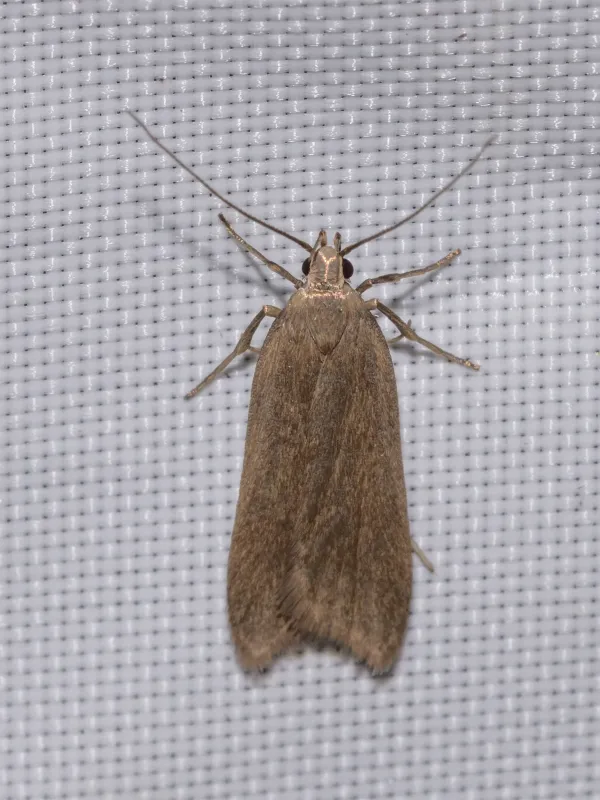
Description
How to identify
The genus Acompsia belongs to the order Lepidoptera and the family Gelechiidae (twirler moths). These are small moths characterized by a distinct notch on the outer edge of their wings, which is a diagnostic feature of the entire family.
Adult individuals are typically nocturnal or crepuscular, making them difficult to detect in the field. Their coloration ranges from grey to brownish tones, providing excellent camouflage against plant debris and tree bark.
The larvae (caterpillars) of Acompsia have a well-developed head and a segmented body, often covered with sparse bristles. Larval development occurs over several instars, during which they significantly increase in size and change their coloration intensity.
Identification of species within the genus is complicated due to the morphological similarity of the adults, often requiring microscopic examination of genital structures for precise taxonomic classification.
These insects prefer humid and shaded habitats, often concentrating in floodplains or abandoned agricultural areas where microclimatic conditions are highly favorable for reproduction.
What it damages
Species of the genus Acompsia demonstrate trophic specialization on certain wild and cultivated herbaceous plants. Significant damage occurs during the larval stage as they feed actively on plant tissues.
Caterpillars can damage both generative and vegetative plant organs, including leaves, buds, and inflorescences. High population densities can lead to significant defoliation, negatively impacting photosynthetic activity and overall yield.
In some cases, larvae mine the leaves, creating tunnels between the epidermal layers, which results in premature wilting and abscission of the affected foliage.
The damage caused by these pests provides entry points for secondary pathogens, including fungal and bacterial infections, which exacerbates the impact on crops.
The economic significance of this pest depends on the intensity of the infestation; while rarely causing catastrophic losses on an industrial scale, they require consistent monitoring.
When it appears
The life cycle of Acompsia is closely tied to seasonal temperature shifts. Adult flight typically occurs during the summer months, with a peak in June and July.
They overwinter primarily as larvae or pupae, seeking shelter in plant debris, under bark, or in the topsoil layer, which allows them to survive harsh winter conditions.
In spring, once stable positive temperatures are reached, the larvae resume active feeding and increase their biomass before initiating the pupation process.
The development of a single generation may take several weeks, with the duration of each stage depending on the accumulated heat units and humidity levels in the region.
In warmer climates, two generations per growing season are possible, which significantly increases the potential risk to agricultural crops.
Signs of infestation
The first indicator of the pest's presence is the appearance of characteristic excrement (frass) on the leaf surface or inside leaf rolls fastened with silk threads.
Small pale spots, 'windows,' or winding leaf mines indicate the active feeding of young larvae on internal leaf tissues.
Wilting of specific inflorescences or their deformation often points to hidden larval feeding inside the buds, which may be overlooked during superficial plant inspections.
The presence of fine silk webbing, used by caterpillars to bind plant parts together, is a clear indicator of infestation by members of the Gelechiidae family.
Mass emergence of adults can be detected using light traps or pheromone traps, serving as a reliable method for early diagnostic monitoring in fields.
Control measures
Integrated pest management includes agricultural practices aimed at disrupting the insect's life cycle and reducing population numbers during early stages.
Deep autumn plowing helps destroy overwintering larvae and pupae residing in the soil and plant debris, exposing them to natural enemies and freezing temperatures.
Regular removal of weeds along field margins and between rows significantly reduces alternative food sources and breeding sites for the pest.
Biological control methods, such as the use of entomophages or bacterial-based biopesticides, allow for effective caterpillar population control without harming the environment.
- Application of selective insecticides during periods of mass larval hatching.
- Crop rotation practices to break the pest's trophic links.
- Population monitoring using pheromone traps to trigger timely interventions.
Taxonomy
- Latin name
- Acompsia
- Order
- Lepidoptera (butterflies)
- Family
- Gelechiidae
- EPPO code
- ACOMSP
Discussion
No discussions yet — be the first.