Юрий · 20 August 2026
Угловертка, Активно вредит посадкам батата (вьюнковы сем. ) Дагестан. В завернутом листке ее как достать? Или уже поздно бороться с ней. Руками давить всю массу гусениц, не реально.

Brachmia macroscopa
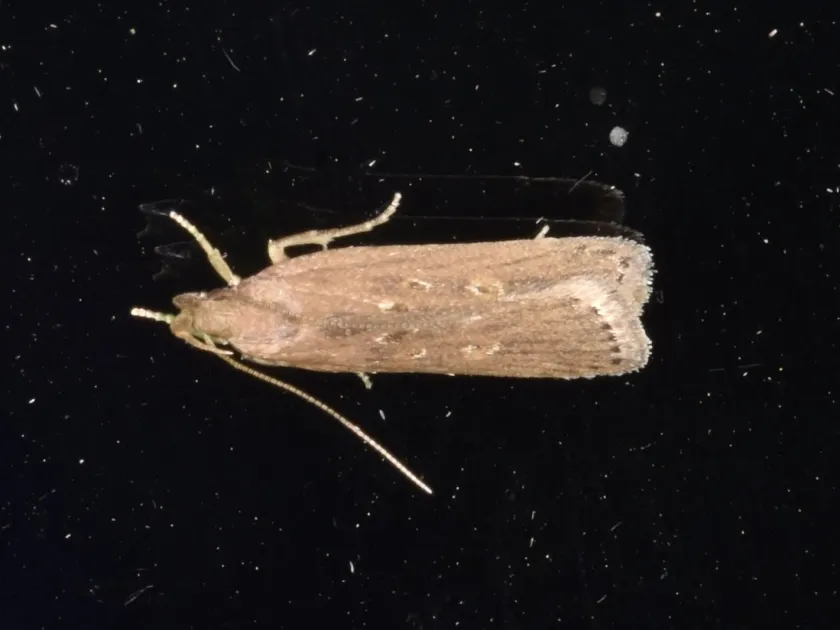
The Bindweed moth (Brachmia macroscopa) is a member of the Gelechiidae family, commonly known as twirler moths or gelechiid moths, within the order Lepidoptera.
Adult moths are characterized by their small size and specific wing venation patterns, which are typical for this diverse family of insects.
The larvae are highly active and demonstrate protective coloration, making them difficult to spot against the green foliage of their host plants.
This species goes through a complete metamorphosis, with the larval stage being the most destructive to agricultural plants.
Biological monitoring is essential to distinguish Brachmia macroscopa from other similar moth species that may inhabit the same agricultural fields.
The Bindweed moth primarily feeds on various members of the Convolvulaceae family, but it also impacts several cultivated crops in warm agricultural regions.
Larvae feed on the leaf tissue, causing significant reduction in the surface area available for photosynthesis, which stresses the plants.
In cases of severe infestation, the damage can spread to stems and flower buds, negatively impacting the overall plant growth and yield potential.
Economic damage is most pronounced when the larval population density exceeds the established threshold, leading to stunted plant development.
Damaged tissues are often entry points for secondary bacterial and fungal pathogens, which can exacerbate the harm caused by the moth larvae.
The most prominent sign of infestation is the presence of leaves that are rolled or tied together with fine silk webbing produced by the larvae.
Discoloration of the foliage, ranging from pale yellow to brown in affected areas, indicates active feeding sites on the host plant.
Presence of larval frass (excrement) within the silken shelters is a clear indicator that the plant is currently occupied by the pest.
Early-season signs include deformed leaves and the cessation of growth in young shoots, often occurring in localized hotspots within a field.
Checking the underside of leaves for small larvae or their protective silk webs is a standard practice for field scouting and pest detection.
Effective management of the Bindweed moth relies on an integrated pest management (IPM) strategy focused on cultural and chemical interventions.
Reducing populations of host weeds, especially field bindweed, is crucial for preventing the pest from establishing a foothold in crop fields.
Chemical control should be implemented based on scouting results, targeting the early larval stages before they form protective leaf rolls.
Biological control agents, such as parasitoid wasps or microbial insecticides, can be used to manage population levels while preserving ecological balance.
Regular crop rotation and the destruction of post-harvest crop residues help disrupt the lifecycle of the pest, reducing its emergence in the following season.
Угловертка, Активно вредит посадкам батата (вьюнковы сем. ) Дагестан. В завернутом листке ее как достать? Или уже поздно бороться с ней. Руками давить всю массу гусениц, не реально.