
Cherry fruit moth
Athrips rancidella
Description
How to identify
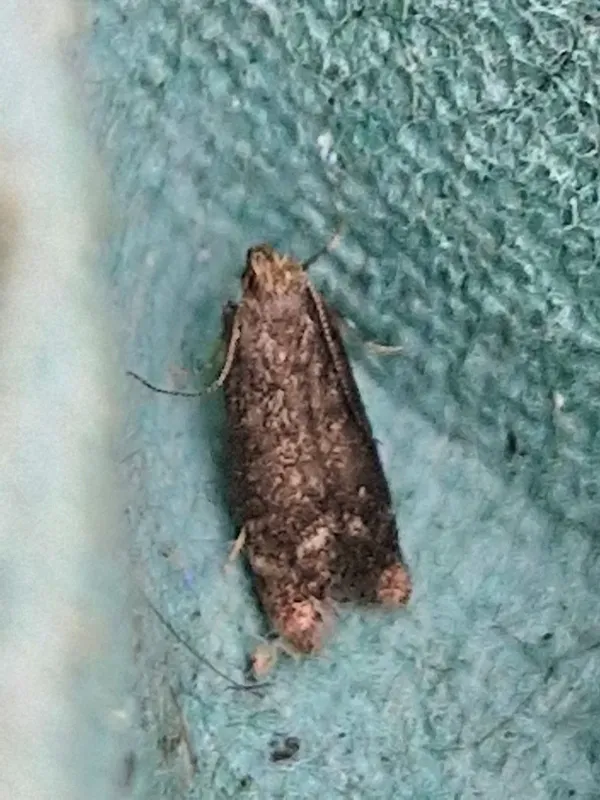
The cherry fruit moth (lat. Athrips rancidella) is a small moth species belonging to the Gelechiidae family. Adults are delicate insects with a wingspan ranging from 12 to 15 mm.
The forewings have a greyish-brown appearance with darker spots and a characteristic notched margin, which is the defining feature for this family of moths. The hindwings are lighter in color and fringed.
Larvae (caterpillars) measure up to 12 mm in length and are typically greenish-yellow or brownish with a darker head capsule. Their bodies are sparsely covered with fine hairs.
The life cycle of this pest is closely synchronized with the phenology of fruit trees, particularly stone fruits. Overwintering occurs in the larval stage, protected within cocoons tucked into bark crevices.
Adult moths are primarily nocturnal, making them difficult to spot in the orchard during the day, as they remain camouflaged against the bark of the trees.
What it damages
This pest primarily infests stone fruit trees. Its main hosts include cherries, sour cherries, plums, and occasionally apricots.
Damage is caused by the caterpillars, which emerge early in the spring to feed on developing buds, hollowing them out and preventing the growth of leaves and flowers.
Later in the season, the larvae migrate to the leaves. They use silk to roll leaves into protective tubes or cigars, where they feed on the leaf tissue from the inside.
Heavy infestations can lead to partial or total defoliation of the trees, significantly reducing the tree's photosynthetic capacity and overall health.
Reduced vigor makes the trees more susceptible to environmental stressors, such as harsh winters, and secondary infestations by other garden pests.
When it appears
Larval activity begins in early spring, coinciding with the bud swell phase of cherry trees. This is the period when the trees are most vulnerable to damage.
Depending on the climatic zone, the moth completes one or two generations per year. The flight of the second generation typically occurs in mid-summer.
Pupation takes place inside the rolled-up leaves during the summer months. This protective structure ensures high survival rates for the developing pupae.
By autumn, larvae seek out overwintering sites, often moving under the bark or into protected debris, remaining there until the following spring cycle begins.
Dry and warm spring weather patterns are particularly conducive to rapid pest development, often leading to outbreaks that require immediate horticultural action.
Signs of infestation
The presence of fine webbing on the tips of young shoots is one of the first indicators that the cherry fruit moth is active in the garden.
Unopened or withered buds with small entry holes at their base are a clear sign that larvae have been feeding internally on the developing tissues.
The appearance of rolled, blackened leaves clustered together is a hallmark symptom of a high-density infestation within the orchard.
Careful inspection of these leaf rolls will usually reveal the presence of the caterpillar or its dark, granular excrement trapped inside the silk structure.
Trees severely affected by the moth will exhibit stunted growth, weakened branches, and a general lack of vigor during the primary growing season.
Control measures
Cultural control, such as removing old or loose bark from tree trunks during the dormant season, is highly effective in destroying overwintering sites.
Applying systemic insecticides during the "green cone" growth stage is an effective way to eliminate caterpillars as they emerge from their winter shelters.
During the growing season, biological control options, such as using Bacillus thuringiensis, can be applied to target larvae before they cause significant leaf damage.
Monitoring using pheromone traps can help track the adult moth population and determine the precise timing for targeted insecticide applications.
Pruning and destroying infected branches or leaf clusters during the summer helps to manually reduce the population size for the following season.
Taxonomy
- Latin name
- Athrips rancidella
- Order
- Lepidoptera (butterflies)
- Family
- Gelechiidae
- EPPO code
- AHRSRA
Discussion
No discussions yet — be the first.