
Dichomeris ianthes
Dichomeris ianthes
Description
How to identify
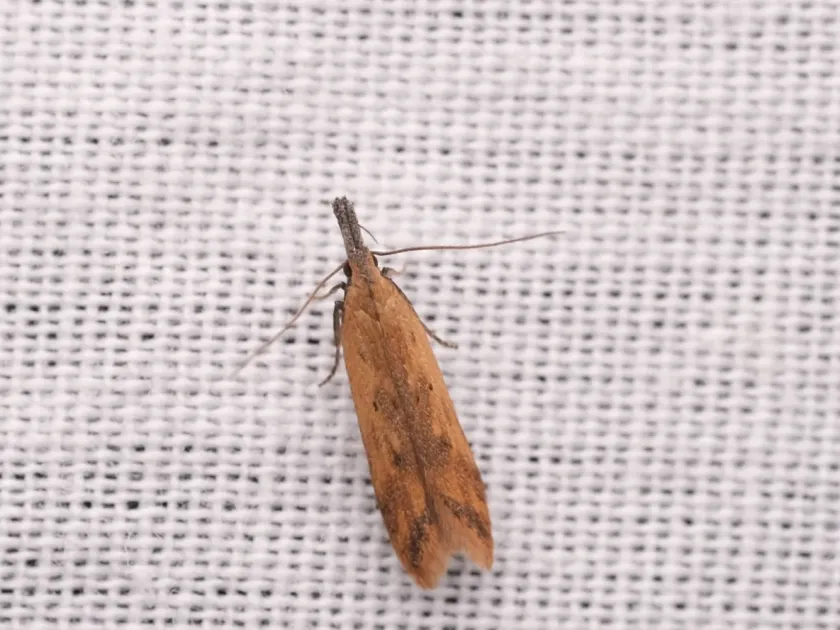
Dichomeris ianthes belongs to the order Lepidoptera and the family Gelechiidae. The adult moth has a wingspan of approximately 12–15 mm. The forewings are typically grayish-brown with dark markings, providing excellent camouflage against the foliage of host plants during the day.
The larvae, or caterpillars, are highly mobile and go through several developmental stages. They are generally greenish in color with a dark head, which helps them blend in while they feed within leaves that they have webbed together for protection.
The insect undergoes a complete metamorphosis, consisting of egg, larva, pupa, and adult stages. Females lay eggs on host plants, ensuring that emerging larvae have immediate access to nutrients required for their rapid development throughout the growing season.
This species thrives in warm, humid conditions, which favor population growth. Depending on the geographical location, multiple generations can occur within a single growing season, leading to potential outbreaks if left unchecked during favorable climate periods.
Overwintering usually takes place in the pupal stage, often sheltered within plant debris or in the upper layers of the soil. This dormancy allows the population to survive cold periods and re-emerge when host plants become available in the spring.
What it damages
Dichomeris ianthes primarily targets members of the Fabaceae family. Its main host crops include soybeans, alfalfa, clover, and various wild legumes, which serve as crucial developmental sites for the larvae before they migrate to agricultural fields.
Signs of infestation
The most visible sign of infestation is the presence of leaves webbed or rolled together by silk threads produced by the larvae. Inside these protective shelters, the caterpillars feed on the soft tissue, creating irregular patches and holes in the leaf blades.
In cases of high infestation levels, severe defoliation occurs. This loss of photosynthetic area weakens the plant, reducing its ability to allocate energy to seed production, which directly translates into lower yields at the end of the season.
Affected plants often appear stunted or yellowed, particularly in focal points of the field where the moth population has established itself. The presence of webbing and caterpillar frass is a reliable indicator that an active infestation is currently underway.
Growth points of the legume plants may also be damaged, leading to altered branching patterns and reduced overall plant health. This stress makes the plants more susceptible to secondary infections from pathogens that enter through the feeding wounds.
Monitoring the field for adult moths during the night using light traps can provide early warning of potential caterpillar emergence. Farmers should conduct field walks focusing on the underside of leaves and growing tips to detect the first signs of larval activity.
Control measures
Integrated pest management (IPM) is essential for controlling Dichomeris ianthes. Crop rotation is a fundamental practice, as it disrupts the life cycle by removing the specific food source required for the larvae to survive and multiply in consecutive seasons.
Field sanitation, including deep plowing after harvest, is highly effective in burying and destroying pupae that are overwintering in the soil. Furthermore, controlling weeds within and surrounding the fields, especially wild legumes, helps eliminate alternative breeding grounds.
Biological control methods involve the use of natural enemies, such as parasitic wasps that target the larval stages. Introducing or preserving these beneficial organisms can help maintain the moth population below the economic injury level without relying heavily on chemical inputs.
When chemical intervention is necessary, the timing must be precise. Systemic insecticides are generally preferred as they can reach larvae hidden within the webbed leaves, where contact insecticides may fail to provide adequate coverage or efficacy.
Constant monitoring of the fields during the critical growth stages of the legume crop allows for informed decision-making. By applying insecticides only when threshold levels are met, farmers can effectively manage the pest while minimizing environmental impact and protecting beneficial pollinators.
Taxonomy
- Latin name
- Dichomeris ianthes
- Order
- Lepidoptera (butterflies)
- Family
- Gelechiidae
- EPPO code
- DICMIA
Discussion
No discussions yet — be the first.