
Cerceris moth
Fascista cercerisella
Description
How to identify
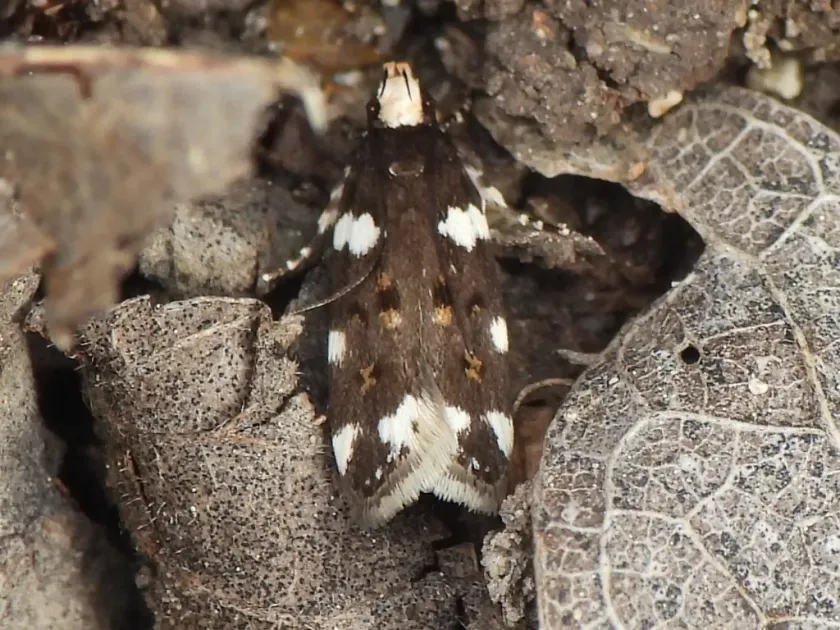
Fascista cercerisella is a moth belonging to the family Gelechiidae, often known as twirler moths. The adult moth is characterized by its relatively small size and a dark wing pattern accented with lighter, distinct markings.
The larvae, or caterpillars, have a specific appearance that aids in their field identification. They typically feature a light-colored or greenish body, sometimes marked with darker spots, allowing them to camouflage effectively against the leaf surface.
Adult moths are not particularly large, which is standard for the Gelechiidae family. Their flight is often brief and erratic, making them difficult for an agronomist to detect in a field environment without utilizing specialized monitoring tools.
The larvae create distinct shelters by webbing together leaves with silk threads. This behavior is a primary diagnostic marker, allowing for quick visual verification of the pest presence during routine crop scouting.
In cases where identification is difficult, laboratory rearing or dissection may be required, as larval morphology can shift slightly depending on the nutritional status of the host plant.
What it damages
The primary host plants for this pest are members of the Fabaceae family. It is most commonly associated with plants of the genus Cercis, from which its species name is derived.
The larvae cause significant damage to both ornamental and agricultural plants by consuming tender leaf tissues. In cases of severe infestations, the pest can cause complete defoliation of the branches, weakening the plant host.
Damage to the foliage disrupts the plant's photosynthetic capacity, which leads to reduced growth rates and poor overall health. For ornamental shrubs, this aesthetic damage can be a major concern for landscape management.
Damaged leaf tissue serves as an entry point for secondary infections, including fungal and bacterial pathogens, which can exacerbate the decline of the plant and lead to premature leaf drop.
In high-intensity agricultural systems, the cumulative impact of Cerceris moth damage can lead to measurable losses in productivity, necessitating proactive intervention and constant monitoring.
When it appears
Adult activity typically commences during the warmer months, usually appearing in late spring or early summer as temperatures remain consistently favorable for development.
The life cycle is closely linked to the phenology of the host plant. Under favorable conditions, the pest produces multiple generations throughout a single growing season, allowing for rapid population explosions.
Peak damage from larvae occurs during the active vegetative growth phase of host legumes, coinciding with the emergence of abundant young, nutrient-rich leaves.
By autumn, larvae of the final generation prepare for diapause, typically pupating within plant debris or in the upper soil layers, where they are insulated against cold weather.
Field scouting should ideally begin in early spring to catch the first adult flight, which serves as a warning for potential egg-laying activity on susceptible crops.
Signs of infestation
The most prominent sign of infestation is the presence of tightly curled or webbed leaves. Larvae use silk to construct protective retreats, where they remain sheltered while feeding.
Upon closer inspection of the underside of the leaves, an agronomist will often find small, dark granular frass (excrement) accumulated within the silken webbing.
Initial signs of damage present as small leaf windows or skeletonized patches. Unrolling a leaf frequently reveals the larva, which may react to the disturbance with sudden, rapid movement.
A high density of webbed leaves on a single stem is a clear indicator of significant pest pressure, signaling an urgent need for phytosanitary action.
Adult moths are often active at twilight and can be spotted resting near infested foliage, confirming that an active population is present and currently reproducing.
Control measures
Successful management relies on an integrated strategy involving both cultural and chemical control measures. Clearing crop debris at the end of the season is critical to reducing overwintering pupae.
For small-scale infestations in home gardens, the physical removal and destruction of curled leaves is the most environmentally sound approach.
In commercial settings with heavy pressure, the application of systemic or contact insecticides registered for use on the specific legume crop is necessary for mitigation.
- Utilizing biological control agents, such as formulations of Bacillus thuringiensis.
- Deploying pheromone traps to monitor adult population levels and determine timing for treatment.
- Implementing strict crop rotation to disrupt the pest's lifecycle and host accessibility.
Treatments are most effective when applied during the period of peak egg hatch, before the larvae have fully constructed their protective leaf shelters, which limits insecticide penetration.
Taxonomy
- Latin name
- Fascista cercerisella
- Order
- Lepidoptera (butterflies)
- Family
- Gelechiidae
- EPPO code
- GELECE
Discussion
No discussions yet — be the first.