
Chionodes viduella
Chionodes viduella
Description
How to identify
Chionodes viduella belongs to the Gelechiidae family of moths. An adult moth typically has a wingspan ranging from 15 to 20 mm.
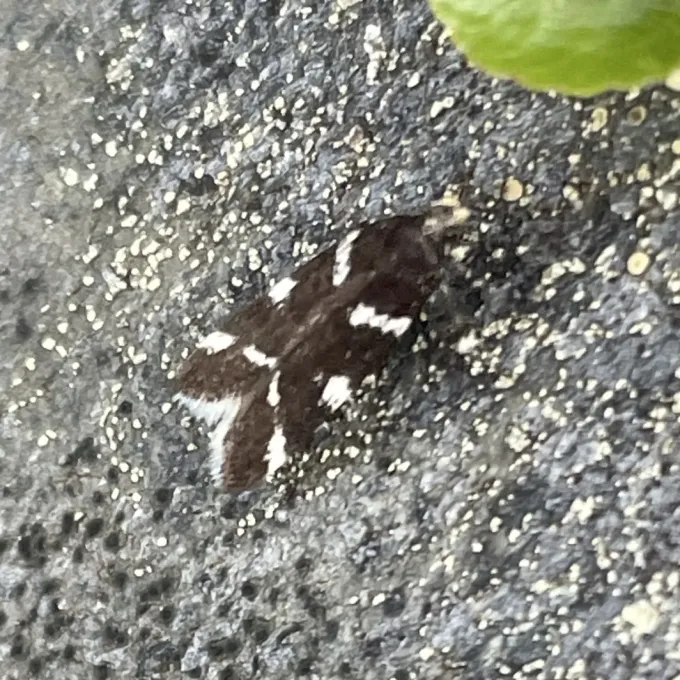
The forewings feature a dark grey or almost black pattern with distinctive whitish spots and bands, providing excellent camouflage against tree bark.
The insect possesses a slender body, characteristic of the Gelechiidae family, with larvae equipped with chewing mouthparts adapted for plant tissue.
The species undergoes a complete metamorphosis involving four stages: egg, larva, pupa, and adult, usually completing one generation per year.
Identifying the adult moth is challenging in the field, so entomologists often rely on light traps or pheromone monitoring to detect its presence.
What it damages
This pest primarily infests various woody plants and shrubs, including species within the Ericaceae family and certain forest trees.
The primary damage is caused by larvae that feed on leaves, buds, and young shoots, often leading to significant defoliation of the host plant.
In agricultural settings adjacent to woodlands, the pest may migrate to crops, affecting their vegetative development and overall health.
Feeding damage compromises the photosynthetic capacity of the plants, resulting in weakened immunity and reduced growth vigor.
Severe infestations in nurseries can stunt the growth of young saplings, rendering them susceptible to secondary infections or environmental stress.
When it appears
Adult moths are typically active during the summer months, with the peak flight period usually occurring in June and July.
Larvae hatch after an incubation period and remain active throughout late summer, feeding voraciously on fresh plant tissues.
The species overwinters as a larva or pupa in protected environments, such as leaf litter, soil, or deep crevices in the bark of trees.
Emergence in the spring depends on soil and air temperatures, typically aligning with warming trends above 10-12 degrees Celsius.
Ideal conditions for population growth include moderate humidity and warmth, whereas extreme drought or cold may limit the survival of the larvae.
Signs of infestation
The most common sign of infestation is skeletonized or chewed foliage, often tied together with silk threads to form protective shelters.
The presence of frass (larval excrement) on leaf surfaces or within plant axils provides a clear indication of active feeding behavior.
Small entry holes found in developing buds are characteristic signs of early-season damage caused by the larvae.
Silk webbing containing small larvae is a diagnostic feature used to confirm the presence of this pest on susceptible plants.
Premature leaf drop and discoloration in the absence of fungal or bacterial pathogens often point towards insect-driven damage.
Control measures
Cultural control is essential, including the removal and destruction of leaf litter and infested plant debris during the autumn season.
When populations exceed economic thresholds, the application of contact or systemic insecticides during the early larval stage is highly effective.
Promoting biodiversity by encouraging natural predators, such as birds and predatory insects, can help maintain the population at manageable levels.
Biological control agents, particularly products containing Bacillus thuringiensis, are effective against larvae while minimizing impact on beneficial insects.
- Regular inspection of host plants during the summer.
- Use of pheromone traps for early detection and monitoring.
- Sanitary pruning of heavily infested branches to reduce local populations.
Taxonomy
- Latin name
- Chionodes viduella
- Order
- Lepidoptera (butterflies)
- Family
- Gelechiidae
- EPPO code
- KHIOVI
Discussion
No discussions yet — be the first.