
Anarsia
Anarsia
Description
How to identify
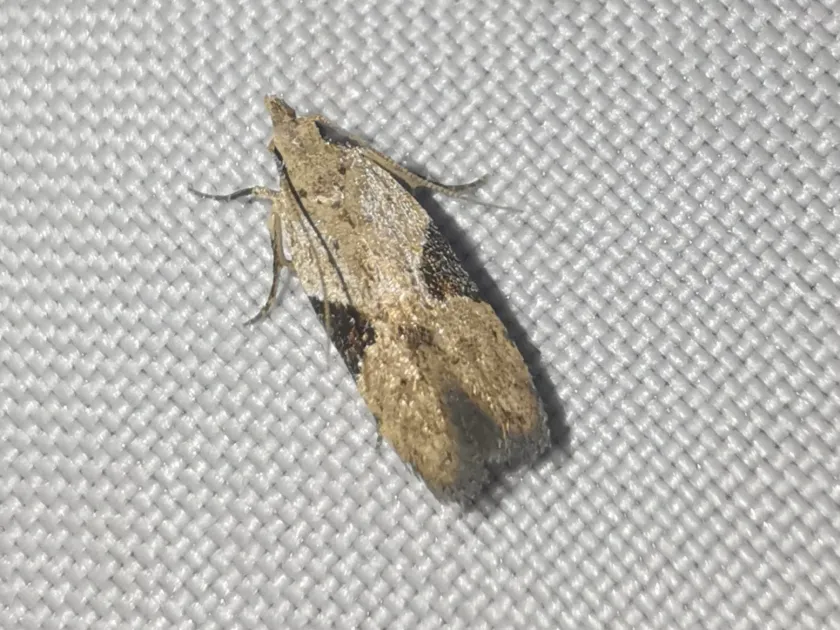
The peach twig borer (Anarsia lineatella) is a moth species belonging to the Gelechiidae family. Adult moths have a wingspan of approximately 10–15 mm and display a distinctive greyish-brown color with dark markings on their forewings.
The larvae, or caterpillars, grow up to 15 mm in length. They are characterized by a reddish-brown body, a dark head, and a thoracic shield, making them visually distinguishable from other fruit-infesting larvae.
Eggs are minute, oval-shaped, and creamy white or yellowish. They are typically laid individually or in small groups on tender shoots, leaves, or near the base of fruit stems.
Pupae are brown and reach about 8 mm. They are found within loose cocoons hidden inside rolled leaves or crevices in the bark of host trees.
The species overwinters as young larvae. They construct small, silk-lined galleries in the bark, usually in crotches of branches, which serve as their protective hibernacula during the winter months.
What it damages
Anarsia is a highly destructive pest that primarily targets stone fruits, including peaches, nectarines, apricots, plums, and almonds.
In spring, first-generation larvae tunnel into succulent shoots and buds. This feeding behavior causes the tips to wilt, die back, and curl into a 'flag,' significantly stunting tree growth.
Later generations target the developing fruit. Larvae bore into the flesh, often near the stem, creating tunnels filled with frass, which renders the fruit unmarketable.
Infested fruit is highly susceptible to secondary infections like brown rot, leading to premature fruit drop and significant economic losses for commercial growers.
If left unmanaged, the pest can cause severe damage to both the canopy structure and the seasonal yield, especially in young, high-density orchards.
When it appears
The emergence of overwintering larvae occurs early in the season, coinciding with bud swell and the beginning of sap flow in stone fruit trees.
The life cycle involves multiple generations per year, typically two to four depending on the regional climate and temperature conditions.
Peak moth activity usually occurs in June and July. Monitoring with pheromone traps is essential during these months to predict the timing of larval emergence.
Late-season generations target ripening fruits in August and September before the final brood prepares for the winter diapause beneath the bark.
Effective management requires precise timing, as protective measures are only successful when targeting the larvae before they bore into the plant tissue.
Signs of infestation
The most noticeable early symptom is the sudden wilting and browning of shoot tips, often referred to as 'flagging,' which occurs in the spring.
Entry holes on the surface of the fruit, often surrounded by droplets of gum or sap, indicate that a larva has successfully bored into the fruit flesh.
Overwintering sites can be detected by looking for small, raised mounds of silk and frass on the bark, usually found in the forks of branch unions.
Damaged or dead buds that fail to open during the initial growth phase are another clear indicator of larval activity within the woody tissue.
Catching male moths in pheromone traps serves as a primary indicator of population levels and confirms the need to initiate control measures.
Control measures
Cultural control methods include the systematic removal and destruction of infested shoots and 'flagged' branches to reduce the local larval population.
Chemical control must be timed precisely to target the larvae during their brief exposure on the surface before they burrow into the twigs or fruit.
- Application of selective insecticides during periods of peak larval emergence.
- Use of biological control agents, such as Bacillus thuringiensis, for environmentally friendly management.
- Implementation of pheromone-based mating disruption to suppress reproductive success.
- Mechanical removal of loose bark and cleaning of tree crotches to destroy overwintering sites.
Rotating chemical classes is vital to prevent the development of insecticide resistance, a common challenge when dealing with multivoltine pests.
An integrated pest management (IPM) approach, combining diligent monitoring with timely applications, is the most effective way to sustain orchard productivity.
Taxonomy
- Latin name
- Anarsia
- Order
- Lepidoptera (butterflies)
- Family
- Gelechiidae
- EPPO code
- ANARSP
Discussion
No discussions yet — be the first.