
Anacampsis niveopulvella
Anacampsis niveopulvella
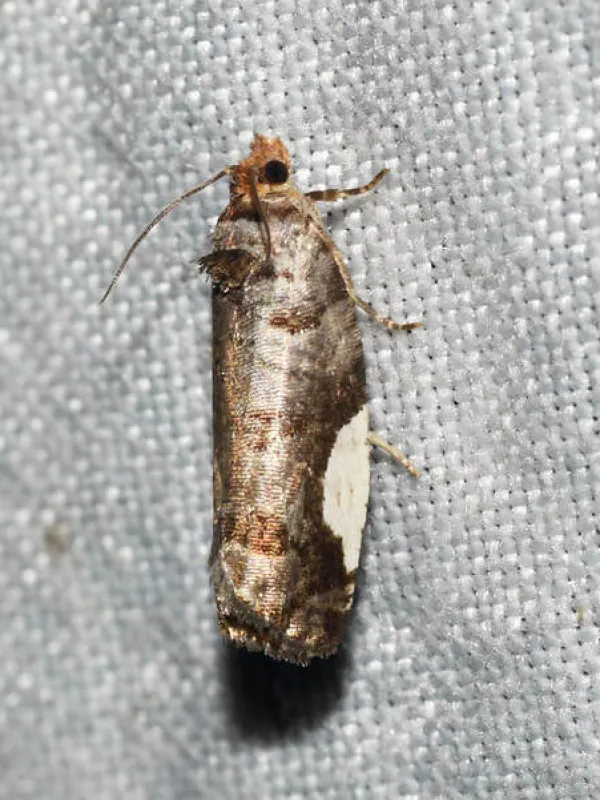
Description
How to identify
Anacampsis niveopulvella is a moth belonging to the family Gelechiidae. The adult moth is small, typically featuring a wingspan ranging from 12 to 15 mm.
The forewings have a dark brownish-gray coloration, uniquely patterned with light, almost white scales that resemble a fine dusting. The hindwings are paler and characteristically fringed with long hairs.
The larvae, or caterpillars, reach about 10–12 mm in length. Their body coloration is generally greenish-yellow or brownish, with a distinctively darker, well-defined head capsule.
The life cycle undergoes complete metamorphosis, including egg, larva, pupa, and adult stages. They typically overwinter as pupae or larvae in protected areas like bark crevices or leaf litter.
Because they are nocturnal and secretive, they are often overlooked until the damage to the foliage becomes obvious to the observer.
What it damages
This species primarily targets plants within the Rosaceae family. Host plants frequently include apple, pear, cherry, and various decorative shrubs found in orchards.
The damage is caused exclusively by larvae feeding on developing buds and young leaves immediately after hatching in the spring, hindering the plant's structural growth.
During years of high infestation, the cumulative feeding impact can significantly reduce the tree's photosynthetic capacity, affecting both growth rates and fruit quality.
Heavy defoliation can weaken the trees, making them more susceptible to subsequent environmental stresses, such as winter frost or secondary disease infections.
The loss of leaf surface area directly translates to reduced energy storage for the plant, which can have long-term consequences for the vigor of the tree.
Signs of infestation
Early symptoms include bud damage, where buds fail to open or appear stunted because the larvae have hollowed them out from the inside.
Another classic sign is the presence of webbed or rolled leaves. The larvae use silk to bind leaf margins together, creating protective shelters for feeding.
Feeding damage often appears as irregular holes or "windows" in the leaf blade, with the larger leaf veins typically left intact, giving the leaves a skeletonized look.
The presence of fine, dark granular frass (excrement) deposited within the webbed leaves is a definitive indicator of the larvae's presence and activity.
In dry conditions, the infested leaf tissues quickly turn brown and wither, making the damage highly visible against the otherwise healthy canopy of the tree.
Control measures
Cultural control involves thorough cleaning of tree trunks to remove loose bark, which eliminates overwintering sites for the pupae of the moth.
Pruning and destroying infested shoots early in the season is a highly effective method to curb the population before the moths can complete their generation cycle.
Biological control options, such as using Bacillus thuringiensis, are highly effective against early-instar larvae and are generally safe for beneficial insect populations.
Chemical treatments should be timed precisely with the period of larval hatch. Systemic insecticides are preferred as they penetrate the leaf tissue where the larvae feed.
- Monitor adult flight using pheromone traps.
- Encourage natural predators like lacewings and parasitic wasps.
- Sanitize the orchard by removing fallen leaves and pruning debris.
Taxonomy
- Latin name
- Anacampsis niveopulvella
- Order
- Lepidoptera (butterflies)
- Family
- Gelechiidae
- EPPO code
- ANKSNI
Discussion
No discussions yet — be the first.