
Angoumois grain moth
Sitotroga cerealella
Description
How to identify
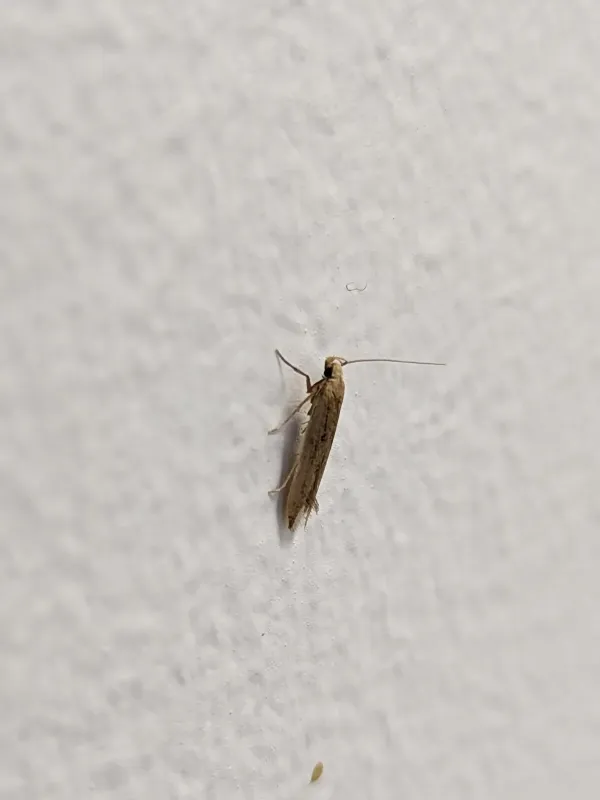
The Angoumois grain moth (Sitotroga cerealella) is a significant pest of stored grain, belonging to the Gelechiidae family. Adults are small moths with a wingspan of approximately 13–18 mm.
The forewings are yellowish or brownish with small dark spots. The hindwings are greyish, tapering to a point, and feature a characteristic fringe of hair along the edges.
The larvae, which cause the primary damage, grow to about 6–8 mm in length. They are typically cream-colored with a brown head capsule, allowing them to remain well-hidden inside grains.
Eggs are laid individually or in small clusters on the surface of seeds or packaging. They are white when freshly laid but transition to a reddish color as the larva develops inside.
The life cycle is highly temperature-dependent. Under optimal conditions (25–28°C), the insect can complete its generation in just over a month, leading to rapid population outbreaks.
What it damages
This moth primarily targets cereal crops, including wheat, barley, rye, oats, corn, and sorghum. It is known to infest grains both in the field and during storage in silos or granaries.
Larvae bore into individual kernels, consuming the endosperm from the inside. This process destroys the nutritional value and viability of the grain, leaving only the empty seed coat.
In addition to direct weight loss, the infestation alters the grain's microclimate, raising moisture levels and promoting the growth of mold and secondary storage pests.
Seed lots infested with the Angoumois grain moth suffer from reduced germination rates, which poses a serious economic threat to seed producers and commercial farmers.
High infestation levels make the grain unsuitable for human consumption or processing into flour, as the presence of larvae and waste products compromises hygiene standards.
Signs of infestation
The most common sign of an active infestation is the presence of adult moths flying in storage areas, especially during the twilight hours or when grain is disturbed.
Inspection of kernels reveals small, circular emergence holes, indicating that adult moths have already exited the grain. This is a definitive sign of past or ongoing larval development.
Silk webbing on the surface of the grain mass is another frequent indicator of larval activity, particularly when they are preparing to pupate or moving between grains.
Infested grain is lighter in weight than healthy grain. During processing or cleaning, these damaged kernels are easily separated by air currents due to their lower density.
A musty odor in the storage facility often accompanies large infestations, signaling advanced stages of pest development and the need for immediate corrective action.
Control measures
Sanitation is the first line of defense; cleaning grain dust and residues from storage facilities before harvest storage significantly reduces the risk of initial infestations.
Fumigation with phosphine-based products is the most effective method for controlling internal infestations within the grain kernels, where other treatments cannot reach.
The use of pheromone traps is highly recommended for monitoring moth populations, allowing managers to time their control efforts precisely when populations begin to rise.
Maintaining grain moisture below 14% and ensuring proper aeration helps suppress larval growth and reproduction, making the storage environment less hospitable to the pest.
Implementing regular monitoring through probe sampling and visual inspections is critical for identifying early-stage infestations before they cause significant economic loss.
Taxonomy
- Latin name
- Sitotroga cerealella
- Order
- Lepidoptera (butterflies)
- Family
- Gelechiidae
- EPPO code
- SITTCE
Discussion
No discussions yet — be the first.