
Chrysoesthia
Chrysoesthia
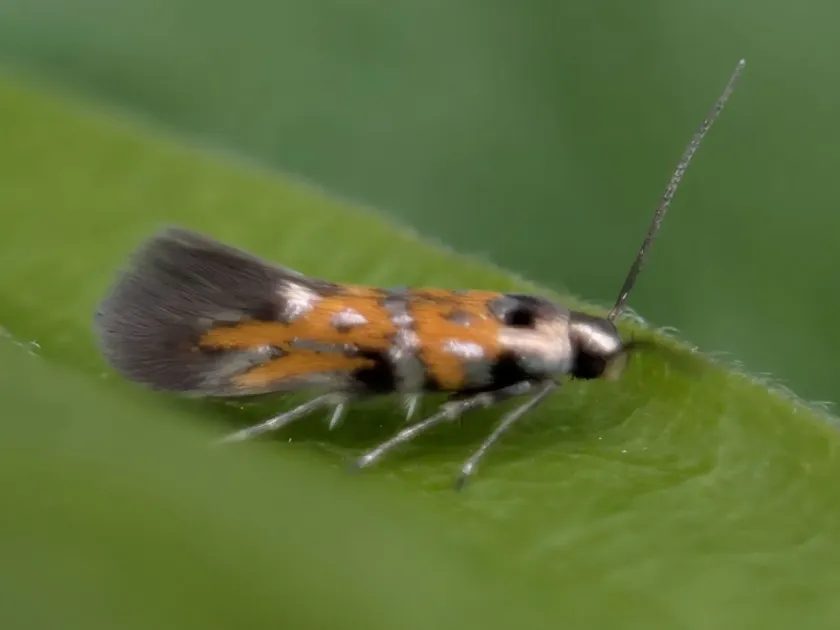
Description
How to identify
The genus Chrysoesthia belongs to the family Gelechiidae, which includes several species of leaf-mining moths known for their ability to feed within the leaf tissues of host plants.
Adult moths are typically small and nocturnal, making them difficult to detect in the field without using specific light traps or pheromone monitoring equipment.
The larvae are the primary stage causing damage; they are small, slender, and possess specialized mouthparts designed for feeding on plant mesophyll while remaining hidden.
Developmental stages occur rapidly during the growing season, with multiple generations possible in warmer climates, leading to overlapping infestations.
The insects are highly adapted to their hosts, often synchronizing their life cycle with the germination and early growth stages of the target crops.
What it damages
Chrysoesthia species primarily target Amaranthaceae family members, with sugar beet, table beet, spinach, and wild Chenopodium species being the most common hosts.
The larvae create mines by feeding on the internal layers of leaves, which disrupts the plant's photosynthetic ability and reduces overall crop vigor.
Severe infestations lead to a significant decrease in leaf area, which can hinder the plant's capacity to accumulate biomass and store nutrients in roots.
Secondary infections often take advantage of the damaged leaf tissue, leading to necrosis or further decay, which exacerbates the initial impact of the larval feeding.
In high-pressure situations, the economic impact is significant due to both yield losses and reduced quality of harvested produce.
Signs of infestation
The most visible symptom is the presence of pale, serpentine, or blotch-like mines on the leaf surface, which look like transparent or dried-out tunnels.
Accumulation of frass (larval excrement) within the mines is a clear indicator that the damage was caused by Chrysoesthia larvae rather than other leaf-mining insects.
Leaves affected by heavy infestation may turn yellow, become necrotic at the edges, and ultimately drop prematurely, significantly weakening the plant.
Torn or ruptured epidermal layers on the leaves are frequently observed as the larvae exit the mines to pupate or move to adjacent foliage.
Observation of moths fluttering near the host plants during dusk is a critical indicator of the onset of egg-laying activities.
Control measures
Integrated Pest Management (IPM) is essential for controlling Chrysoesthia, focusing on crop rotation and the systematic removal of wild host weeds.
Deep plowing after harvest is an effective mechanical measure to bury and destroy overwintering pupae, thereby reducing the population size for the next season.
When damage thresholds are exceeded, the application of systemic insecticides is required to penetrate the leaf tissue and reach the concealed larvae.
Continuous monitoring using traps and field scouting allows for timely interventions that minimize the need for blanket chemical treatments.
- Regular weeding of Chenopodium and related wild host species.
- Spatial isolation of new crops from old infested fields.
- Targeted chemical control focusing on early larval development stages.
Taxonomy
- Latin name
- Chrysoesthia
- Order
- Lepidoptera (butterflies)
- Family
- Gelechiidae
- EPPO code
- KRYSSP
Discussion
No discussions yet — be the first.