
Beet moth
Scrobipalpa ocellatella
Description
How to identify
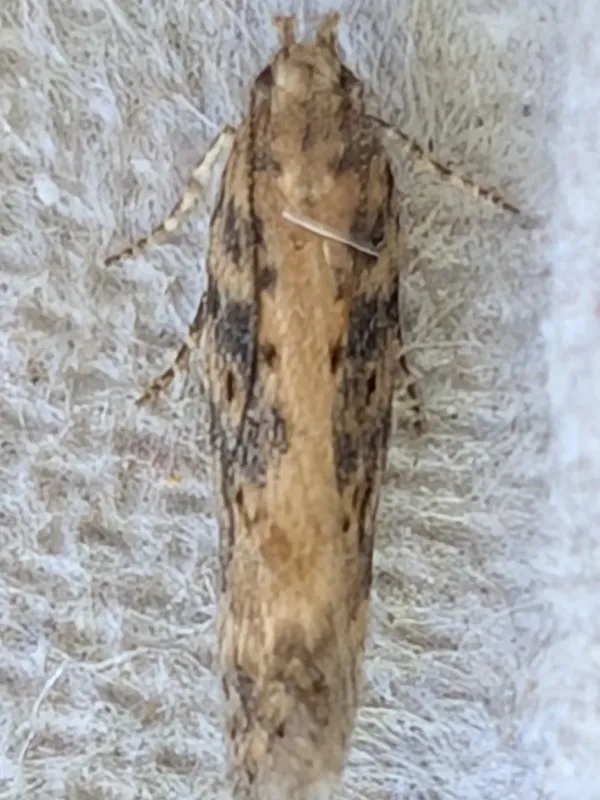
The beet moth (Scrobipalpa ocellatella) is a significant pest belonging to the order Lepidoptera and the family Gelechiidae. This small moth typically has a wingspan of 10–12 mm and possesses a greyish-brown coloration with dark spots on its forewings.
The larvae, or caterpillars, grow up to 8–10 mm in length and are characterized by a pale yellow-white body and a brown head. This stage is responsible for all the damage caused to the host plants.
Adult moths are nocturnal or crepuscular, hiding during the day to avoid predators. This behavior makes it difficult to detect them in the field without using specialized monitoring traps.
The pest overwinters primarily in the pupal stage, residing in the soil or within dry plant debris, which allows it to survive cold winter temperatures in sheltered areas.
Each female can lay several hundred eggs, typically placing them on the underside of leaves or near the crown of the beet plant, facilitating a quick start for the next generation.
What it damages
The primary hosts for the beet moth are sugar beets, table beets, and fodder beets. It is considered a major economic pest in many regions where these crops are grown on a large scale.
Larvae feed by mining the leaves, creating tunnels that destroy leaf tissue. This significantly reduces the plant's photosynthetic capacity, leading to weaker growth and reduced sugar content.
As larvae grow, they migrate toward the leaf petioles and the crown of the root, causing physical damage that often leads to secondary infections like rots, significantly impacting harvest quality.
Damage to the plant's growing point (the central bud) is the most critical, as it stops plant development entirely, causing deformation and rendering the crop unsuitable for processing.
Heavy infestations can result in the entire field appearing blighted or burned, with blackened foliage, which causes significant yield losses and complicates harvesting operations.
When it appears
The emergence of the first generation of adults usually begins in late spring, around May, coinciding with rising temperatures that trigger the development of the larvae.
Depending on the climatic zone and temperature fluctuations, the pest can complete between three and five generations within a single growing season.
Hot, dry weather patterns during the summer months are particularly favorable for the beet moth, as they accelerate the life cycle and increase the overall population density.
The final generation of the season prepares for winter as temperatures drop in autumn, burying themselves in the top 5–10 cm of soil or within crop residues.
Effective monitoring involves placing light traps or pheromone lures at the beginning of the season to track the intensity of the flight and determine the precise timing for intervention.
Signs of infestation
The earliest signs of infestation are small tunnels on the leaves, which gradually expand into brown, necrotic patches as the larvae continue their feeding activity.
The presence of fine webbing at the base of the leaf rosette is a common indicator, as larvae spin silk to protect themselves and anchor the damaged petioles to the center of the plant.
One can often observe piles of dark frass (insect excrement) accumulated in the grooves of the beet crown, which is a clear diagnostic feature of larval activity.
Wilting and mass die-off of the young center leaves are strong indicators that the pest has reached the crown, which is the most dangerous stage of crop injury.
Field-wide yellowing or browning of the canopy is typically observed when the pest population has reached a high level, indicating extensive leaf damage across the plantation.
Control measures
Managing the beet moth requires an integrated approach that combines cultural practices, such as deep autumn plowing to bury pupae, with chemical and biological interventions.
Crop rotation is essential to prevent the buildup of local populations, ensuring that beets are not planted in the same field for consecutive years if possible.
Chemical control should be applied strictly based on the economic threshold, using insecticides that provide effective coverage of the foliage and systemic activity for internal larvae.
- Elimination of weeds from the Chenopodiaceae family to remove alternative food sources.
- Utilizing beneficial insects and biological control agents to manage populations.
- Optimizing sowing dates to avoid the peak periods of adult moth flight.
Pheromone-based mating disruption is an environmentally friendly strategy that can significantly reduce the success of mating and subsequent egg-laying in agricultural fields.
Taxonomy
- Latin name
- Scrobipalpa ocellatella
- Order
- Lepidoptera (butterflies)
- Family
- Gelechiidae
- EPPO code
- PHTOOC
Discussion
No discussions yet — be the first.