
Carnation moth
Caryocolum
Description
How to identify
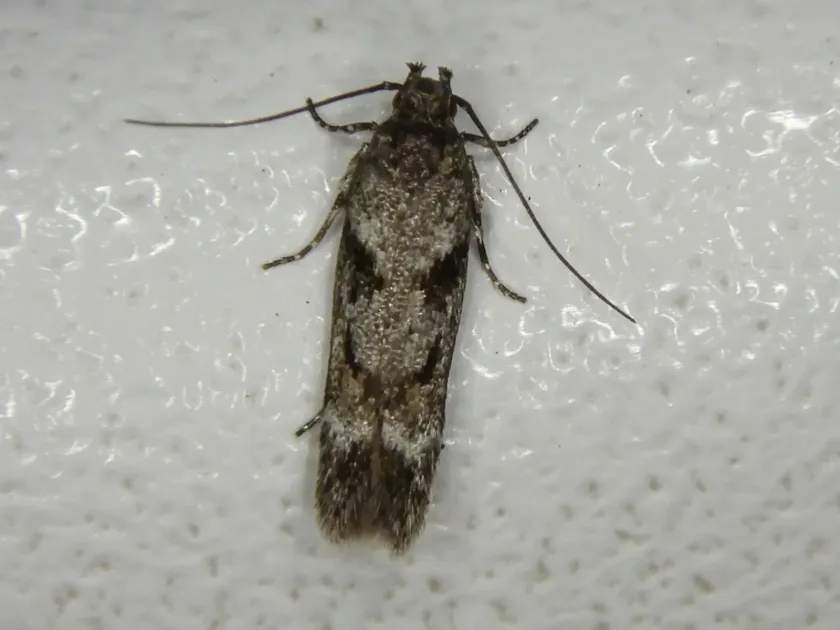
The carnation moth (Caryocolum) belongs to the Gelechiidae family. The adult moth is small, typically with a wingspan ranging from 12 to 15 mm, featuring distinct patterns on its forewings.
The body of the adult is slender and usually colored in shades of grey, brown, or black, providing excellent camouflage against stems and foliage.
Larvae pass through several developmental stages (instars). Their appearance changes as they grow, typically starting as yellowish and becoming dark green with a prominent dark head capsule.
The lifecycle is closely synchronized with the host plant's growth. Overwintering usually occurs in the larval or pupal stage within plant debris or near the soil surface.
Adult moths are nocturnal and crepuscular, meaning they are active during dusk and throughout the night, making them difficult to spot during daylight hours.
What it damages
The primary hosts for this pest are members of the Caryophyllaceae family, specifically various ornamental species of Dianthus (carnations).
Larvae cause damage to all aerial parts of the plant, including leaves, stems, and flower buds, significantly hindering the plant's health and aesthetic value.
In cases of high infestation, the pest can ruin almost all flower buds, rendering the plants useless for ornamental or commercial purposes.
Larvae feed on leaf tissues, causing skeletonization and the formation of visible tunnels or blotches, which disrupts photosynthesis.
Attacks on terminal shoots are particularly devastating as they cause the cessation of apical growth, leading to stunted and deformed plants.
Signs of infestation
A classic sign of infestation is the presence of webbed or curled terminal leaves, where larvae hide for protection while feeding.
Small dark pellets of frass (larval excrement) found inside the webbed leaves or leaf axils provide clear evidence of active larval feeding.
Infested buds often show signs of premature wilting, yellowing, or browning, sometimes resulting in crippled flowers if they manage to open at all.
When inspecting during the night, one might observe the presence of adult moths flying near the plants, which indicates active mating and egg-laying.
Necrotic patches on leaves and damaged stem tissue indicate previous feeding, which often facilitates secondary infections by fungi or bacteria.
Control measures
Sanitation is the most effective management strategy; this involves clearing all dead foliage and plant debris from the garden at the end of the season to remove overwintering sites.
Chemical control should be timed to match the hatching period of the larvae, as they are most vulnerable before they spin protective webs inside leaves.
Biological control methods, including the use of entomopathogenic nematodes or Bacillus thuringiensis-based sprays, provide an environmentally friendly alternative for gardeners.
Ensuring proper spacing between plants improves airflow and reduces humidity, which makes the microenvironment less favorable for the development of the moth.
- Deploy pheromone or light traps to monitor and reduce adult moth populations.
- Regular manual inspection of terminal buds during the early stages of plant growth.
- Application of systemic insecticides when larval presence is first confirmed.
- Removal of wild host plants (weeds) in the immediate vicinity of the carnation beds.
- Providing adequate fertilization to help plants recover from light feeding damage.
Taxonomy
- Latin name
- Caryocolum
- Order
- Lepidoptera (butterflies)
- Family
- Gelechiidae
- EPPO code
- KAKLSP
Discussion
No discussions yet — be the first.