
Dichomeris ferruginosa
Dichomeris ferruginosa
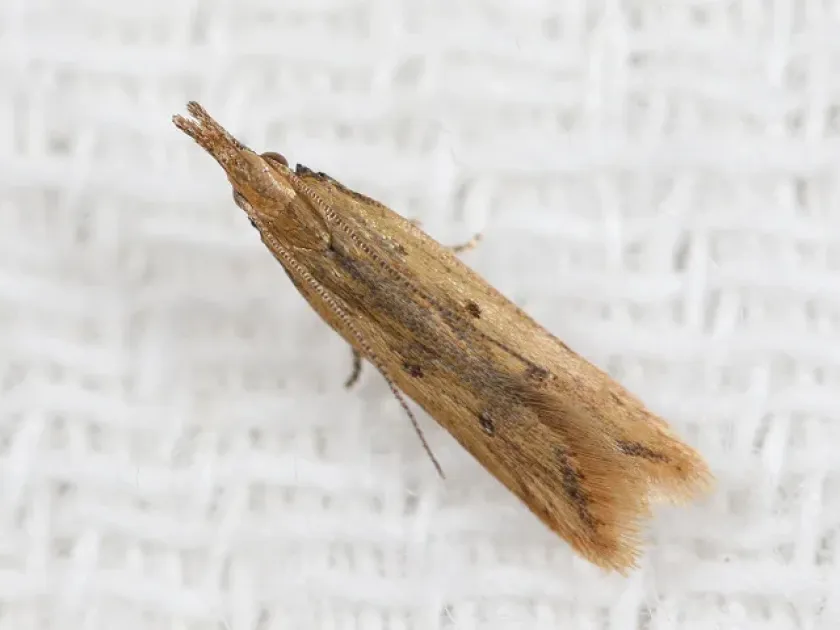
Description
How to identify
Dichomeris ferruginosa is a moth species belonging to the family Gelechiidae. As an adult, it is a small insect characterized by a wingspan ranging from 15 to 22 millimeters, typical for members of this family.
The forewings exhibit a distinct ferruginous (rusty-brown) coloration, which serves as a camouflage against withered leaves and soil. The hindwings are generally lighter in color and feature well-developed fringes.
The larvae are active and display a strong biting mouthpart. Depending on the instar, their color can shift from pale yellow to brownish-green, often with darker markings along the body segments.
Pupation occurs within small, silk-spun cocoons often found tucked inside folded leaf margins or near the base of the host plants, protecting the insect from environmental stresses.
Identification often requires careful examination of wing venation or genitalic structure, as many species within the Gelechiidae family share similar external appearances.
What it damages
This pest is primarily associated with cereal crops, including wheat and barley. It causes direct damage by feeding on the leaves, which can significantly affect the overall vitality of the plant.
Larval feeding patterns often involve skeletonizing the leaves, where the soft tissue is removed, leaving behind a network of veins. In severe cases, the entire leaf blade may be consumed.
Photosynthesis is severely hampered when a large percentage of the foliage is damaged, leading to stunted growth, reduced tillering, and lower biomass production.
If the infestation persists into the grain-filling stage, the pest may damage developing spikes, leading to grain shriveling and a substantial reduction in yield quality and quantity.
The presence of Dichomeris ferruginosa also opens the plant to opportunistic pathogens, as the wounds caused by larval feeding provide entry points for various fungal and bacterial infections.
When it appears
The pest typically emerges in late spring as temperatures begin to rise consistently above the threshold required for larval activity and moth flight.
There are generally one or more generations per season depending on the latitude and local microclimate. The first generation often coincides with the tillering and stem elongation phases of cereal crops.
Moths are nocturnal, with peak activity occurring during the twilight and night hours. Females lay eggs on the undersides of leaves or within the protective crevices of the plant stem.
Larval development is temperature-dependent and can take anywhere from three to five weeks. High summer temperatures may lead to a temporary decrease in larval activity.
Winter survival is achieved in the pupal or late larval stage, often hidden within plant debris or in the soil profile, ensuring the population persists into the next growing season.
Signs of infestation
The most visible sign of an infestation is the presence of webbed or folded leaves. Larvae create these shelters using fine silk threads to protect themselves while feeding.
The appearance of whitish or translucent patches on leaves indicates areas where the internal tissue has been consumed, leaving only the thin epidermis behind.
Accumulation of larval frass (excrement) within the webbed leaves or near the base of the plant is a clear indicator of active feeding by the pest population.
Stunted growth or chlorosis of the affected plants can be observed when the larval load is high, indicating that the plant's nutritional uptake is compromised.
Monitoring the fields at dusk using light traps can help entomologists detect the presence of adults before the larval damage becomes widespread and difficult to control.
Control measures
Effective crop management starts with crop rotation, which breaks the lifecycle of the pest by ensuring that host plants are not available in the same field consecutively.
Tilling the soil after harvest (stubble destruction) is a crucial mechanical control measure, as it exposes overwintering pupae to predators and adverse weather conditions.
Biopesticides utilizing entomopathogenic bacteria such as Bacillus thuringiensis provide an environmentally friendly option for targeting larvae without harming beneficial insect populations.
Chemical control should be employed only when monitoring reveals that the pest population has crossed the economic threshold. Systemic insecticides are generally effective during the early larval stages.
Integrated Pest Management (IPM) practices, including the maintenance of field borders free from wild grasses, help limit alternative host plants and prevent the buildup of pest populations near agricultural fields.
Taxonomy
- Latin name
- Dichomeris ferruginosa
- Order
- Lepidoptera (butterflies)
- Family
- Gelechiidae
- EPPO code
- DICMFE
Discussion
No discussions yet — be the first.