
Dichomeris acuminatus
Dichomeris acuminatus
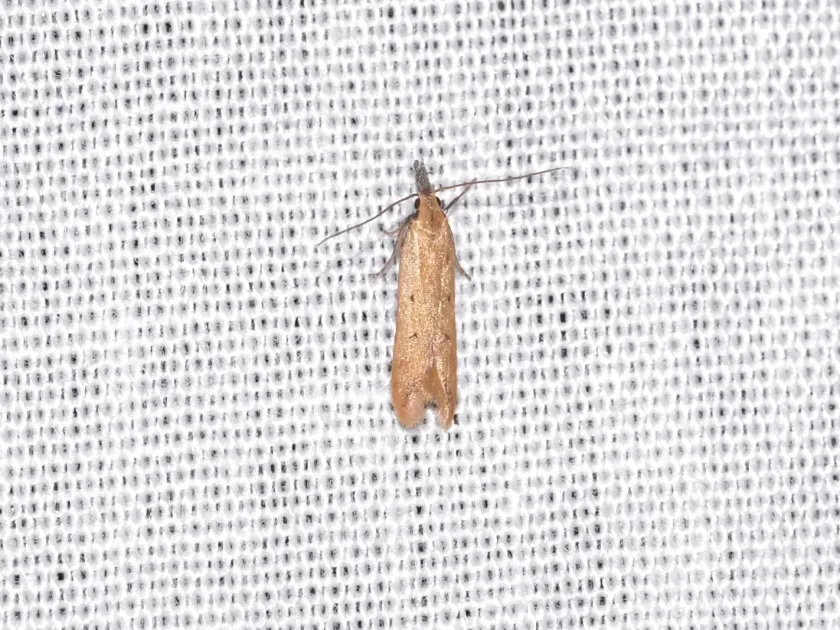
Description
How to identify
Dichomeris acuminatus is a species of moth belonging to the family Gelechiidae, known as a significant agricultural pest on several legume crops.
The adult moth features narrow, elongated wings with a distinctly pointed apex, a morphological trait that gives the species its scientific name.
The color of the adult moths is typically muted, ranging from brownish-gray to dark brown, which provides excellent camouflage against host plants.
The larvae are highly active caterpillars that possess a robust chewing mouthpart, allowing them to feed efficiently on plant tissue.
The insect undergoes a complete metamorphosis process, consisting of four distinct life stages: egg, larva (caterpillar), pupa, and adult.
What it damages
The primary hosts of this pest include various legume species, such as soybeans, cowpeas, alfalfa, and beans, which are critical for agricultural production.
Larvae cause damage by skeletonizing the foliage or consuming leaf edges, which directly reduces the plant's photosynthetic capacity and vigor.
In addition to foliage, the larvae may feed on reproductive parts, including floral buds and developing pods, leading to significant yield losses.
The larvae are known for webbed foliage, where they fold or roll leaves together with silk threads to create a protected feeding environment.
Severely infested plants exhibit stunted growth, deformed leaves, and reduced pod set, impacting both seed quality and total harvest quantity.
When it appears
Adult moths emerge in early spring, following a period of hibernation, and begin seeking suitable host plants for oviposition.
The peak activity of the larval stage typically occurs during the mid-summer months, often aligning with the reproductive stages of the host crops.
In warmer climates, the pest can complete multiple generations in a single growing season, allowing its population density to escalate rapidly.
Monitoring should be most intensive during the flowering and pod-filling phases, as this is when the crop is most vulnerable to damage.
The species survives the winter mainly in the pupal stage, hidden within plant debris or the upper layer of the soil profile.
Signs of infestation
The most visible indicator of infestation is the presence of webbed or folded leaves, which serve as a shelter for the feeding caterpillars.
Irregular holes or skeletonized leaf patches are common signs that the larvae have been feeding on the underside or edges of the foliage.
The presence of larval frass (excrement) trapped within the folded leaves is a definitive sign of active infestation in the field.
Prematurely dropped buds or damaged developing pods are often evidence that the pest has moved from foliage feeding to reproductive feeding.
Field scouting using light traps during evening hours can help identify the flight activity of adult moths before significant larval populations emerge.
Control measures
Cultural control measures, such as deep plowing after harvest, are effective in burying pupae and reducing the carry-over population for the next season.
Crop rotation and field hygiene are vital practices to minimize the localized build-up of the pest and break its lifecycle.
Chemical control involving systemic insecticides is recommended when larval populations exceed the economic threshold established for the specific region.
Effective application timing is critical, focusing on early larval stages before the caterpillars reach the larger, more protected instars inside leaf folds.
Biological control agents, including parasitic wasps and predatory insects, should be encouraged as part of an integrated pest management program.
Taxonomy
- Latin name
- Dichomeris acuminatus
- Order
- Lepidoptera (butterflies)
- Family
- Gelechiidae
- EPPO code
- DICMLO
Discussion
No discussions yet — be the first.