
Alfalfa moth
Stomopteryx detersella
Description
How to identify
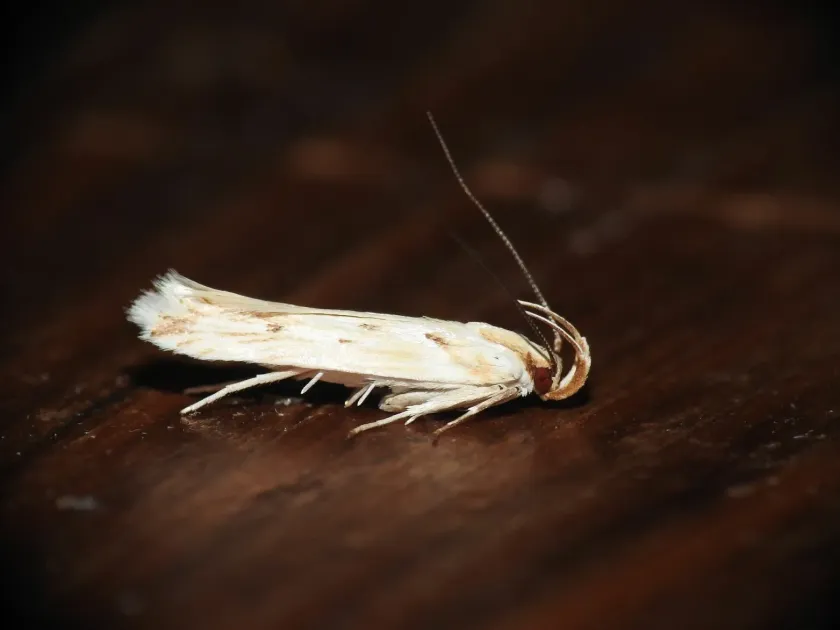
The alfalfa moth (Stomopteryx detersella) belongs to the order Lepidoptera and the family Gelechiidae. The adult moth is a small insect with a wingspan of approximately 12–15 mm, characterized by its brownish-grey wing coloration.
The larvae, or caterpillars, undergo several developmental stages, shifting from light yellow to greenish hues with a dark stripe along the back. The head capsule is typically dark brown or black, serving as a key diagnostic feature for field identification.
Pupae are found in the soil or within plant debris and are brown. Adults are nocturnal or crepuscular, often requiring light traps or sweep nets for accurate detection during field scouting activities.
The life cycle is highly dependent on environmental conditions, with warmer climates significantly shortening the development time of generations. Rapid population growth is common in dry, hot summer conditions.
Proper identification is crucial, as morphological similarities exist with other gelechiid species. Agronomists should verify the species through entomological examination to ensure targeted management strategies are applied.
What it damages
Alfalfa (Medicago sativa) is the primary host for this pest. The larvae feed on foliage, leading to substantial reductions in photosynthetic capacity and overall biomass production of the crop.
Young larvae initially skeletonize the leaves, while later instars consume the entire leaf lamina. This feeding behavior disrupts plant metabolism and inhibits the accumulation of nutrients in the root system, weakening the stand.
The damage extends to reproductive structures, including buds and flowers, which significantly reduces seed yield potential. Persistent feeding leads to stunted growth and reduced vigor of the alfalfa plants.
The presence of webbing and frass inside the plant canopy reduces the forage quality and overall palatability for livestock. This contamination can lead to significant economic losses in hay production.
Severe infestations may result in complete loss of leaf area, turning the fields yellowish and causing plant death in extreme cases. This necessitates timely intervention to prevent long-term stand degradation.
When it appears
Adult flight typically begins in late spring when temperatures consistently rise above 15-18 degrees Celsius. The moth is active throughout the summer, often overlapping with the growth phases of various alfalfa cuts.
Depending on the region, the moth can complete two to three generations per season. Monitoring is most critical during the pre-harvest periods of the first and second cuts to mitigate infestation levels.
Overwintering occurs as a pupa within the soil or under crop residue. Spring warming triggers adult emergence, signaling the start of the primary infestation cycle for the new growing season.
Summer generations develop rapidly, often necessitating scouting every 7 to 10 days. The intensity of activity usually correlates with weather patterns, peaking during extended dry spells.
As temperatures drop in the autumn, the pest enters diapause. Field sanitation post-harvest is a vital step in reducing the overwintering success of the population for the following year.
Signs of infestation
The earliest signs of infestation are small, light-colored spots on the leaves caused by larval mining. Over time, leaves become curled and webbed together, forming protective structures for the larvae.
Yellowing or withering of shoot tips is a common indicator of high pest density. The fields may appear prematurely scorched, especially when larval populations are dense across the site.
Observing a flurry of small moths flying up when walking through the field is a strong sign of adult activity. This warrants an immediate inspection of the plants to count larval presence.
Webbing becomes more visible during early morning dew, often trapping dust or soil particles within the canopy. Close inspection of these webbed clusters usually reveals the presence of larvae or their excrement.
Poor quality forage at harvest, characterized by high debris content and matted plant tissues, is a retrospective sign of significant alfalfa moth activity that may have gone unnoticed earlier.
Control measures
Cultural control is centered on deep plowing after the final harvest, which buries pupae and disrupts the overwintering cycle. Proper rotation with non-legume crops is also highly recommended.
Biological control, such as the use of Bacillus thuringiensis, offers an effective way to manage young larvae while preserving beneficial insects and pollinators within the ecosystem.
Chemical control is applied only when the economic injury level is reached. Recommended insecticides include pyrethroids or organophosphates, applied according to local regulations and pre-harvest intervals.
Resistance management requires rotating insecticides with different modes of action. Application should occur during evening hours to improve efficacy and reduce the degradation caused by solar radiation.
Integrated Pest Management (IPM) using pheromone traps allows for precise timing of interventions. This minimizes unnecessary pesticide usage while ensuring the protection of the alfalfa crop from significant losses.
Taxonomy
- Latin name
- Stomopteryx detersella
- Order
- Lepidoptera (butterflies)
- Family
- Gelechiidae
- EPPO code
- STOPDE
Discussion
No discussions yet — be the first.