
Carpatolechia fugacella
Carpatolechia fugacella
Description
How to identify
Carpatolechia fugacella belongs to the Gelechiidae family, commonly known as gelechiid moths, within the order Lepidoptera.
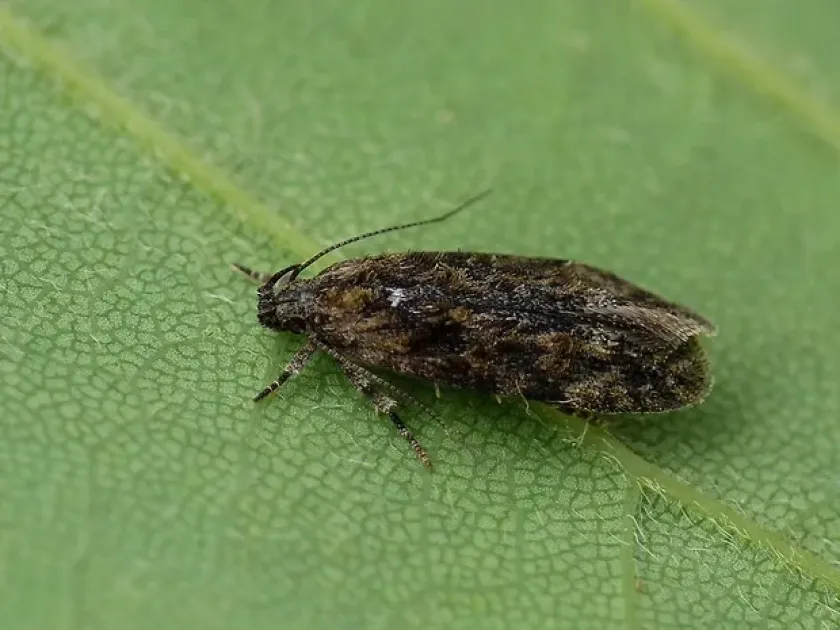
Adult moths are small, typically with a wingspan of approximately 12-14 mm, featuring cryptic coloration that allows them to blend in with tree bark.
The larvae are typically slender and exhibit a caterpillar body structure, changing color during their growth phases from yellowish to a greener tint.
Pupae are generally found within protected environments, such as tightly rolled leaves or crevices in the bark, where they complete their metamorphosis.
This species is widely recognized as a host-specific herbivore primarily associated with maple trees in forest and urban environments.
What it damages
The primary hosts for Carpatolechia fugacella are various species of the genus Acer, including field maple and Norway maple.
Larvae feed on the leaf parenchyma, often leaving only the veins intact, which significantly impairs the tree's photosynthetic efficiency.
The caterpillars create characteristic leaf-rolling structures, utilizing silk to bind leaves, which provides them with shelter and a constant food source.
Heavy infestation leads to widespread foliage discoloration, leaf drop, and a significant reduction in the aesthetic value of the trees.
Stunted growth of young shoots and buds is frequently observed in cases of severe infestation, impacting the overall health and vigor of the host plant.
When it appears
Adult moths are typically active in the spring and early summer, when they mate and lay eggs on the host leaves.
The larval stage usually occurs during the early to mid-summer period, representing the phase of most intensive feeding damage.
Pupation takes place throughout the summer, after which a new generation of moths may emerge, depending on the climatic region.
Hibernation is a key strategy for this species, with individuals typically overwintering as adults or pupae in protected niches.
Seasonal weather patterns, especially temperature fluctuations, play a critical role in determining the timing and intensity of the pest's emergence each year.
Signs of infestation
One of the most obvious indicators is the presence of rolled or folded leaves bound together by thin silk webbing.
Fecal matter accumulation (frass) on the surfaces of leaves located beneath the infested areas is a common sign of caterpillar activity.
Leaves showing irregular, skeletonized patterns where soft tissue has been consumed are indicative of early to mid-instar larval feeding.
A general appearance of thinning foliage and chlorosis (yellowing) often indicates that the tree is under significant stress due to larval pressure.
Spotting adult moths on tree trunks during twilight hours can signal the onset of the breeding season for this pest.
Control measures
Mechanical removal and destruction of infested leaves and rolled structures are highly recommended for smaller ornamental trees.
Biological control methods, particularly the application of Bacillus thuringiensis sprays, are effective against larvae while minimizing environmental impact.
Targeted chemical applications should be reserved for outbreaks where the pest density exceeds economic or aesthetic thresholds.
Maintaining tree vigor through proper irrigation and fertilization reduces the tree's susceptibility to long-term damage from defoliating pests.
Encouraging natural predators, such as insectivorous birds and parasitic wasps, can provide a sustainable way to keep moth populations in check.
Taxonomy
- Latin name
- Carpatolechia fugacella
- Order
- Lepidoptera (butterflies)
- Family
- Gelechiidae
- EPPO code
- KARPFG
Discussion
No discussions yet — be the first.