
Currant bud moth
Argolamprotes
Description
How to identify
The Currant bud moth, scientifically known as Argolamprotes micella, is a small lepidopteran insect belonging to the Gelechiidae family. With a wingspan of roughly 12 to 14 mm, these moths are often difficult to spot due to their size and coloration.
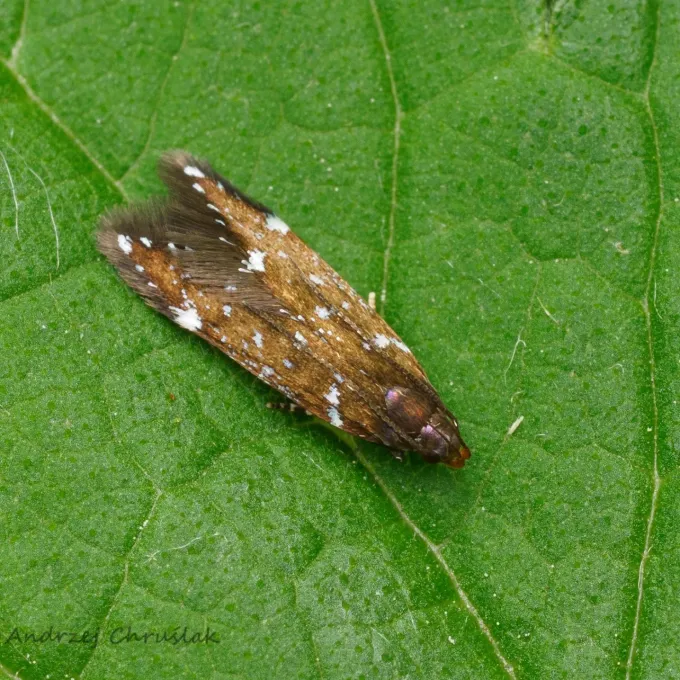
Adult moths feature dark forewings with a metallic sheen and distinct white patches. The hindwings are generally paler, characterized by long fringes along the edges, which is a common morphological trait for moths within this family.
During their larval stage, the caterpillars transition through several instars. Initially pale, they gradually develop a pinkish-brown hue with a pronounced dark head capsule, making them visible to careful observers examining the buds and shoots.
These insects overwinter as young larvae within robust cocoons. They construct these protected shelters inside dry leaf litter, bark crevices, or at the base of buds, allowing them to withstand harsh winter temperatures effectively.
The moths are primarily nocturnal and crepuscular, meaning they are most active during twilight hours. This behavior explains why they are rarely seen by gardeners during the day unless specifically monitoring with pheromone traps.
What it damages
The primary hosts for the Currant bud moth include red and white currants, although it is occasionally found on black currant and gooseberry bushes. The damage is most severe during the early spring season.
Young larvae emerge as the weather warms and bore into the plant's buds. By consuming the inner contents of these buds, they destroy the developing flowers and foliage, leading to significantly reduced yields.
Beyond bud consumption, later stages of the larvae may tunnel into the base of leaf petioles or young shoots. This feeding habit causes localized wilting and stunted growth, negatively impacting the vigor of the host plant.
Infestations are often cumulative. If left unchecked over multiple seasons, the weakened bushes become susceptible to secondary infections, such as fungal pathogens and bacterial rots, which further degrade the plant health.
In cases of high population density, the sheer volume of destroyed buds can lead to substantial economic loss for berry growers. Because the damage occurs early in the season, the plant often lacks the energy to compensate for the lost reproductive structures.
When it appears
The life cycle of the Currant bud moth is synchronized with the phenology of its host plants. Larval emergence typically coincides with the bud-swell stage of the currant bushes during mid-spring.
Active feeding occurs throughout the bud-break and flowering stages. This is the most critical window for intervention, as the caterpillars are localized and highly active within the immediate vicinity of the budding tissues.
The adult flight period generally begins in late May and continues throughout June. During this phase, females mate and deposit eggs on the undersides of leaves or near future budding sites for the following year.
The summer generation of larvae feeds on foliage, developing slowly before finding appropriate overwintering sites as temperatures begin to drop in the autumn.
The species completes one generation per year. By overwintering as early-stage larvae, they ensure that the population remains established and ready to exploit the earliest growth stages of the host plants in the following spring.
Signs of infestation
The earliest and most reliable sign of an infestation is the presence of dried-up, non-opening buds in the spring. These 'blind' buds often show a small exit hole where the larva has previously emerged or fed.
Wilting of new shoots or individual leaves is a secondary symptom. When observing such damage, carefully inspecting the affected stem often reveals tunnels or signs of larval feeding inside the tissue.
Fine dark frass, which looks like small grains of sand or dirt, deposited near the base of buds is a definitive indicator of recent larval activity and feeding within that area.
The presence of fine silk webbing between leaves or around damaged buds serves as an anchor for the larvae and is a common visual cue of their residence on the plant.
Light traps or pheromone lures deployed during the June flight period are highly effective for detecting adult moths and predicting the potential severity of the infestation for the upcoming season.
Control measures
Cultural control is the cornerstone of management. Removing and burning infested plant debris, such as pruned branches and fallen leaves, significantly reduces the number of successful overwintering larvae.
Chemical treatments should be timed precisely to target the larvae during their emergence phase, before they have the chance to bore deep into the protective tissues of the buds.
Biological control methods, such as utilizing Bacillus thuringiensis, offer a safer alternative for managing populations during the flowering period, protecting essential pollinators from harm while suppressing the pest.
Regular field scouting in early spring is vital. Early identification of damage allows for targeted localized control, minimizing the need for broad-spectrum insecticide applications across the entire plantation.
- Sanitation: Destroying plant debris to eliminate overwintering sites.
- Pruning: Removing heavily infested branches during the dormant season.
- Biologicals: Applying microbial insecticides when larvae are active.
- Monitoring: Using pheromone traps to track flight patterns and timing.
Taxonomy
- Latin name
- Argolamprotes
- Order
- Lepidoptera (butterflies)
- Family
- Gelechiidae
- EPPO code
- ARGLSP
Discussion
No discussions yet — be the first.