
Apodia bifractella
Apodia bifractella
Description
How to identify
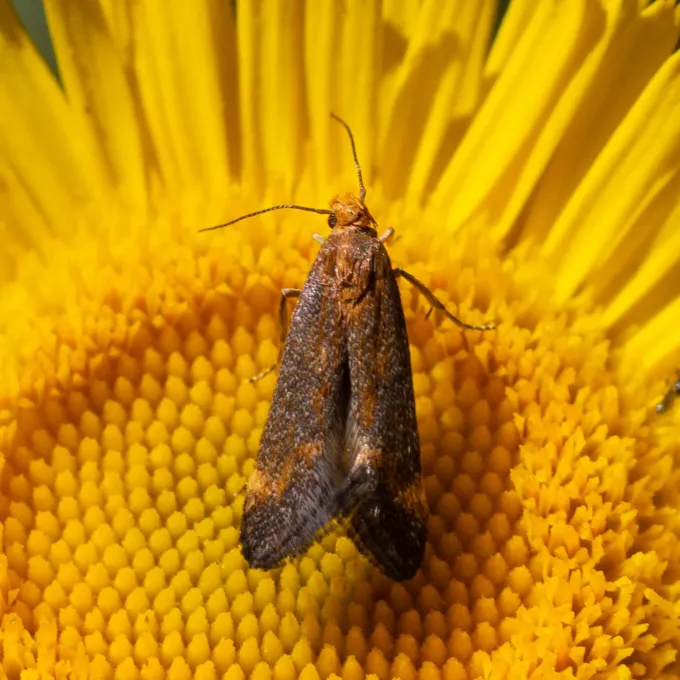
Apodia bifractella is a species of moth belonging to the order Lepidoptera and the family Gelechiidae (twirler moths). The adult is a small moth with narrow, elongated wings characteristic of this family.
The wingspan of the adult moth is approximately 10–14 millimeters. The forewings are typically brownish with darker patterns or spots, which provide excellent camouflage against the host plant's inflorescences.
The larva has a typical appearance for moth caterpillars, reaching a length of up to 10 millimeters, and is usually pale or grayish-yellow in color. It leads a cryptic lifestyle, making it difficult to detect during the early stages of infestation.
The development follows a complete metamorphosis. The life cycle is closely tied to the flowering and fruiting period of the host plants, ensuring larvae have direct access to nutrient-rich plant organs.
Systematically, this species is considered a highly specialized phytophage, preferring specific members of the Asteraceae family, which makes it a locally significant pest in areas where these crops are cultivated.
What it damages
The primary food source for Apodia bifractella are plants from the Asteraceae family. It causes particular harm to members of the genera Inula, Pulicaria, and other composite plants.
The larvae feed on the internal tissues of the flower heads and the developing seeds. They penetrate the inflorescence, destroying reproductive organs and leading to a sharp decrease in seed yield.
In industrial cultivation of medicinal or ornamental composite crops, this pest can lead to the loss of a significant portion of the marketable seed harvest.
Damage to the flower heads also creates entry points for secondary infections, including fungal diseases and bacterial rots, which thrive in the damaged tissues and larval excrement.
Beyond direct destruction of seeds, the pest disrupts the formation of high-quality planting material, negatively impacting future crop cycles.
When it appears
The adult activity period occurs in mid-to-late summer, coinciding with the peak flowering phase of host plants. The flight of the moths can last for several weeks.
Eggs are laid directly on or near the flower heads. Upon hatching, the larvae immediately bore into the tissues of the buds or the developed flower heads.
The species usually overwinters as a larva or pupa in plant debris or in the soil near the base of the stem. Under favorable conditions, one generation completes its cycle in about a month.
The risk of infestation increases during hot and dry weather, which facilitates rapid larval development and reduces the host plant's ability to resist damage.
Monitoring for the pest should be conducted during the budding and flowering phases when the larvae are most vulnerable to external factors.
Signs of infestation
The first sign of infestation is the presence of small entry holes on the surface of the flower heads, often surrounded by larval frass (excrement).
Upon opening the flower head, one can detect the caterpillar, which often creates silk webbing inside the tissues. Damaged parts of the flower head frequently wither, turn brown, and become deformed prematurely.
The overall appearance of the inflorescence becomes unkempt if heavily infested; petals may fall off early, and seeds in the center of the head may be underdeveloped or completely eaten.
- Deformation of flower heads and premature shedding.
- Presence of silk threads inside the flower head.
- Accumulation of dark larval frass on the plant surface.
- Uneven maturation of seeds within the head.
For accurate diagnosis, it is recommended to dissect several sample flower heads to confirm the presence of larvae within the tissue.
Control measures
Agro-technical methods of control are the most effective and eco-friendly approaches. Thorough removal and destruction of crop residues after the growing season is highly recommended.
Deep autumn plowing of the soil helps destroy pupation sites, significantly reducing the pest population for the following season.
Crop rotation and maintaining spatial isolation between composite crops and wild relatives help prevent the migration of the pest into cultivated fields.
In cases of high infestation, the use of systemic insecticides approved for specific crops at the onset of the flowering phase may be necessary.
Biological control options, such as the use of entomopathogenic fungi or the release of natural predators (entomophagous insects), show promise in integrated pest management systems.
Taxonomy
- Latin name
- Apodia bifractella
- Order
- Lepidoptera (butterflies)
- Family
- Gelechiidae
- EPPO code
- APDIBI
Discussion
No discussions yet — be the first.