
Anacampsis
Anacampsis
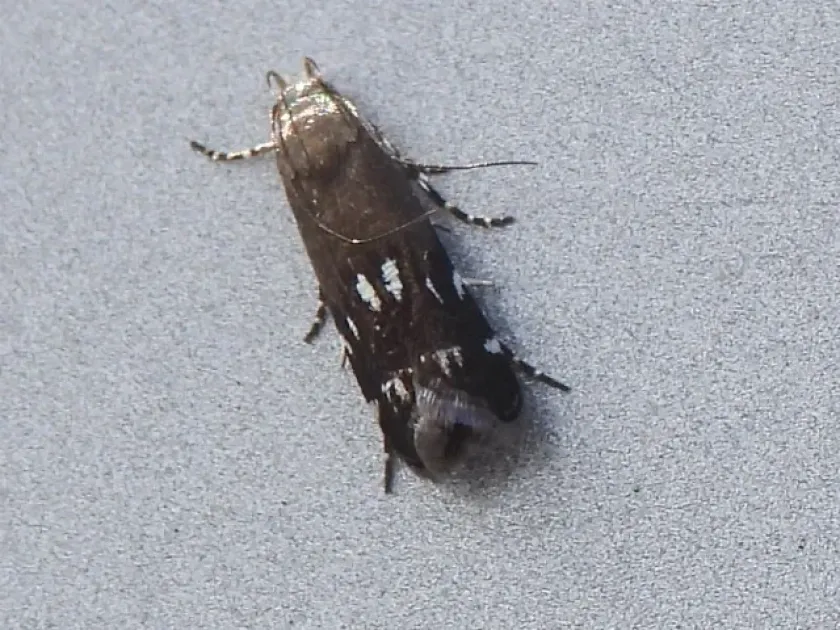
Description
How to identify
The genus Anacampsis belongs to the family Gelechiidae (twirler moths) in the order Lepidoptera. These are small moths with narrow wings, typically having a wingspan of 12–18 mm.
Adult moths usually display gray-brown or ochre colorations, providing excellent camouflage against tree bark. The larvae (caterpillars) possess a cylindrical body with distinct thoracic legs and a well-developed head.
Specific identification within the genus is challenging due to the morphological similarity of the adults. Agronomists often rely on the examination of genital structures or larval morphological features for precise classification.
When disturbed, the larvae exhibit a rapid escape response, often dropping from the leaf surface using a silk thread to reach the lower canopy or the ground.
The life cycle involves complete metamorphosis, progressing through four distinct stages: egg, larva, pupa, and adult.
What it damages
The pest primarily targets deciduous woody plants. Common hosts include elms, beeches, as well as various fruit trees and ornamental shrub species.
The caterpillars are foliage feeders. They typically consume the soft parenchyma tissue of leaves, leaving behind the vein structure, which leads to skeletonized leaf appearance.
Outbreaks of this species can result in severe defoliation of trees, which poses a significant threat to young saplings and weakened trees in nurseries.
Damaged foliage loses its photosynthetic capacity, reducing the growth rate of the tree and lowering its overall tolerance to winter cold and environmental stress.
In some instances, larvae feed on developing buds at the start of the growing season, which significantly impacts crown development and the potential yield of fruit trees.
When it appears
The flight period for the first generation of moths typically occurs in late spring or early summer, coinciding with the flushing of new leaves and bud development.
Larvae are most active during the first half of the summer, which represents the critical window for implementing effective control measures.
The species typically overwinters as a pupa, enclosed within a protective silk cocoon hidden in bark crevices, leaf litter, or the top layer of the soil.
The pest's biological rhythm is strictly synchronized with the phenological stages of its host plant, ensuring that larvae emerge when food resources are most abundant.
The number of generations per year varies depending on the geographic climate, with warmer regions supporting two or more generations annually.
Signs of infestation
One of the earliest signs of infestation is the presence of curled or rolled leaves, which the caterpillars tie together with silk to create protective shelters.
When inspecting the canopy, one can observe areas of "skeletonized" leaves, characterized by a translucent network of veins against the remaining green tissue.
The presence of frass (small dark excrement pellets) inside the silken leaf nests or scattered on leaves below is a clear indicator of active caterpillar feeding.
Wilting of shoot tips resulting from larval damage to apical buds is another common symptom of an ongoing infestation.
- Deformed and rolled leaf blades.
- Silken webbing within leaf folds.
- Excrement pellets on leaves.
- Severe defoliation (skeletonization).
- Pupal cocoons within bark crevices.
Control measures
Pheromone traps are highly effective for monitoring adult moth populations, allowing agronomists to determine the optimal timing for protective interventions.
Biological insecticides containing Bacillus thuringiensis are recommended for targeting young larvae, as they provide effective control while being compatible with integrated pest management (IPM).
In cases of severe infestation, chemical treatments including pyrethroids, organophosphates, or neonicotinoids may be necessary, provided that application regulations are strictly followed.
Cultural practices such as cleaning old, loose bark from tree trunks to eliminate overwintering sites and removing leaf litter in autumn significantly reduce pest pressure.
Encouraging the presence of natural enemies, such as ichneumonid wasps that parasitize the larvae and pupae, is a key component of long-term sustainable control.
Taxonomy
- Latin name
- Anacampsis
- Order
- Lepidoptera (butterflies)
- Family
- Gelechiidae
- EPPO code
- ANKSSP
Discussion
No discussions yet — be the first.