

Disease · fungal · affects Alfalfa, Arabica coffee, Asparagus
Especially harmful
Fusarium wilt
Fusarium spp.
Description
Symptoms
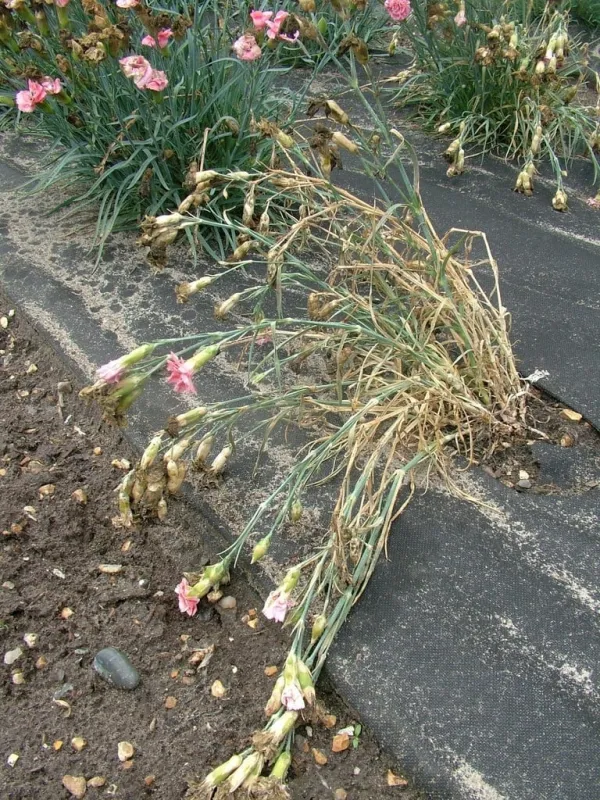
The first symptom is usually yellowing of lower leaves, which eventually leads to wilting. This often happens on one side of the plant or leaf first, which is a characteristic feature of vascular wilting.
The root system becomes brown and decays, showing signs of dry rot. In onion and garlic, the basal plate becomes soft, and the roots may disappear entirely, causing the plant to pull easily from the ground.
A cross-section of the stem or root reveals a distinct browning or darkening of the vascular bundles. This internal discoloration confirms the presence of the pathogen inside the vascular system.
Under humid conditions, a whitish or pinkish fungal mycelium may appear on the surface of stems or damaged areas. This is the sporulation stage, indicating that the fungus is ready to spread further.
Stunted growth, leaf curling, and overall wilting during the hottest parts of the day, followed by recovery at night (in early stages), are common indicators of the disease.
Pathogen
The causative agent of Fusarium wilt is the Fusarium fungus genus (specifically species such as F. oxysporum, F. solani, F. graminearum). These are soil-borne pathogens capable of surviving in the soil for years as mycelium or resistant spores.
This is a systemic disease where the fungus colonizes the vascular system. By obstructing the xylem, it disrupts the upward flow of water and nutrients, eventually causing the plant to wither and collapse.
The fungus produces mycotoxins, such as fusaric acid, which contribute to tissue necrosis and plant toxicity. These substances interfere with the plant's metabolic processes and accelerate cell death.
Fusarium affects a vast range of crops, including onion, garlic, celery, peanuts, asparagus, oats, fodder beet, and Indian mustard. Its ability to infect various hosts makes it a global agricultural challenge.
Infection spreads through infested soil, contaminated seeds, irrigation water, and infected plant debris. Wind-borne spores and pests also act as vectors, moving the pathogen to new locations.
Conditions for development
Fusarium thrives in warm temperatures, typically between +22°C and +28°C. These conditions trigger rapid fungal growth and high rates of infection in susceptible crops.
High soil moisture promotes the spread of the pathogen, though some Fusarium species can also infect plants under water-stressed conditions if the plant's natural defense is compromised.
Soil pH plays a critical role, as acidic soils are generally more favorable for the development of the fungus. Excessive nitrogen application can also create conditions that encourage the disease.
Poor crop rotation is the primary reason for high pathogen levels in fields. Without rotating non-host crops, the density of Fusarium spores in the soil increases significantly over time.
Mechanical damage to roots caused by nematodes, insects like wireworms, or improper cultivation allows the fungus to enter the plant tissues more effectively, bypassing natural barriers.
Why it matters
The harm caused by Fusarium is immense, often leading to yield losses of 50% or more in heavy infestations. In severe cases, it can cause the total loss of a crop in specific patches of the field.
For vegetables and root crops, Fusarium causes post-harvest rot. Produce that appears healthy at harvest may deteriorate rapidly in storage, leading to significant economic losses for producers.
Product quality is severely compromised; seeds may become shriveled, and the overall plant vigor is reduced, leading to poor marketability and lower nutritional value of the harvested produce.
Fusarium can contaminate crops with mycotoxins, which are harmful to humans and livestock if consumed. This makes contaminated harvests unsafe and potentially rejects them from supply chains.
The disease drains the plant's resources, limiting growth and development, which inevitably reduces farm productivity and increases costs due to the need for continuous soil remediation.
Protection
Implementing a strict crop rotation strategy is the most effective way to manage soil-borne inoculum. Avoid planting susceptible species in the same field for at least 4 to 5 years.
Seed treatment with authorized fungicides is essential to protect young seedlings from early-stage infection. Always use high-quality, certified, and disease-free seeds.
Adjusting soil pH to a neutral or slightly alkaline range through liming can inhibit fungal growth. Balanced fertilization, especially with potassium, strengthens the plant's overall resistance.
Remove and destroy all infected plant debris after harvest to prevent the fungus from overwintering. Controlling soil pests is equally important to minimize the entry points for the pathogen.
- Selecting resistant varieties and cultivars for cultivation.
- Applying biological control agents like Trichoderma species.
- Avoiding excessive use of nitrogenous fertilizers.
- Monitoring fields regularly for early symptoms to contain localized outbreaks.
- Using systemic fungicides as a preventative or curative measure when necessary.
In brief
60
Affects crops
Biology
Pathogens and affected parts
Pathogens
Fusarium· fungus
Fusarium solani· fungus
Fusarium oxysporum· fungus
Fusarium semitectum· fungus
Fusarium culmorum· fungus
Fusarium redolens· fungus
Fusarium pallidoroseum· fungus
Fusarium moniliforme· fungus
Fusarium graminearum· fungus
Fusarium nivale· fungus
Fusarium sporotrichiodes· fungus
Fusarium lateritium· fungus
Affected plant parts
whole plantrootstemseedearbulbleaffruitflower
Content graph
Affects crops · 60
AlfalfaArabica coffeeAsparagusAvocadoBananaBlack walnutCarnationCattleyaCeleryChickpeaCitrusCoconut palmCoffea canephoraCommon beanCommon hopCommon oatCommon sunflowerCommon walnutCottonDahliaDate palmDouglas firExacum affineField mintField peaFlaxFlaxFodder beetGarlicGerbera jamesoniiHempImpatiensIndian mustardIvy-leaved pelargoniumJerusalem artichokeLentilLiquidambarMangoOnionPapayaPeachPeanutPearPelargoniumPepperPeppermintPersian cyclamenPlatanusPoinsettiaRadishRiceScented geraniumSoybeanSpearmintStrawberrySweet potatoTurnipWatermelonWinter barleyWinter rapeseed
Reference
Connections · Fusarium wilt
Most often together:
Marketplace
Products · 6695































Community
Discussion
No discussions yet — be the first.