
Exacum affine
Exacum affine Balf. f.
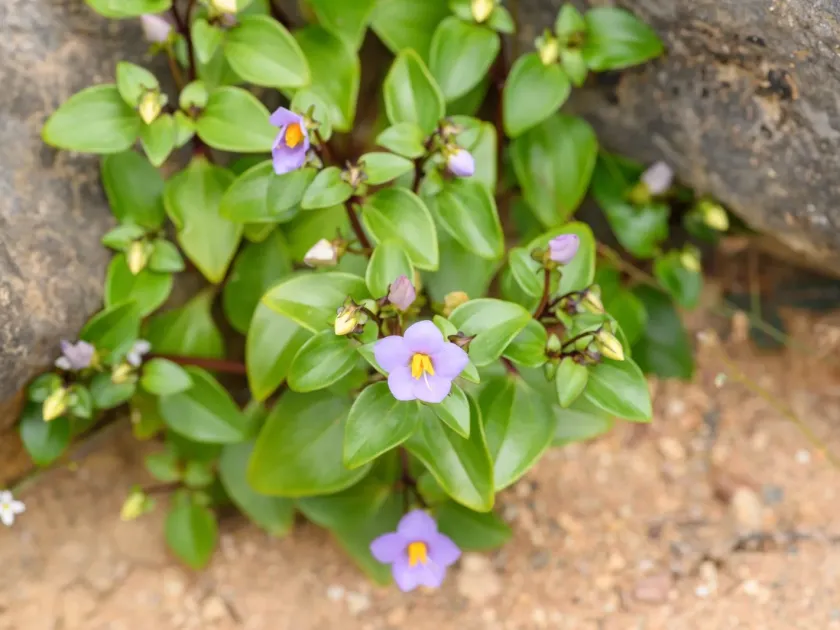
Description
Sowing dates
Exacum affine, commonly known as the Persian violet, is a charming biennial or annual plant belonging to the Gentianaceae family. For cultivation, seeds are typically sown in late winter, from January to March, in a well-draining seed-starting mix.
Since the seeds are extremely small, they should be sown on the surface of the moist medium and pressed gently without being buried. Keeping the sowing tray covered with plastic or glass is essential to maintain high humidity during the germination process.
A consistent temperature between 20 and 22 degrees Celsius is necessary for successful germination. Light is also a key factor; although the seeds do not require strong light to germinate, the seedlings should be provided with bright, indirect light immediately after emergence.
Pricking out occurs when the seedlings develop their first true leaves. Transplanting them into individual containers helps encourage a strong root system, which is vital for the plant to sustain its heavy bloom in the later stages of development.
Professional growers often use supplemental lighting to ensure uniform plant growth and prevent the seedlings from becoming leggy. This rigorous approach in the nursery stage leads to a higher quality product with a more compact and aesthetically pleasing habit.
Growing requirements
Exacum affine thrives in bright, indirect light. Direct sunlight can scorch its delicate foliage, whereas insufficient light causes the plant to lose its compact structure and produce fewer blooms. East-facing windows are usually ideal for this species.
The soil should be a porous, nutrient-rich mix with a slightly acidic to neutral pH. Proper drainage is non-negotiable for Exacum, as waterlogged soil quickly leads to root oxygen deprivation and subsequent death of the root system.
Ideal temperatures range from 16 to 20 degrees Celsius. While it can handle warmer weather, Exacum dislikes dry air and heat waves; therefore, maintaining a comfortable ambient humidity through regular misting is beneficial for its longevity.
Watering should be balanced—keeping the substrate moist but allowing it to dry out slightly between waterings. Overwatering is the most common mistake, especially during cooler or overcast weather when the plant’s rate of transpiration decreases.
Pinching the tips of young stems is a standard agrotechnical practice to promote bushiness. By removing apical dominance, growers encourage the development of lateral shoots, resulting in a more floriferous plant that looks much fuller and more attractive.
Main diseases and pests
Fungal diseases are the primary threat to Exacum affine, usually stemming from poor ventilation and excessive soil moisture. These pathogens can cause rapid degradation of the plant's health, making preventative measures essential.
Rhizoctonia and Pythium root rot are among the most destructive diseases, often causing the stem base to darken and the plant to collapse. Proper irrigation management and the use of sterile growing media are the best defenses against these soil-borne pathogens.
Botrytis cinerea, also known as gray mold, often affects leaves and flowers in humid conditions. Removing infected debris and improving air circulation around the plants can effectively curb the spread of this mold within the growing area.
Other serious threats include Southern Sclerotium rot, Fusarium wilt, and Phytophthora, which can cause internal decay of the stems and roots. Stem necrosis can also appear if the plant's structural integrity is compromised by poor maintenance or environmental stress.
Pests such as spider mites and aphids are frequently found on Exacum. Early detection through regular inspections is key; using insecticidal soaps or systemic treatments can help keep the populations in check, ensuring the plant remains healthy and aesthetic.