
Arabica coffee
Coffea arabica L.
Description
Sowing dates
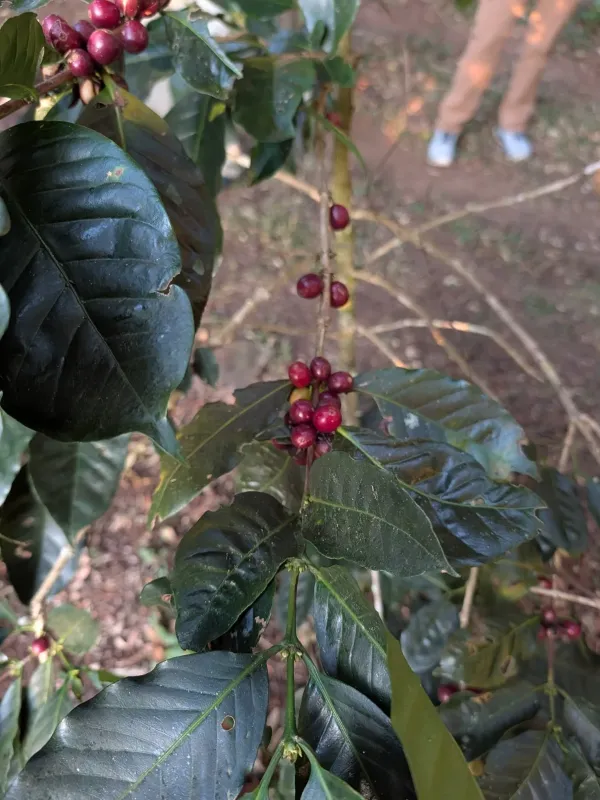
Arabica coffee (Coffea arabica L.) is a perennial evergreen shrub belonging to the Rubiaceae family. Originating from the Ethiopian Highlands, it is the most widely cultivated coffee species globally.
The plant is typically propagated from seeds. Because coffee seeds have a short shelf life, they must be sown soon after harvesting into well-drained, nutrient-rich nursery beds.
Optimal germination requires consistent temperatures between +25°C and +28°C. Seedlings usually emerge within two months and require careful monitoring and shading during their early development.
Once the seedlings develop their first true leaves, they are transplanted into individual containers. Young plants are sensitive to intense light and require shade to avoid leaf scorch.
In commercial plantations, seedlings are transplanted to the field at about 12–18 months of age. Spacing depends on the specific variety and the intensity of the agricultural system used.
Growing requirements
Arabica coffee thrives in tropical climates, preferring regions with stable temperatures between +18°C and +24°C. It is significantly more sensitive to frost and heat extremes than other species.
The ideal soil for coffee farming is a deep, fertile, and well-drained loam. Water stagnation is extremely harmful to the root system, often leading to rapid plant decline and death.
The crop requires consistent rainfall or effective irrigation throughout the growing season. A brief dry period can actually stimulate uniform flowering, provided the water supply is adequate.
Altitude plays a crucial role in the quality of the harvest. Higher altitudes provide cooler conditions, which slow down fruit maturation, leading to more complex flavor profiles in the coffee beans.
Shade-grown coffee is a common practice that protects the plants from harsh sun and prevents over-ripening. This technique promotes healthier trees and more sustainable plantation management.
Yield
Coffee trees typically begin to produce a significant harvest between 3 and 5 years after planting. A healthy, well-maintained tree can remain productive for up to 30 years.
Average yields vary significantly based on variety, altitude, and soil fertility. On average, a mature tree may yield 0.5 to 2 kilograms of processed green beans per season.
Because coffee plants do not ripen all their fruit simultaneously, harvesting is a multi-pass process. This biological trait necessitates high labor intensity throughout the harvest season.
The fruit, known as a coffee cherry, contains two seeds. Efficient management of nitrogen, phosphorus, and potassium is essential to ensure consistent yields and fruit quality.
Post-harvest processing is the final stage that defines the bean's quality. Whether using the wet or dry method, consistency is key to meeting international market standards.
Main diseases and pests
Arabica coffee is susceptible to various pathogens that can cause devastating economic losses. The most notorious threat is coffee leaf rust (Hemileia vastatrix), which causes severe defoliation.
Other significant diseases that threaten the vitality of coffee plantations include:
- Anthracnose and Cercospora leaf spot;
- Rhizoctonia and Gray mold;
- Fusarium wilt and various leaf blights.
Pests are also a constant threat. The root-knot nematode (Meloidogyne spp.) is particularly dangerous, as it attacks the root system, causing stunted growth and reducing the plant's nutrient uptake.
Effective management requires a combination of resistant varieties, regular field inspection, and timely application of fungicides. Integrated pest management (IPM) is standard in modern farms.
Sanitation practices, such as pruning infected branches and controlling moisture levels, are essential for preventing disease outbreaks and maintaining overall plantation health.
Harvesting
Harvesting is the most critical and labor-intensive operation in coffee production. In most high-quality plantations, hand-picking is preferred to ensure only ripe cherries are selected.
The «picking» method involves multiple passes throughout the season to harvest only deep red, mature cherries. This maximizes quality but increases the cost of labor significantly.
The «stripping» method involves removing all cherries from the branch at once. While more efficient, it often includes unripe or overripe fruit, requiring rigorous sorting afterward.
Immediate post-harvest processing (depulping) is vital to prevent fermentation and spoilage. The time elapsed between harvest and depulping can drastically affect the cup quality.
Drying the beans is the final critical step before export. Beans must be dried to a moisture content of approximately 10–12% to ensure stability and prevent fungal growth during storage.