

Reference · Crops
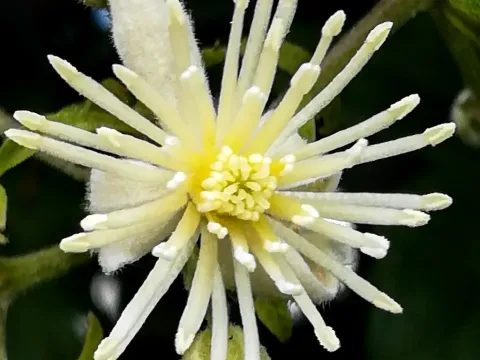
Clematis
Clematis L.
Planting clematis in open ground is best performed in spring, during April or May, or in autumn in September, depending on the climatic zone. Plants in containers can be transplanted throughout the growing season, avoiding extremely hot days.
48
items
What the section contains
 Alpine clematis
Clematis alpina (L.) Mill.
Alpine clematis
Clematis alpina (L.) Mill.
 Armand clematis
Clematis armandii Franch.
Armand clematis
Clematis armandii Franch.
 Clematis aethusifolia
 Turcz.
Clematis aethusifolia
Clematis aethusifolia Turcz.
 Clematis afoliata
 Buchanan
Clematis afoliata
Clematis afoliata Buchanan
 Clematis akoensis
 Hayata
Clematis akoensis
Clematis akoensis Hayata
 Clematis aristata x gentianoides
Clematis aristata x gentianoides
Clematis aristata x gentianoides
 Clematis cadmia
 Buch.-Ham. ex Hook. f. & Thomson
Clematis cadmia
Clematis cadmia Buch.-Ham. ex Hook. f. & Thomson
 Clematis Cartmanii
Clematis x cartmanii
Clematis Cartmanii
Clematis x cartmanii
 Clematis cirrhosa
 L.
Clematis cirrhosa
Clematis cirrhosa L.
 Clematis courtoisii
 Hand.-Mazz.
Clematis courtoisii
Clematis courtoisii Hand.-Mazz.
 Clematis Courtoisii-Texensis
Clematis courtoisii Hand.-Mazz. x C. texensis Buckley
Clematis diversifolia
Clematis x diversifolia DC.
Clematis Courtoisii-Texensis
Clematis courtoisii Hand.-Mazz. x C. texensis Buckley
Clematis diversifolia
Clematis x diversifolia DC.
 Clematis florida
 Thunb.
Clematis florida
Clematis florida Thunb.
 Clematis florida integrifolia
Clematis florida Thunb. x Clematis integrifolia L.
Clematis florida integrifolia
Clematis florida Thunb. x Clematis integrifolia L.
 Clematis gentianoides
 DC.
Clematis gentianoides
Clematis gentianoides DC.
 Clematis heracleifolia
 DC.
Clematis heracleifolia
Clematis heracleifolia DC.
 Clematis integrifolia
 L.
Clematis integrifolia
Clematis integrifolia L.
 Clematis integrifolia x recta
hybrids between Clematis integrifolia L. and Clematis recta L.
Clematis integrifolia x recta
hybrids between Clematis integrifolia L. and Clematis recta L.
 Clematis lanuginosa
 Lindl. & Paxton
Clematis lanuginosa
Clematis lanuginosa Lindl. & Paxton
 Clematis macropetala
 Ledeb.
Clematis macropetala
Clematis macropetala Ledeb.
 Clematis marmoraria x paniculata
Clematis marmoraria x paniculata
Clematis marmoraria x paniculata
 Clematis paniculata x forsteri
Clematis paniculata x forsteri
Clematis paniculata x forsteri
 Clematis patens
 C. Morren & Decne.
Clematis patens
Clematis patens C. Morren & Decne.
 Clematis Patens and Viticella hybrids
Hybrids between Clematis patens C. Morren & Decne. and Clematis viticella L.
Clematis patens variety tientaiensis
Clematis patens C. Morren & Decne. var. tientaiensis (M. Y. Fang) W. T. Wang
Clematis Patens and Viticella hybrids
Hybrids between Clematis patens C. Morren & Decne. and Clematis viticella L.
Clematis patens variety tientaiensis
Clematis patens C. Morren & Decne. var. tientaiensis (M. Y. Fang) W. T. Wang
 Clematis serratifolia
 Rehder
Durand Clematis
Clematis x durandii T. Durand ex Kuntze
Clematis serratifolia
Clematis serratifolia Rehder
Durand Clematis
Clematis x durandii T. Durand ex Kuntze
 Forster's clematis
Clematis forsteri J. F. Gmel.
Forster's clematis
Clematis forsteri J. F. Gmel.
 Fremont's and whole-leaved clematis hybrids
hybrids between Clematis fremontii S. Watson and Clematis integrifolia L.
Fremont's and whole-leaved clematis hybrids
hybrids between Clematis fremontii S. Watson and Clematis integrifolia L.
 Fremont's leather flower
Clematis fremontii S. Watson
Fremont's leather flower
Clematis fremontii S. Watson
 Golden-haired clematis
Clematis chrysocoma Franch.
Golden-haired clematis
Clematis chrysocoma Franch.
 Ground clematis
Clematis recta L.
Ground clematis
Clematis recta L.
 Henry's Clematis
Clematis henryi Oliv.
Hybrids of Clematis courtoisii and Clematis florida
hybrids between Clematis courtoisii Hand.-Mazz. and Clematis florida Thunb.
Hybrids of Clematis courtoisii and Clematis patens
hybrids between Clematis courtoisii Hand.-Mazz. and Clematis patens C. Morren & Decne.
Henry's Clematis
Clematis henryi Oliv.
Hybrids of Clematis courtoisii and Clematis florida
hybrids between Clematis courtoisii Hand.-Mazz. and Clematis florida Thunb.
Hybrids of Clematis courtoisii and Clematis patens
hybrids between Clematis courtoisii Hand.-Mazz. and Clematis patens C. Morren & Decne.
 Italian leatherflower
Clematis viticella L.
Jackman clematis
Clematis x jackmanii T. Moore
Italian leatherflower
Clematis viticella L.
Jackman clematis
Clematis x jackmanii T. Moore
 Korean clematis
Clematis koreana Kom. var. carunculosa (Gagnep.) Tamura
Korean clematis
Clematis koreana Kom.
Korean clematis
Clematis koreana Kom. var. carunculosa (Gagnep.) Tamura
Korean clematis
Clematis koreana Kom.
 Marmorate clematis
Clematis marmoraria
Marmorate clematis
Clematis marmoraria
 Mountain clematis
Clematis aristata R. Br. ex Ker Gawl.
Mountain clematis
Clematis aristata R. Br. ex Ker Gawl.
 Mountain clematis
Clematis montana Buch.-Ham. ex DC.
Mountain clematis
Clematis montana Buch.-Ham. ex DC.
 Oriental clematis
Clematis orientalis L.
Oriental clematis
Clematis orientalis L.
 Scarlet leather flower
Clematis texensis Buckley
Sweet autumn clematis
Clematis paniculata J. F. Gmel.
Scarlet leather flower
Clematis texensis Buckley
Sweet autumn clematis
Clematis paniculata J. F. Gmel.
 Tibetan clematis
Clematis tibetana Kuntze
Tube Clematis
Clematis tubulosa Turcz.
Woolly-leaved clematis
Clematis lanuginosa x Clematis patens
Tibetan clematis
Clematis tibetana Kuntze
Tube Clematis
Clematis tubulosa Turcz.
Woolly-leaved clematis
Clematis lanuginosa x Clematis patens
Marketplace
Products in this section · 1
Clematis
When propagating by seeds, timing depends on the specific variety: small-flowered species can be sown immediately after harvest or stratified for 2–3 months. Consistent temperature and humidity are essential for successful germination.
Preparing a planting hole at least 60 cm deep is crucial. It is necessary to place a drainage layer of crushed brick or gravel at the bottom to prevent water stagnation, which is detrimental to the plant's root system.
Spacing between plants should be at least 1–1.5 meters to ensure adequate airflow. Dense planting significantly increases the risk of fungal infections and reduces overall plant vigor.
After planting, the root collar must be buried 5–10 cm deep into the soil. This technique promotes better branching and protects the plant from freezing temperatures during winter.
Clematis belongs to the Ranunculaceae family and is a long-lived perennial herbaceous or semi-woody vine. It prefers sunny locations protected from strong winds, while the root zone requires shade to stay cool.
The plant has specific soil requirements: fertile, well-drained loams with a neutral to slightly alkaline pH are ideal. Heavy or waterlogged soils are unsuitable as they promote root rot.
Cultivation practices involve regular irrigation, especially during dry spells. Keeping the soil moist is vital, and mulching the root zone with peat or compost helps maintain consistent moisture levels.
A fundamental requirement is the provision of sturdy support structures. As stems can grow 3–4 meters long, trellises, nets, or wire systems are necessary for vertical growth and proper vine training.
Seasonal fertilization is required: nitrogen-rich fertilizers in early spring to boost vegetative growth, followed by phosphorus and potassium applications during budding to support long-lasting blooms.
The primary threat is "wilt," caused by soil-borne fungi. Symptoms include the sudden wilting and death of stems. Affected parts must be removed and destroyed immediately, and the soil should be treated with fungicides.
Powdery mildew frequently affects foliage in humid conditions with poor air circulation. Copper-based sprays or systemic fungicides are effective for managing this fungal disease.
Nematodes are significant pests that attack the root system, causing stunted growth. Implementing biological controls and avoiding replanting in the same spot are key prevention strategies.
Aphids and spider mites may target young stems during hot summer periods. Regular monitoring and the application of suitable insecticides or miticides are recommended for effective control.
Slugs and snails can cause severe damage to young spring shoots. Physical barriers and baits are standard methods used to protect the tender foliage from these common garden pests.