
Clematis florida
Clematis florida Thunb.
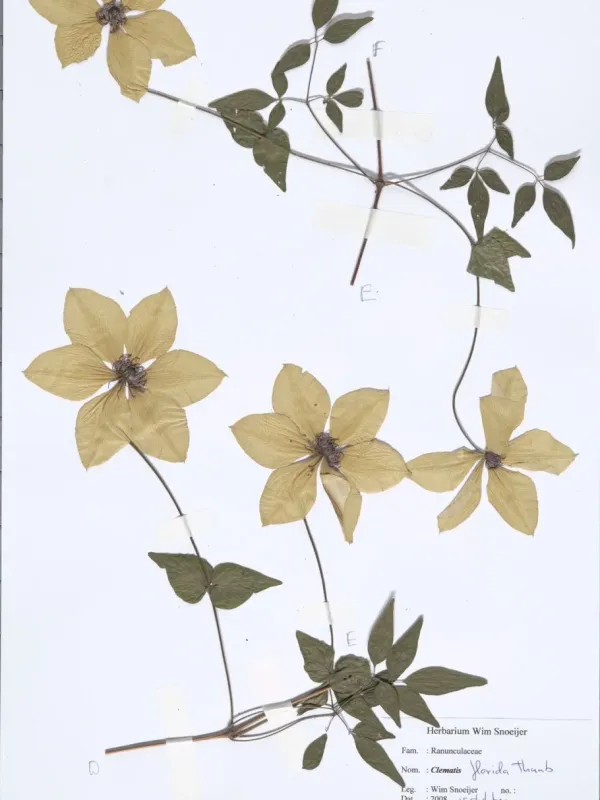
Description
Growing requirements
Clematis florida is a perennial woody vine belonging to the Ranunculaceae family. Originating from the subtropical regions of China, this species is widely appreciated for its unique flowers and elegant climbing habit in ornamental gardening.
The plant thrives in locations with full sun to partial shade, requiring shelter from strong, drying winds. It performs best when its root zone is kept cool, which is often achieved by planting low-growing perennial companions or applying a thick layer of organic mulch at the base.
Soil requirements are strict regarding drainage; Clematis florida cannot tolerate waterlogged conditions. A well-drained, fertile, loamy soil with a neutral to slightly alkaline pH is optimal for healthy root development and vigorous growth of the vine.
Cultural practices include consistent watering during dry spells and providing sturdy trellis support for the tendrils. Proper pruning is essential for this species to promote lateral growth and enhance the overall flowering display throughout the season.
In cooler temperate climates, the vine requires winter protection, as it is generally less hardy than other popular clematis hybrids. Ensuring that the crown of the plant is protected from severe frost is crucial for successful over-wintering.
Main diseases and pests
The most devastating disease for this culture is Clematis wilt, caused by soil-borne fungi that block the plant's vascular tissues. Immediate removal of affected stems and sanitation of the surrounding soil are necessary to prevent the spread to healthy parts of the plant.
Powdery mildew is a frequent issue, especially in warm, humid weather with poor air circulation. Improving plant spacing and ensuring good airflow are primary cultural methods for preventing outbreaks of this fungal disease.
Pests such as aphids and spider mites can infest the foliage, leading to yellowing and stunted growth. Integrated pest management, including regular inspection and the use of appropriate biological or chemical treatments, is recommended for effective control.
Root-knot nematodes can also pose a threat to the plant's long-term health, particularly in lighter, sandy soils. Selecting resistant cultivars or ensuring the use of sterile planting media can significantly reduce the risk of infestation.
Balanced fertilization throughout the growing season helps the plant maintain its vigor, making it more resilient against environmental stresses and minor pest attacks. Proper monitoring remains the cornerstone of maintaining a healthy and productive vine.