
Clematis afoliata
Clematis afoliata Buchanan
Description
Growing requirements
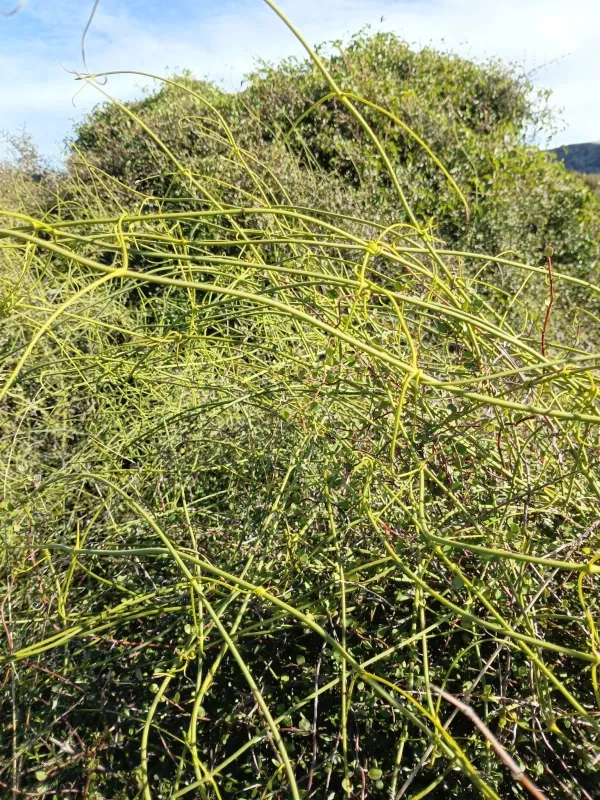
Clematis afoliata, a member of the Ranunculaceae family, is a distinctive species native to New Zealand. It is famous for its unique appearance, as the plant is virtually leafless, consisting instead of a tangled mass of thin, photosynthetic, rush-like green stems.
In its natural habitat, it thrives in dry, rocky environments, which dictates its cultivation requirements. The species demands highly permeable, well-draining soil, as it is extremely susceptible to root rot if the substrate remains saturated for extended periods.
Optimal growth is achieved in full sun exposure. The plant requires significant solar energy to maintain its physiological functions, as the stems serve as the primary photosynthetic organs. Providing enough light is crucial for the production of its characteristic white or cream-colored flowers.
This clematis is relatively hardy but requires protection from excessive moisture during the winter months. Growers often place it in elevated garden beds or on slopes to ensure that rainwater does not collect around the base of the plant.
Propagation is primarily conducted through seed sowing in a well-draining medium or via careful stem cuttings taken in early summer. The plant requires patience during the establishment phase, as it grows relatively slowly compared to common large-leaved clematis varieties.
Main diseases and pests
The primary concern for Clematis afoliata is the risk of fungal pathogens, particularly those that attack the roots and crown in damp conditions. Good air circulation and avoiding overhead watering can significantly reduce these risks.
Pests such as aphids and spider mites can occasionally affect the green stems. Monitoring for these insects during the warmer months is recommended, as they can weaken the plant and make it more susceptible to environmental stress.