
Cilician winter aconite
Eranthis cilicica
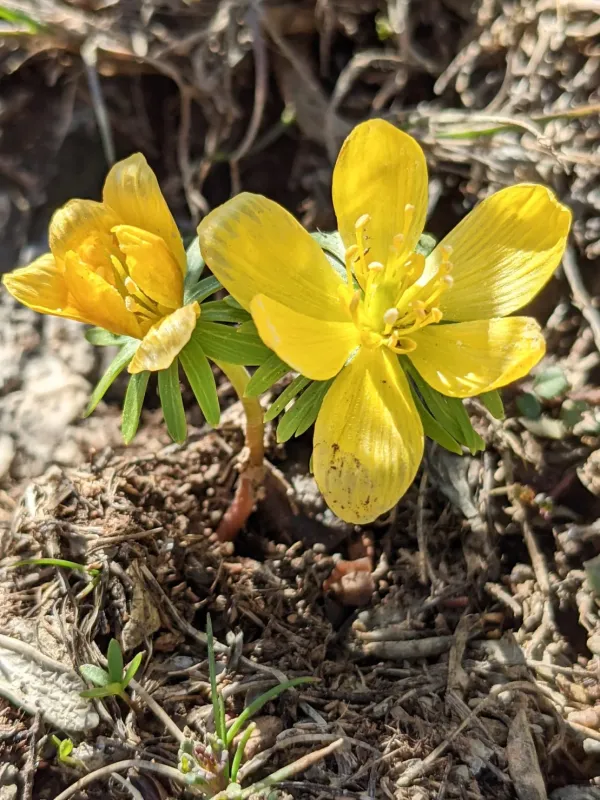
Description
Sowing dates
The planting of Eranthis cilicica should take place in late summer or early autumn. This timing allows the tubers to establish a root system before the onset of winter dormancy.
Tubers should be planted at a depth of 5 to 7 centimeters. A planting distance of approximately 5–10 centimeters is recommended to ensure the plant has enough space to grow into a dense colony.
It is critical to soak the dried tubers in room-temperature water for several hours before planting. This procedure significantly improves the germination rate and vigor of the young plants.
Propagation is commonly done by dividing the clumps after the foliage has died back. This is the most reliable method for expanding your garden collection of this species.
Seed propagation is also possible, but it requires patience as the seedlings will not produce flowers until they reach their third or fourth year of growth.
Growing requirements
Eranthis cilicica belongs to the Ranunculaceae family. It is a woodland ephemeral that thrives in areas that receive ample sunlight in early spring but provide shade later in the season.
The soil must be fertile, rich in organic matter, and well-draining. Heavy or waterlogged soils are detrimental to the health of the tubers, often leading to rot.
The ideal soil pH is neutral or slightly alkaline. In areas with acidic soil, adding garden lime will create a much more favorable environment for the winter aconite.
Consistent moisture is required during the flowering stage, but the soil should be allowed to dry out significantly once the plants enter their summer dormancy.
- Sun exposure: Full sun to partial shade.
- Soil structure: Loamy, loose, and aerated.
- Maintenance: Low, provided the drainage is adequate.
Main diseases and pests
Fungal rots are the most common issue, typically caused by poor drainage during the wet winter months. Ensuring the planting site has adequate slope or gravel drainage is key.
Small rodents and mice are known to feed on the tubers of various spring bulbs; protective mesh or wire cages are often used to safeguard the plants in affected areas.
Slugs and snails may attack the young shoots as they emerge from the soil in early spring. Regular monitoring and physical barriers are effective control methods.
Wireworms can cause significant damage by boring into the tubers. If these pests are present, soil treatment before planting is highly recommended.
While the plant is generally hardy, severe late-spring frosts during the active growth stage can occasionally damage the blooms, though the foliage remains resilient.