
Henry's Clematis
Clematis henryi Oliv.
Description
Sowing dates
Planting of Clematis henryi is best accomplished in early spring once the risk of frost has passed, or during the mild days of early autumn.
Choose a location that provides ample sunlight for the foliage, while ensuring the root zone remains shaded and cool throughout the day.
Dig a hole approximately 60 centimeters deep and wide, ensuring a drainage layer is included to prevent water accumulation near the roots.
When planting, set the crown of the plant about 5 to 10 centimeters below the soil level to encourage multiple stems and better root establishment.
Provide a sturdy trellis or support structure immediately after planting, as the vine grows rapidly and requires guidance to attach correctly.
Growing requirements
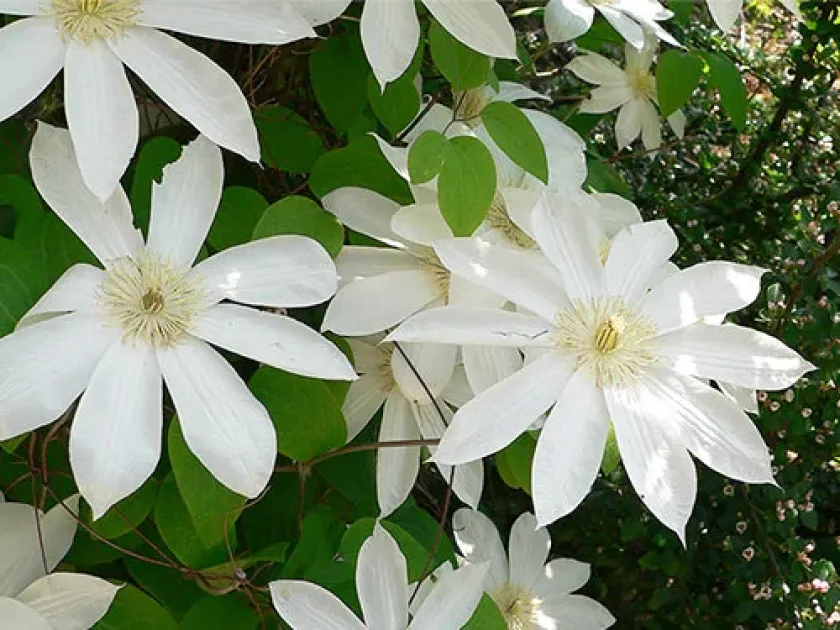
Henry's Clematis is a member of the Ranunculaceae family, celebrated for its large, elegant, and often white-petaled flowers.
This species thrives in fertile, well-draining soil with a neutral to slightly alkaline pH level, preferring loose organic-rich ground.
Consistent moisture is essential for this plant; however, gardeners must prevent standing water, which can trigger fungal diseases at the base.
Mulching the soil around the base is a vital practice to maintain stable root temperatures and prevent the soil from drying out too quickly.
Regular fertilization with balanced nutrients during the active growing season will support the development of strong, healthy flowering vines.
Main diseases and pests
Clematis wilt is a significant concern for this variety, often caused by soil-borne fungi that enter through stem injuries or stressed roots.
Powdery mildew can appear as a white dusting on leaves during humid weather, necessitating the use of appropriate anti-fungal treatments.
Aphids and spider mites are common pests that target the young tips of the vines, leading to distorted growth and reduced flowering.
Slugs and snails can cause damage to the foliage of younger plants, especially during the wet spring months when new growth is tender.
Maintaining good air circulation through proper spacing and routine pruning helps mitigate many of these common plant health risks.
Harvesting
Henry's Clematis is primarily used in landscaping for vertical design elements, covering pergolas, walls, fences, and garden pillars.
The plant exhibits two distinct blooming phases, producing flowers on old wood in late spring and on new growth throughout the summer.
Pruning is usually light for this variety, focusing on the removal of spent flowers and weak stems to maintain the vine's structure and health.
Winter care is essential in colder climates; the vines should be carefully removed from supports and covered to protect the buds from freezing.
With correct environmental conditions and maintenance, this clematis will serve as a long-lived focal point in any temperate garden setting.