
Italian leatherflower
Clematis viticella L.
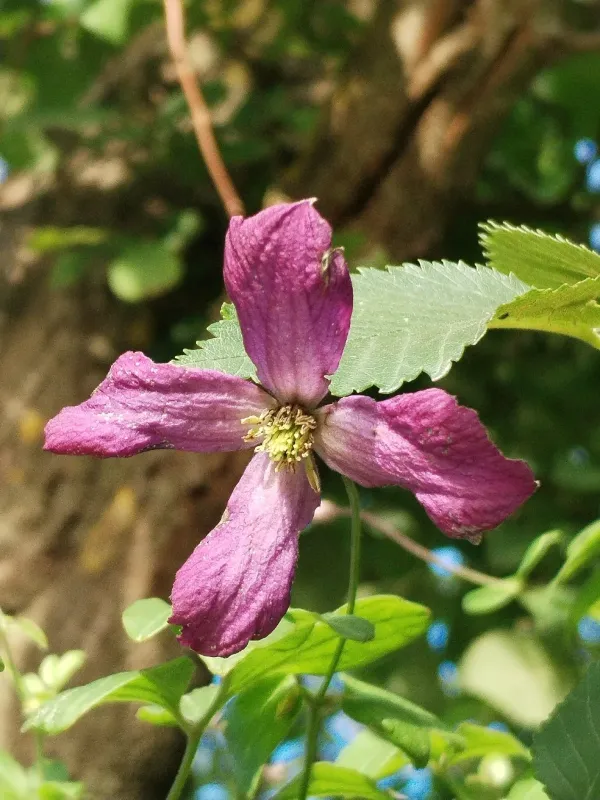
Description
Growing requirements
The Italian leatherflower (Clematis viticella) is a hardy perennial climber belonging to the Ranunculaceae family. Native to Southern Europe and the Caucasus, it has become a staple in ornamental gardening due to its resilience and profuse blooming habit.
This species thrives in sunny locations but requires its roots to remain cool and shaded. Gardeners often plant low-growing perennials around the base of the vine to provide the necessary ground cover and moisture retention for the roots.
The plant prefers well-drained, fertile, loamy soil with a neutral to slightly alkaline pH. It is essential to ensure that the site does not have standing water, as excess moisture in the root zone can lead to rapid decline and fungal infections.
Regular maintenance involves providing sturdy vertical support, such as a trellis or fence, allowing the plant to climb effectively. Its tendrils are sensitive and will naturally wrap around supports if they are narrow enough to grasp.
Routine care consists of annual pruning in late winter or early spring to remove dead wood and encourage vigorous new growth.
- Apply balanced fertilizer in early spring.
- Maintain consistent soil moisture through mulching.
- Protect young shoots from late spring frosts.
Main diseases and pests
Clematis wilt, caused by soil-borne fungi, is the most severe threat to the species. It causes sudden collapse of stems, and once infected, it is difficult to treat; prevention through proper sanitation and drainage is the primary defense strategy.
Powdery mildew often affects the foliage during hot, humid summers, manifesting as white dusty spots. Proper spacing and airflow are crucial to minimize humidity around the plant leaves and reduce the risk of outbreaks.
Aphids are common pests that aggregate on succulent new growth and flower buds. While they rarely kill a mature plant, they can spread viruses and reduce the aesthetic value of the floral display if left unchecked.
Spider mites may colonize the leaves during prolonged dry spells, causing yellowing and webbing. Regular watering and overhead misting during heatwaves can help discourage these mites from establishing on the foliage.
Earwigs can cause unsightly holes in petals and leaves throughout the growing season. Using traps or natural botanical insecticides can help manage their population and preserve the integrity of the flowers.