
Armand clematis
Clematis armandii Franch.
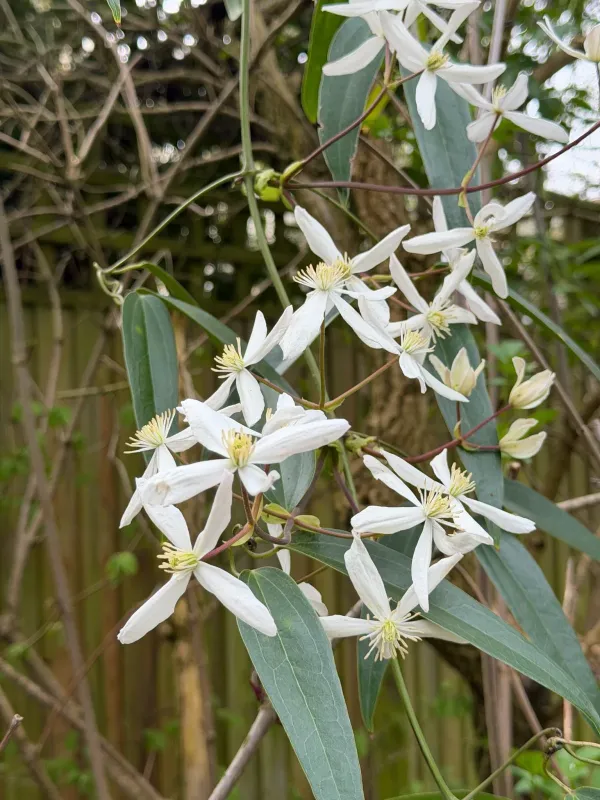
Description
Growing requirements
Armand clematis (Clematis armandii) is a vigorous evergreen woody climber belonging to the Ranunculaceae family. It is prized for its lush, glossy foliage and early spring blooming, making it a staple in temperate climate landscaping.
The plant originates from China and thrives in areas with mild winters. In terms of site selection, it requires a sheltered spot with full sun to partial shade, where it is protected from cold, drying winds that can scorch its evergreen leaves.
Soil requirements focus on fertility and drainage. The root system is sensitive to waterlogging; therefore, adding organic matter such as compost or well-rotted manure to the planting pit is recommended to improve soil structure and moisture retention.
Regarding agrotechnics, providing a sturdy trellis or fence is essential. As the plant is a climber, it uses its leaf petioles to wrap around supports, allowing it to reach significant heights while maintaining a dense wall of greenery.
Maintenance involves consistent watering during the growing season to keep the roots cool and moist. Applying a layer of mulch around the base of the plant helps retain soil moisture and suppresses weeds, which is crucial for optimal development.
Main diseases and pests
Clematis wilt, caused by fungi such as Phoma clematidina, is the most serious threat to this species. It causes stems to wilt and collapse rapidly, requiring immediate removal and destruction of the infected parts to prevent spread.
Powdery mildew is a common foliage disease that appears as a white dusting on leaves during periods of fluctuating temperatures and high humidity. Proper spacing to ensure air circulation is the best preventive strategy against this fungus.
Insect pests include aphids, which often cluster on new growth, causing curling and stunted development. If infestations occur, horticultural soap or specific insecticides can be used to treat the affected areas effectively.
Spider mites are another concern, particularly in hot, dry environments. They cause stippling and yellowing of the leaves, which can lead to premature leaf drop if the infestation remains uncontrolled for a long duration.
Regular monitoring of the plant for signs of stress is vital. Maintaining high cultural standards, including proper feeding and sanitation, helps the clematis resist these common threats and improves its longevity in the garden environment.