
Marmorate clematis
Clematis marmoraria
Description
Growing requirements
Clematis marmoraria, commonly known as the marmorate clematis, is a distinctive member of the Ranunculaceae family. Native to the limestone outcrops of the South Island of New Zealand, this species deviates significantly from typical climbing clematis varieties by adopting a dwarf, shrub-like growth habit.
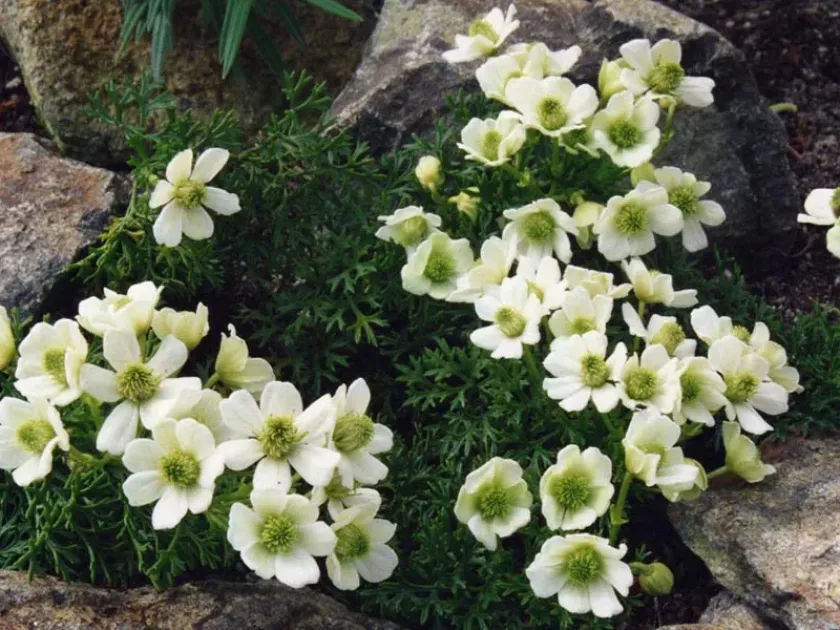
Botanically, this plant is characterized by its miniature stature, rarely exceeding 15 centimeters in height. It produces finely divided, textured foliage and small, nodding white flowers, making it an excellent choice for alpine gardeners who appreciate unique, low-growing specimens.
Successful cultivation requires simulating its native alpine conditions. The most critical requirement is exceptionally well-draining soil, typically achieved by incorporating a large volume of stone chippings or gravel into the planting medium. Waterlogged roots are fatal to this species.
Climatic preferences center on cool, airy environments with ample sunlight. While the plant thrives in full sun in cooler regions, it often requires partial shade during the peak of summer to avoid overheating the delicate root zone, which can suffer if temperatures rise too high.
The primary use of Clematis marmoraria is decorative, specifically in specialized rock gardens, troughs, or alpine houses. Its rarity and specific needs make it a prized specimen for plant enthusiasts and professional alpine plant collectors worldwide.
Main diseases and pests
The health of Clematis marmoraria is primarily threatened by fungal pathogens associated with soil moisture. Root rot is the most common and dangerous issue, usually stemming from improper drainage or excessive irrigation during periods of dormancy.
Pests such as spider mites and aphids can infest the foliage, particularly in dry or poorly ventilated conditions. Monitoring for these pests is essential, as the small size of the plant means that infestations can spread quickly and severely weaken the shrub.
Weeds pose a significant threat to this slow-growing plant. Since the clematis does not spread aggressively, invasive grass or broad-leaved weeds can quickly smother it, leading to nutrient deprivation and increased humidity around the crown, which invites disease.
Soil chemistry should not be overlooked; as a calcicole, it thrives in alkaline conditions. Gardeners should ensure the substrate matches its preference for limestone-rich environments, as suboptimal pH levels can lead to chlorosis and general lack of vigor.
Integrated management includes routine pruning of dead foliage, ensuring the base of the plant remains clear of debris to improve air circulation, and maintaining a strictly controlled watering regimen that allows the substrate to dry out between applications.