
Clematis Courtoisii-Texensis
Clematis courtoisii Hand.-Mazz. x C. texensis Buckley
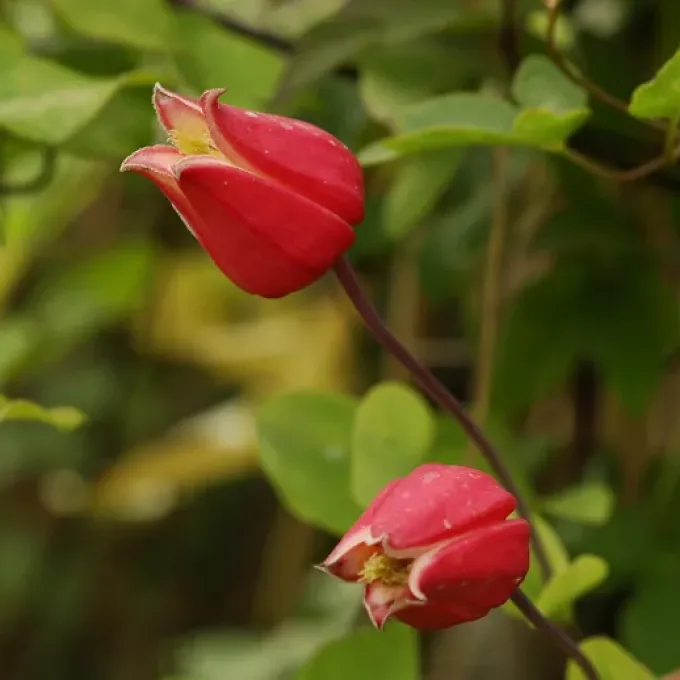
Description
Growing requirements
Clematis Courtoisii-Texensis (Clematis courtoisii x C. texensis) is a hybrid ornamental vine belonging to the Ranunculaceae family. It combines the genetic traits of its parent species to create a vigorous climber noted for its unique floral architecture and adaptability in garden environments.
The plant thrives in well-drained, fertile soil with a neutral to slightly alkaline pH level. While it prefers full sun to bloom profusely, the roots must be kept cool and shaded, often achieved by planting low-growing perennials at its base or applying a thick layer of organic mulch.
This species requires sturdy vertical support, as its stems are designed for climbing. Given its hybrid nature, it is sensitive to heavy, waterlogged soils, which can lead to root suffocation; thus, excellent drainage is a mandatory requirement for successful cultivation.
The cultivation process involves consistent irrigation throughout the growing season, especially during hot, dry spells. The plant responds well to balanced liquid fertilization applied every few weeks during the spring and summer to support rapid stem growth and floral production.
Pruning is essential for maintaining plant health and vigor. Typically, this hybrid requires careful management of its stems to encourage new growth from the base, ensuring the vine remains productive and aesthetically pleasing throughout its lifespan.
Main diseases and pests
Clematis wilt is the most serious threat to this culture, caused by fungi that block the water-conducting tissues. Immediate pruning of affected parts and soil treatment are necessary to contain the spread of the infection.
Powdery mildew often appears during periods of high humidity and poor air circulation. Managing plant density and using appropriate fungicides are standard practices to prevent leaf damage and maintain photosynthesis.
Aphids are common pests that target new shoots and flower buds. Regular monitoring and the application of insecticidal soaps or systemic pesticides are effective ways to manage infestations before they become severe.
Spider mites can become a problem in hot, arid conditions, causing the foliage to lose color and eventually drop. Increasing environmental humidity and timely acaricide treatments can mitigate this damage.
Root-knot nematodes can weaken the plant by attacking the root system. Using nematode-resistant soil amendments and avoiding planting in areas previously infested with these pests are critical preventive measures for long-term health.