
Golden-haired clematis
Clematis chrysocoma Franch.
Description
Growing requirements
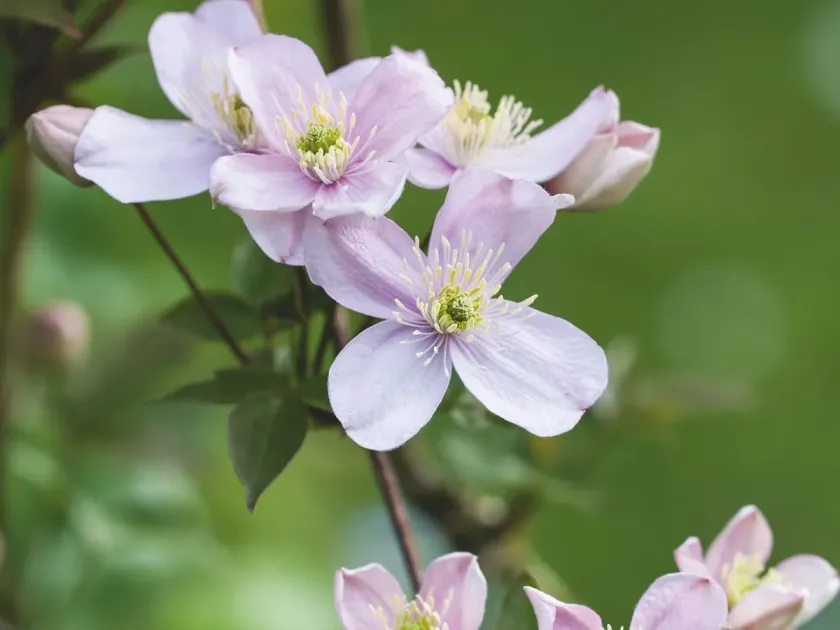
Golden-haired clematis (Clematis chrysocoma) is a perennial woody climber belonging to the Ranunculaceae family, native to the mountain forests of China. It is highly valued in horticulture for its pubescence on stems and delicate white or pinkish flowers appearing in early summer.
The plant thrives in fertile, well-draining soils with a neutral pH level. It requires a sunny, sheltered location where its foliage can access light while the root zone remains shaded and cool, preventing thermal stress during hot summer days.
Cultivation practices involve regular irrigation to maintain consistent soil moisture without triggering root rot. Mulching the base of the plant with organic material is a recommended practice to preserve moisture and suppress weeds that compete for nutrients.
Trellising is essential for this species, as it uses its petioles to cling to supports. Proper training early in the growing season ensures uniform coverage of fences, pergolas, or walls, maximizing the aesthetic impact of the blooming season.
In ornamental landscaping, this clematis serves as a vertical feature for structures and garden boundaries. Its ability to grow vigorously makes it an excellent choice for gardeners looking to create lush, flowery privacy screens in suitable climatic zones.
Main diseases and pests
The most significant pathological threat to this culture is wilt, a fungal condition that can cause sudden collapse of the stems. Preventive measures include ensuring excellent ventilation and avoiding excessive moisture in the root area during damp periods.
Garden pests such as aphids and spider mites can infest the young foliage, leading to stunted growth. Integrated pest management, including regular inspection and the use of targeted insecticides or horticultural oils, is necessary to maintain plant health.