
Clematis cadmia
Clematis cadmia Buch.-Ham. ex Hook. f. & Thomson
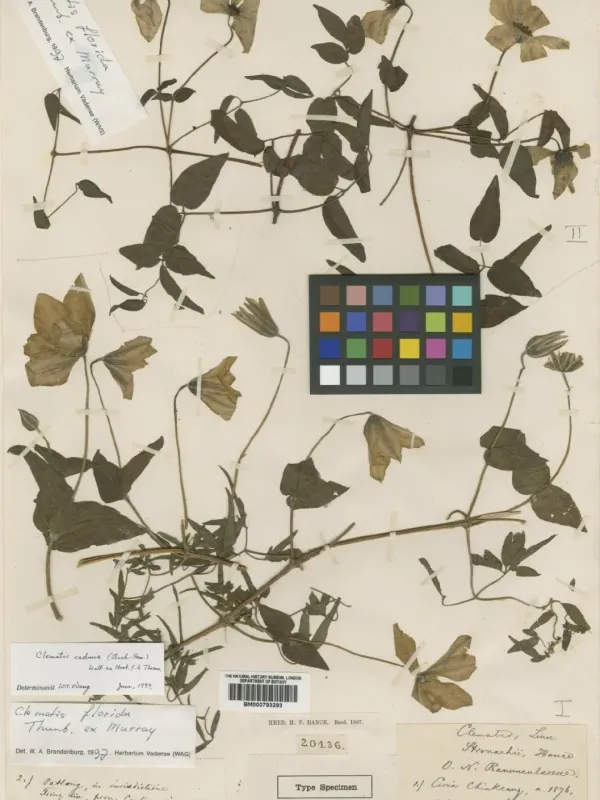
Description
Growing requirements
Clematis cadmia is a perennial herbaceous climber belonging to the Ranunculaceae family. Unlike woody clematis species, it features delicate stems that require structural support, such as trellises or garden meshes, to reach their full potential and aesthetic appeal.
Native to the regions of South and Southeast Asia, specifically the Himalayan foothills, this plant thrives in subtropical climates. It is best suited for environments with high humidity and stable temperatures, requiring protection from extreme weather conditions in cooler regions.
For successful cultivation, well-drained and nutrient-rich soil is essential. The substrate should be loose, typically a loam-based mix that prevents water accumulation near the root system, which is critical to avoid root rot and ensure long-term plant health.
The plant prefers a position with bright, filtered light. While it loves the sun, it is highly sensitive to scorching temperatures; therefore, a location that offers some shade during the hottest part of the day is recommended for optimal performance.
In terms of landscaping, Clematis cadmia is valued for its unique, elegant flowers. It is primarily used as an ornamental plant for vertical gardening, suitable for decorating small pergolas, balcony containers, and shaded garden corners where it can gracefully twine.
Main diseases and pests
The primary pathological threat to Clematis cadmia is fungal wilt, which can cause sudden collapse of the stems. Proper hygiene, including the removal of dead plant material and the use of preventive fungicides, is necessary to mitigate this risk.
Powdery mildew is another significant issue, especially in stagnant air conditions. Ensuring proper spacing between plants and maintaining good airflow around the foliage are the best cultural practices to prevent the development of this fungal disease.
Pests such as aphids and spider mites frequently target the tender shoots and leaves of the plant. A regular inspection routine is vital, and the application of neem oil or systemic insecticides can help control infestations effectively if detected early.
Root-knot nematodes can pose a serious threat to the underground parts of the plant, leading to stunted growth. Using sterile soil media for container planting and avoiding over-fertilization with excess nitrogen can reduce the plant's susceptibility.
Regular maintenance, including mulching to maintain consistent soil moisture and protecting the root base from direct sunlight, forms the basis of a healthy plant environment. Constant vigilance is the best strategy against the variety of biotic stressors.