
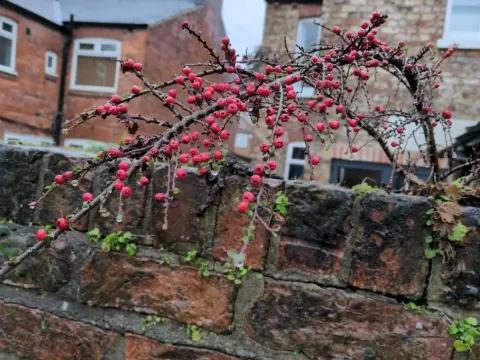
Cotoneaster
Cotoneaster
Cotoneaster can be propagated by seeds or vegetative cuttings. Seed propagation requires a long stratification period, so seeds are typically sown in outdoor beds during late autumn.
What the section contains
 Bearberry cotoneaster
Cotoneaster uva-ursi
Bearberry cotoneaster
Cotoneaster uva-ursi
 Black cotoneaster
Cotoneaster niger
Blunt-leaved cotoneaster
Cotoneaster obtusus
Black cotoneaster
Cotoneaster niger
Blunt-leaved cotoneaster
Cotoneaster obtusus
 Bordered cotoneaster
Cotoneaster marginatus
Bordered cotoneaster
Cotoneaster marginatus
 Box-leaved cotoneaster
Cotoneaster buxifolius
Box-leaved cotoneaster
Cotoneaster buxifolius
 Cooper's Cotoneaster
Cotoneaster cooperi
Cooper's Cotoneaster
Cotoneaster cooperi
 Cotoneaster affinis
Cotoneaster affinis
Cotoneaster affinis
 Cotoneaster ambiguus
Cotoneaster ambiguus
Cotoneaster ambiguus
 Cotoneaster amoenus
Cotoneaster amoenus
Cotoneaster amoenus
 Cotoneaster ascendens
Cotoneaster ascendens
Cotoneaster ascendens
 Cotoneaster astrophoros
Cotoneaster astrophoros
Cotoneaster astrophoros
 Cotoneaster atropurpureus
Cotoneaster atropurpureus
Cotoneaster atropurpureus
 Cotoneaster boisianus
Cotoneaster boisianus
Cotoneaster boisianus
 Cotoneaster bradyi
Cotoneaster bradyi
Cotoneaster bradyi
 Cotoneaster calocarpus
Cotoneaster calocarpus
Cotoneaster calocarpus
 Cotoneaster cochleatus
Cotoneaster cochleatus
Cotoneaster cochleatus
 Cotoneaster crispii
Cotoneaster delphinensis
Cotoneaster delphinensis
Cotoneaster crispii
Cotoneaster crispii
Cotoneaster delphinensis
Cotoneaster delphinensis
 Cotoneaster fangianus
Cotoneaster fangianus
Cotoneaster fangianus
 Cotoneaster foveolatus
Cotoneaster foveolatus
Cotoneaster foveolatus
 Cotoneaster fruticosus
Cotoneaster fruticosus
Cotoneaster fruticosus
 Cotoneaster glabratus
Cotoneaster glabratus
Cotoneaster glabratus
 Cotoneaster harrysmithii
Cotoneaster hedegaardii
Cotoneaster hedegaardii
Cotoneaster harrysmithii
Cotoneaster harrysmithii
Cotoneaster hedegaardii
Cotoneaster hedegaardii
 Cotoneaster hodjingensis
Cotoneaster hodjingensis
Cotoneaster hodjingensis
 Cotoneaster hsingshangensis
Cotoneaster hurusawanus
Cotoneaster hurusawanus
Cotoneaster hsingshangensis
Cotoneaster hsingshangensis
Cotoneaster hurusawanus
Cotoneaster hurusawanus
 Cotoneaster hybrid
s
Cotoneaster ignavus
Cotoneaster ignavus
Cotoneaster ignotus
Cotoneaster ignotus
Cotoneaster hybrid
Cotoneaster hybrids
Cotoneaster ignavus
Cotoneaster ignavus
Cotoneaster ignotus
Cotoneaster ignotus
 Cotoneaster induratus
Cotoneaster insculptus
Cotoneaster insculptus
Cotoneaster insignis
Cotoneaster insignis
Cotoneaster induratus
Cotoneaster induratus
Cotoneaster insculptus
Cotoneaster insculptus
Cotoneaster insignis
Cotoneaster insignis
 Cotoneaster integerrimus
Cotoneaster integerrimus
Cotoneaster integerrimus
 Cotoneaster integrifolius
Cotoneaster laetevirens
Cotoneaster laetevirens
Cotoneaster integrifolius
Cotoneaster integrifolius
Cotoneaster laetevirens
Cotoneaster laetevirens
 Cotoneaster lucidus
Cotoneaster splendens
Cotoneaster lucidus
Cotoneaster splendens
 Cotoneaster lucidus
Cotoneaster nitidus
Cotoneaster mairei
Cotoneaster mairei
Cotoneaster lucidus
Cotoneaster nitidus
Cotoneaster mairei
Cotoneaster mairei
 Cotoneaster megalocarpus
Cotoneaster morulus
Cotoneaster morulus
Cotoneaster megalocarpus
Cotoneaster megalocarpus
Cotoneaster morulus
Cotoneaster morulus
 Cotoneaster mucronatus
Cotoneaster mucronatus
Cotoneaster mucronatus
 Cotoneaster nebrodensis
Cotoneaster nebrodensis
Cotoneaster nebrodensis
 Cotoneaster nitens
Cotoneaster nohelii
Cotoneaster nohelii
Cotoneaster nummularius
Cotoneaster nummularius
Cotoneaster nitens
Cotoneaster nitens
Cotoneaster nohelii
Cotoneaster nohelii
Cotoneaster nummularius
Cotoneaster nummularius
 Cotoneaster perpusillus
Cotoneaster pseudoambiguus
Cotoneaster pseudoambiguus
Cotoneaster pseudomultiflorus
Cotoneaster pseudomultiflorus
Cotoneaster raboutensis
Cotoneaster raboutensis
Cotoneaster perpusillus
Cotoneaster perpusillus
Cotoneaster pseudoambiguus
Cotoneaster pseudoambiguus
Cotoneaster pseudomultiflorus
Cotoneaster pseudomultiflorus
Cotoneaster raboutensis
Cotoneaster raboutensis
 Cotoneaster rehderi
Cotoneaster rehderi
Cotoneaster rehderi
 Cotoneaster rugosus
Cotoneaster sandakphuensis
Cotoneaster sandakphuensis
Cotoneaster rugosus
Cotoneaster rugosus
Cotoneaster sandakphuensis
Cotoneaster sandakphuensis
 Cotoneaster shannanensis
Cotoneaster sternianus
Cotoneaster sternianus
Cotoneaster shannanensis
Cotoneaster shannanensis
Cotoneaster sternianus
Cotoneaster sternianus
 Cotoneaster suavis
Cotoneaster suavis
Cotoneaster suavis
 Cotoneaster tomentellus
Cotoneaster transens
Cotoneaster transens
Cotoneaster tomentellus
Cotoneaster tomentellus
Cotoneaster transens
Cotoneaster transens
 Cotoneaster uniflorus
Cotoneaster verokotschyi
Cotoneaster verokotschyi
Cotoneaster uniflorus
Cotoneaster uniflorus
Cotoneaster verokotschyi
Cotoneaster verokotschyi
Cotoneaster
Softwood cuttings are taken in mid-summer. These cuttings should be planted in a well-draining medium and kept under mist or in a greenhouse to maintain stable humidity levels.
Layering is a highly effective method for mass propagation. By pinning a low-growing branch to the soil surface in spring, roots develop by the following season.
Care must be taken when handling seeds, as they have a hard seed coat that may require scarification to improve germination rates significantly.
Success in propagation largely depends on the choice of parent material, ensuring that the cuttings are healthy and free from any signs of fungal or viral infection.
Cotoneaster is a member of the Rosaceae family. It is a diverse genus ranging from prostrate ground-covers to upright shrubs, native to temperate regions of Asia and Europe.
The plant thrives in full sun but maintains good foliage color in partial shade. It is highly adaptable to various soil types, including chalky, loamy, and sandy soils with neutral or alkaline pH.
This crop is prized for its drought tolerance once established, making it suitable for low-maintenance landscaping and erosion control on slopes.
Routine pruning is essential for maintaining the shape of hedges. Cotoneaster responds exceptionally well to shearing, which encourages dense branching and vigorous growth.
While hardy in many climates, some evergreen species may require protection from harsh winter winds to prevent foliage desiccation in exposed locations.
The most common fungal threats include powdery mildew and leaf spot diseases, which are exacerbated by poor air circulation and high atmospheric humidity.
Pest issues frequently involve aphid infestations and scale insects. These pests feed on the sap of tender new growth, often causing curling and stunted development.
Fire blight is a serious bacterial concern for species within the Rosaceae family. Infected branches must be pruned back to healthy wood and tools disinfected immediately.
Spider mites can become problematic during hot, dry spells, leading to speckled foliage and premature leaf drop if left untreated.
Integrated pest management, involving beneficial insects and proper cultural practices, is the preferred approach to maintaining a healthy and resilient shrub collection.