
Bordered cotoneaster
Cotoneaster marginatus
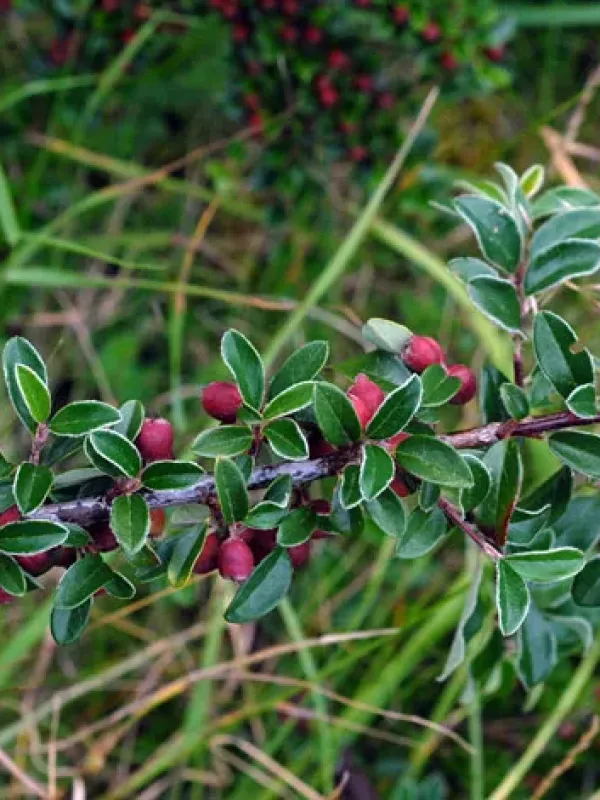
Description
Growing requirements
Bordered cotoneaster (Cotoneaster marginatus) is a perennial ornamental shrub belonging to the Rosaceae family. It is widely recognized in horticultural practice for its dense growth habit and robust nature under various environmental stressors.
Originating from the mountainous regions of Asia, this species has adapted to rocky, well-draining soils. It is highly valued for its resilience in temperate climates, showing significant tolerance to cold winters and typical urban environmental conditions.
The plant thrives in full sun to partial shade, requiring well-aerated soil for optimal development. It is particularly well-suited for sites where low-maintenance ground cover or formal hedges are required due to its slow growth rate.
Basic cultivation practices involve ensuring proper soil drainage during the planting phase and providing adequate water during the establishment period. Once established, the shrub becomes relatively drought-tolerant and requires minimal supplemental irrigation.
In landscaping, it serves multiple purposes: from soil erosion control on slopes to the formation of neat, manicured borders. Its structural beauty throughout the seasons makes it a versatile choice for both public parks and private gardens.
Main diseases and pests
The species is susceptible to various fungal pathogens, most notably leaf spot and powdery mildew, which thrive in conditions of high humidity and poor air circulation within the shrub canopy.
Insect pests, such as aphids and scale insects, frequently target young shoots, potentially hindering the plant's growth and causing aesthetic damage to the foliage during the peak growing season.
Effective management includes maintaining a rigorous pruning schedule to ensure interior branches remain dry and well-ventilated, which significantly decreases the likelihood of fungal infections.
Integrated pest management strategies, utilizing selective insecticides or horticultural oils, are recommended to control infestations of sap-sucking insects before they reach critical levels.
Proactive care, including the removal of deadwood and the application of fertilizers that promote sturdy cell wall development, helps the plant maintain high vigor and resistance against common garden pests and diseases.