
Cotoneaster rugosus
Cotoneaster rugosus
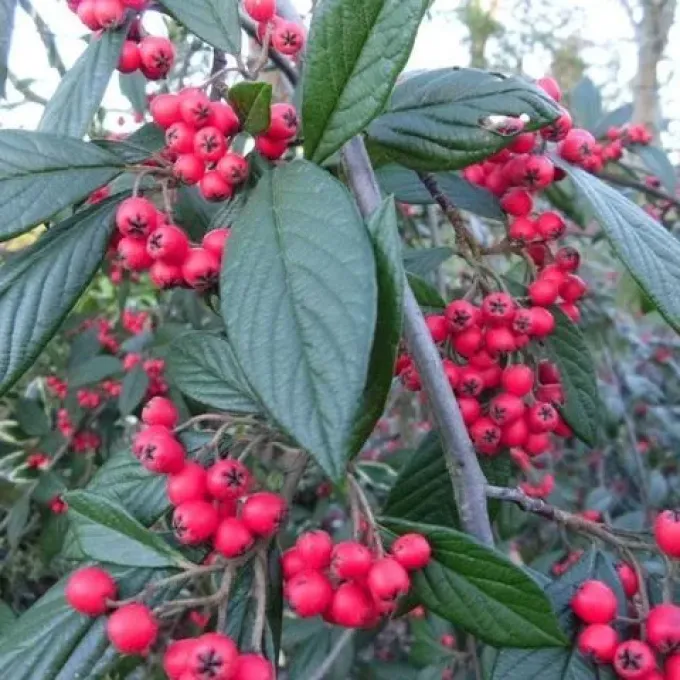
Description
Growing requirements
Cotoneaster rugosus is a distinguished member of the Rosaceae family, prized for its unique foliage and robust nature. This ornamental shrub is widely used in landscape architecture due to its dense growth habit and high aesthetic appeal throughout the changing seasons.
Originating from the mountainous regions of China and the Himalayas, the plant exhibits excellent hardiness and adapts well to temperate climates. It performs best in locations that provide plenty of sunlight, though it maintains its vigor in partial shade if provided with adequate drainage.
The plant is versatile regarding soil types, thriving in anything from sandy loams to heavier clay-based soils, provided there is no risk of waterlogging. It is tolerant of neutral to slightly alkaline pH levels, making it suitable for a wide range of garden settings.
Agronomic maintenance focuses on initial establishment through regular watering and light pruning in early spring to encourage dense foliage. Mulching around the base is recommended to conserve soil moisture and prevent competitive weed growth during the early years of the plant's life.
This species is extensively used for creating formal hedges, ground cover for large areas, and as a structural element in shrub borders. Its ability to withstand urban air pollution makes it an ideal candidate for municipal landscaping and roadside beautification projects.
Main diseases and pests
The primary pathological threats include fungal infections such as powdery mildew and fire blight, which can be mitigated through proper plant spacing to ensure air circulation. Keeping the foliage dry during irrigation helps significantly in reducing the risk of disease outbreaks.
Insects like aphids and scale insects are the most common pests affecting Cotoneaster rugosus. If an infestation occurs, horticultural oils or systemic insecticides are highly effective tools for managing pest populations and maintaining the plant's overall vitality.