
Box-leaved cotoneaster
Cotoneaster buxifolius
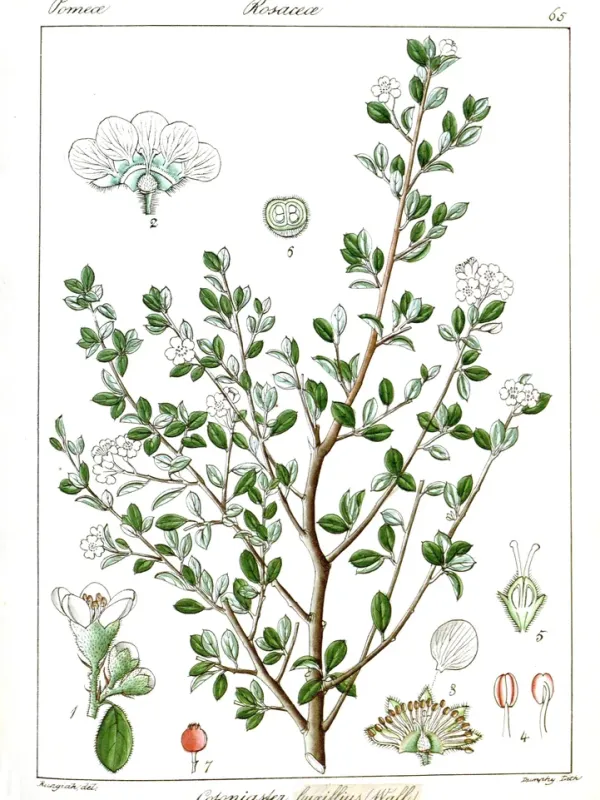
Description
Growing requirements
The box-leaved cotoneaster (Cotoneaster buxifolius) is a robust evergreen or semi-evergreen shrub belonging to the Rosaceae family. It is widely recognized for its box-like foliage and high adaptability for decorative hedging.
Native to the mountain regions of India, specifically the Nilgiri Hills, this species thrives in climates where soil aeration and light availability are prioritized. Its growth habit is dense and compact, making it an excellent choice for rock gardens.
The plant requires well-draining soil with a pH ranging from neutral to slightly alkaline. It is essential to ensure that the site is not prone to waterlogging, as the species is susceptible to root rot in poorly drained environments.
Regarding climate preferences, the box-leaved cotoneaster performs best in full sun but tolerates partial shade in warmer zones. Sufficient sunlight is vital to maintain the dark green color of the leaves and to ensure a healthy display of berries.
Standard agrotechnical care involves periodic pruning to keep the shrub's shape and removal of dead or crossing branches. In arid regions, consistent irrigation during the first few years after planting is crucial for establishment.
Main diseases and pests
Common botanical threats include fungal diseases such as leaf spot and rust, especially during humid and overcast seasons. Improving air circulation within the shrub canopy is one of the most effective ways to prevent such fungal infections.
Pest issues often involve aphids and spider mites, which can drain the plant's vitality. Regular monitoring and the application of insecticidal soaps or horticultural oils can effectively manage these infestations without harming the plant.