
Cotoneaster integrifolius
Cotoneaster integrifolius
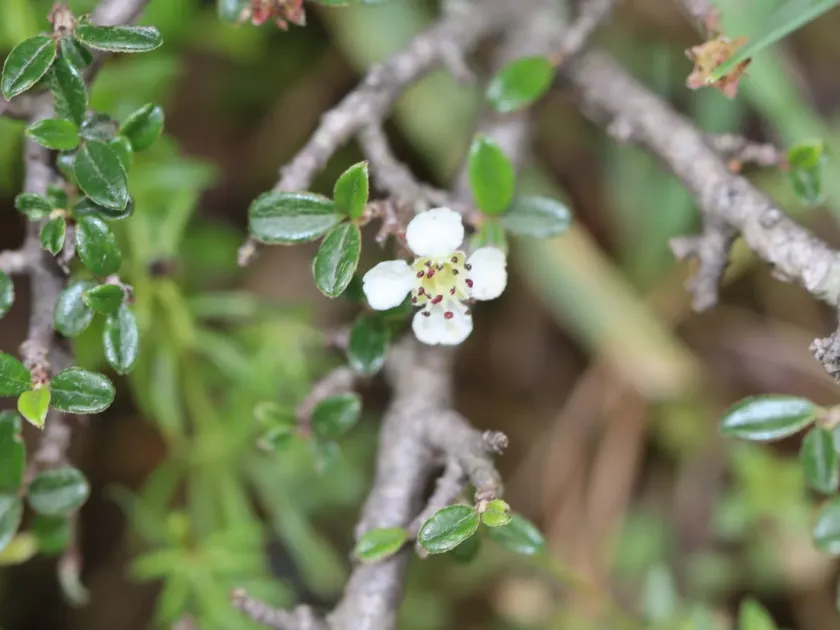
Description
Growing requirements
Cotoneaster integrifolius, belonging to the Rosaceae family, is a compact, evergreen or semi-evergreen shrub native to the Himalayan mountains. It is widely cultivated for its creeping habit, making it an excellent choice for ground cover in rock gardens, slopes, and containers.
This species thrives in well-drained soils and prefers locations that offer full sun or partial shade. While it is tolerant of various soil types, including those with low nutrient content, it performs best in slightly fertile, loamy substrates that maintain consistent, non-stagnant moisture levels.
Regarding climate, the plant exhibits significant hardiness, adapting well to cool temperate zones. It is exceptionally resilient to urban pollution and wind exposure, which facilitates its use in public landscaping and roadside plantings where other species might struggle.
Agronomic management involves minimal irrigation once the plant is established, as it possesses moderate drought tolerance. Periodic pruning is recommended to maintain the desired shape and density, usually performed in early spring before the start of the active vegetation phase.
Propagation is primarily achieved through stem cuttings or layering, ensuring the preservation of the plant's characteristic growth habits. As a low-maintenance crop, it requires occasional fertilization with balanced NPK formulas to promote healthy foliage and abundant berry production.
Main diseases and pests
The primary diseases affecting this plant include fire blight and various types of leaf spot fungi. High humidity and poor air circulation are the main contributing factors, so proper spacing during the planting process is essential for prevention and canopy health.
Pest pressure often stems from aphids and spider mites, which typically colonize the underside of leaves or the tips of new growth. Using specialized horticultural oils or systemic insecticides can help control these infestations if they surpass natural biological thresholds.
Scale insects can pose a significant challenge by attaching to stems and branches, leading to a general decline in plant vigor. Regular monitoring of stems during winter and early spring is vital for identifying and treating these pests before they spread significantly.
Root system damage from soil-dwelling grubs can cause sudden wilting, often mistaken for a water-related issue. Soil drenching with appropriate curative agents is necessary if such an infestation is identified to prevent complete plant loss in the affected area.
Canker and other bark-related diseases can occur if the plant is mechanically injured or stressed by improper environmental conditions. Ensuring sterile tools for pruning and avoiding deep wounding are key strategies to maintain long-term plant health and prevent infections.