
Cotoneaster cochleatus
Cotoneaster cochleatus
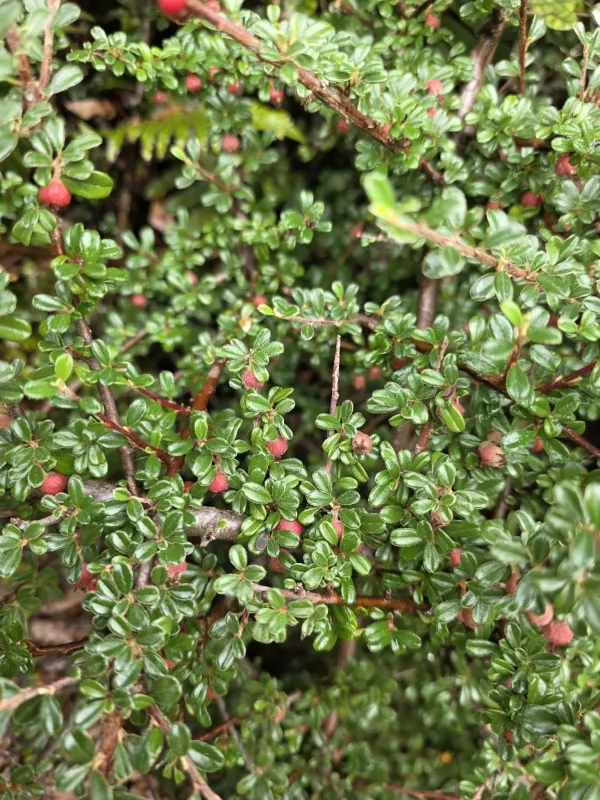
Description
Growing requirements
Cotoneaster cochleatus, a member of the Rosaceae family, is a versatile evergreen ground-covering shrub. It is highly valued for its prostrate, interlocking branches that form a dense, uniform mat, making it an excellent candidate for erosion control and rock gardens.
Native to the high-altitude regions of the Himalayas and Western China, this species is naturally adapted to rugged, rocky terrains. This evolutionary history provides the plant with significant environmental resilience, allowing it to thrive in less than ideal garden conditions.
The plant thrives in well-drained, moderately fertile soil. Proper drainage is the most critical factor for its survival; it is highly susceptible to root rot if planted in heavy or waterlogged soils, which is why incorporating grit or coarse sand into the planting hole is recommended.
It prefers full sun exposure, which ensures the densest foliage and the most abundant display of bright red autumn berries. While it can tolerate partial shade, excessive shade may result in sparser branching and a reduction in the plant's overall structural density.
Cultural practices include a light pruning after flowering or in early spring to maintain the desired shape and promote healthy lateral growth. Mulching around the base with organic material helps maintain moisture during the first year of establishment while suppressing weeds.
Main diseases and pests
Fire blight is the most serious disease affecting Cotoneaster cochleatus. Infected stems appear scorched and wilted; immediate removal of affected branches several inches below the infected area is necessary to prevent the bacteria from spreading through the vascular system.
Aphids frequently colonize the tender tips of new growth. These pests not only damage the leaves but also serve as vectors for various plant viruses, necessitating regular monitoring during the active growing season and the use of insecticidal soaps when appropriate.
Spider mites can become a significant issue during hot, dry summer months. They feed on the underside of leaves, causing a stippled or yellowed appearance; maintaining adequate soil moisture and occasional overhead misting can help mitigate mite populations.
Powdery mildew is a fungal condition favored by high humidity and poor air circulation. While rarely fatal, it can significantly detract from the plant's aesthetic value, requiring the application of sulfur-based fungicides or improved pruning to increase light penetration.
Scale insects may attach themselves to the stems and branches. Since they are protected by a waxy shield, they can be difficult to control; physical removal or the application of horticultural oils during the dormant stage is the most effective management strategy.