
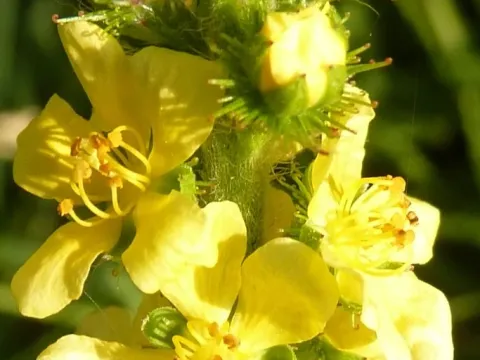
Common agrimony
Agrimonia
Common agrimony (Agrimonia eupatoria) is a herbaceous perennial belonging to the Rosaceae family, widely recognized for its historical and modern therapeutic properties.
What the section contains


Common agrimony
For successful crop establishment, seeds should be sown in the autumn, allowing them to undergo natural stratification during the winter months, which significantly improves germination rates.
Spring planting is also an option, but it requires cold stratification of seeds at temperatures between +2 and +5 degrees Celsius for at least six weeks before sowing.
Seeds should be sown in rows spaced approximately 50 to 60 centimeters apart to allow for proper airflow and mechanized maintenance during the growing season.
Shallow planting depth (no more than 1–2 cm) is critical because the seeds are small and have limited energy reserves to reach the soil surface if buried too deeply.
This plant thrives best in open, sunny locations, which are essential for the optimal synthesis of the medicinal compounds stored within its leaves and stems.
While adaptable, agrimony prefers well-drained, moderately fertile loamy soils with a neutral pH level, which ensures healthy root development and prevents plant rot.
The plant is remarkably hardy and resilient to temperature fluctuations, making it suitable for cultivation in diverse temperate climates across Europe and Asia.
Adequate moisture during the early vegetative stage is important, but once established, the plant demonstrates good tolerance to moderate dry conditions.
Proper soil preparation, including the incorporation of well-composted organic matter, will boost biomass production and ensure the longevity of the perennial stand.
Common agrimony is commercially utilized in the pharmaceutical industry to produce herbal supplements, tonics, and topical ointments for skincare.
With correct agronomic practices, yields of dried aerial biomass can reach 1.5 to 2 tons per hectare, providing a reliable income for medicinal herb growers.
Productivity typically peaks during the second and third years of growth, after which the field may need rejuvenation or rotation to maintain output levels.
The plant also serves as a significant source of nectar, making it a valuable addition to farms that integrate apiculture with herbal production.
High-quality yield is defined by the purity of the harvest, free from weeds and soil contaminants, which is achieved through careful field management.
Powdery mildew is the primary threat to agrimony, especially in humid regions or when planting densities are too high, reducing both quality and yield.
Various beetles and larvae can feed on the leaves and inflorescences, necessitating regular crop monitoring to prevent significant damage to the commodity.
Root rot caused by poor soil drainage remains a critical risk factor, emphasizing the importance of site selection and preventative agricultural maintenance.
Integrated pest management, including crop rotation and the use of resistant varieties, is essential to minimize the need for chemical intervention.
Maintaining clean borders around the fields helps reduce the migration of pests and pathogens from wild surrounding vegetation into the cultivated crop.
The optimal harvest window occurs at the peak of the flowering period, ensuring that the concentration of essential tannins and flavonoids is at its maximum.
Harvesting involves cutting the top 30–40 cm of the aerial parts, which are then immediately moved to a drying facility to prevent fermentation or leaf drop.
Drying must be conducted in dark, well-ventilated rooms at temperatures not exceeding 40 degrees Celsius to protect the volatile compounds from degradation.
Once dried to a crisp texture, the herb should be processed to remove stems that are too thick, which can interfere with the final product quality.
Proper storage in moisture-resistant, opaque containers ensures the herb maintains its color, aromatic profile, and medicinal potency for extended shelf life.