
Cooper's Cotoneaster
Cotoneaster cooperi
Description
Growing requirements
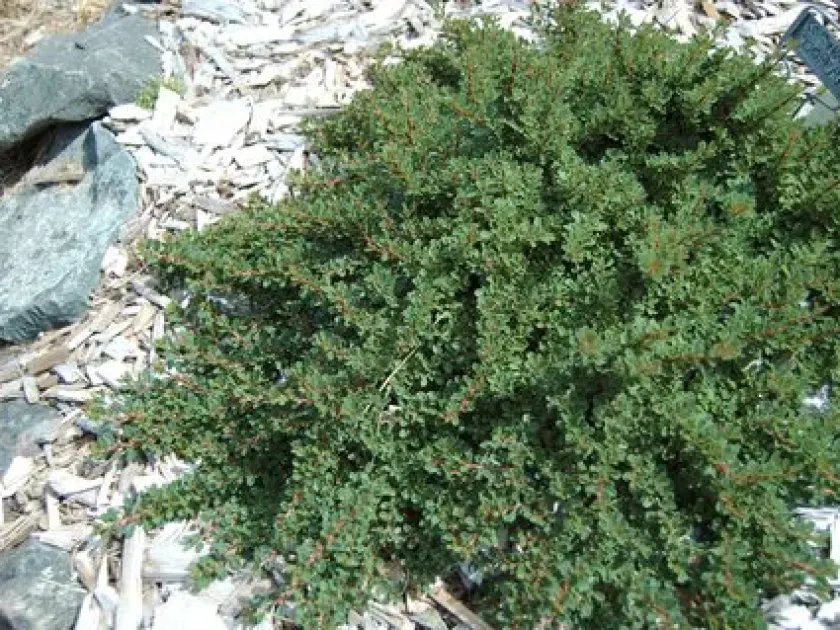
Cooper's Cotoneaster (Cotoneaster cooperi) is a member of the Rosaceae family. It is a robust, woody shrub valued in horticulture for its dense growth habit and elegant appearance, making it suitable for various landscape applications.
Originating from high-altitude regions, this species is naturally adapted to cooler environments. It serves as an excellent choice for temperate climate landscaping, providing evergreen or semi-evergreen foliage that remains attractive throughout the year.
The plant thrives in well-drained soil types. It is essential to ensure that the site is not prone to waterlogging, as the root system of this species is highly sensitive to excessive moisture levels which can lead to rapid fungal decay.
While tolerant of various light conditions, it performs best in full sun or partial shade. Optimal exposure ensures denser branching and more vigorous growth, which is particularly beneficial when the plant is used for formal or informal hedging.
Cultural practices should include annual pruning to maintain shape and density. Fertilizer application in early spring, combined with adequate mulching, helps maintain soil fertility and moisture, promoting healthy plant establishment and long-term vitality.
Main diseases and pests
Like many species in the Rosaceae family, it can be susceptible to fire blight. This bacterial infection requires immediate pruning of infected branches and strict tool sanitation to prevent the spread of the pathogen throughout the landscape.
Pest management should focus on common garden insects such as aphids and scale insects. Regular monitoring of the foliage and stems allows for early detection, enabling the use of organic or chemical controls before significant damage occurs.