
Cotoneaster amoenus
Cotoneaster amoenus
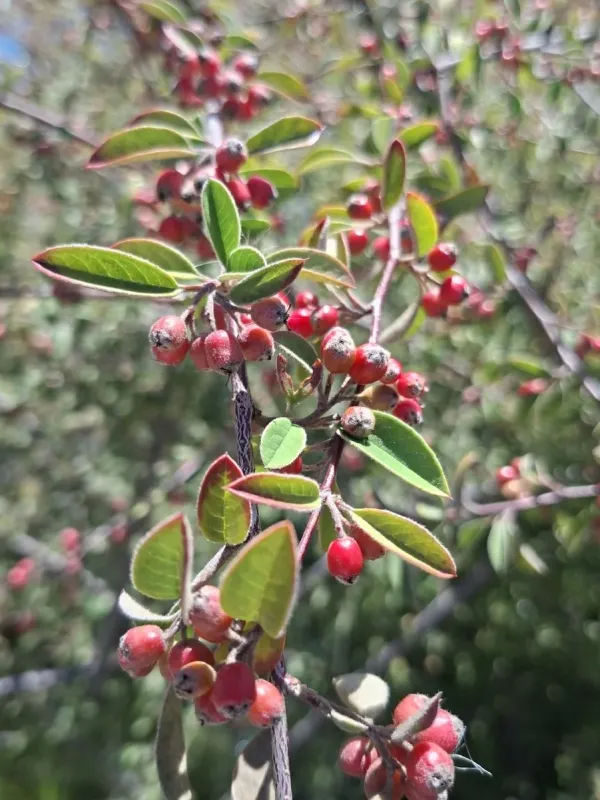
Description
Growing requirements
Cotoneaster amoenus is an attractive evergreen or semi-evergreen shrub belonging to the Rosaceae family. It is widely recognized for its dense habit and clusters of vibrant, berry-like pomes that appear in late summer and autumn.
Native to the mountain regions of China, this species thrives in temperate climates. Its natural habitat includes rocky slopes and forested areas, which has resulted in a plant that is highly adaptable to various soil types, provided they are well-drained.
The ideal conditions for cultivation include full sun to partial shade and fertile, well-draining soil. It is moderately drought-tolerant once established, although consistent moisture during the first year of growth is crucial for healthy root development.
Agricultural practices for this shrub involve regular pruning to maintain its form and structure. Fertilization with a balanced slow-release formula in early spring supports vigorous growth and abundant flowering.
Hardiness is a key feature, as it can withstand moderate frosts. However, in regions prone to extreme winter temperatures, mulching around the base is recommended to protect the root system from freezing cycles.
Main diseases and pests
The most common disease affecting this species is powdery mildew, which appears as a white coating on the leaves. Increasing air circulation and reducing humidity around the plant are effective management strategies.
Aphids and spider mites are the primary pests that can infest Cotoneaster amoenus, particularly during dry spells. These pests can be managed through the application of horticultural oils or insecticidal soaps.
Fire blight is a serious bacterial threat for many members of the Rosaceae family. Symptoms include scorched-looking branches, and affected areas should be pruned and destroyed immediately to prevent spread.
Scale insects can attach to the stems, causing the plant to weaken over time. Regular monitoring of the foliage and stems, especially in spring, is recommended to catch infestations before they cause significant damage.
Good garden hygiene, such as removing fallen leaves and maintaining healthy soil pH levels, remains the foundation for preventing most common pathological issues in this landscape plant.