

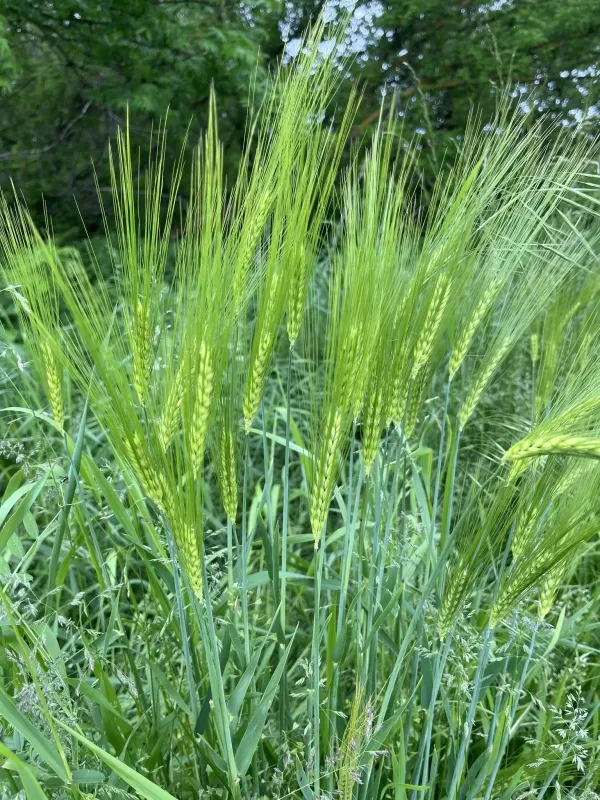
Description
Sowing dates
Sowing winter barley requires precise timing, typically occurring 40–50 days before the onset of sustained frost. Proper timing ensures the plants reach the tillering stage, which is crucial for building cold resistance before winter dormancy begins.
Seeding rates generally range between 3.5 and 5 million viable seeds per hectare. It is essential to ensure uniform depth of 3–5 cm to allow for consistent seedling emergence and to prevent the seeds from drying out in the upper soil layers.
Seedbed preparation is vital; the soil should be firm to provide adequate capillary water movement to the seed. This foundation is essential for quick germination and the establishment of a robust root system before the first freeze.
Fertilization at sowing, particularly with phosphorus and potassium, significantly boosts the plant's overwintering capability. Balanced nutrition helps the crop cope with cold stress and promotes early spring vigor once the temperature rises.
After seeding, rolling the field is a recommended practice to improve soil-to-seed contact. This step helps eliminate large air pockets, prevents desiccation of the seedbed, and fosters a more uniform emergence across the entire field.
Growing requirements
Winter barley (Hordeum vulgare L.) is a member of the Poaceae family. It is a highly productive cereal crop favored for its early maturity and its ability to utilize winter moisture efficiently for rapid growth during the spring season.
The crop thrives in fertile, well-drained soils, with a preference for neutral pH levels. While it is adaptable to various soil types, loamy soils and chernozems are preferred for achieving maximum genetic yield potential.
Winter barley has specific climate requirements; it is generally less winter-hardy than winter wheat. Its cultivation is most successful in regions with mild to moderate winter conditions where the temperature does not reach critical levels that could damage the crown.
Choosing the right rotation is critical. The best results are achieved when barley follows pulses or a clean fallow. Continuous cropping of barley is strongly discouraged due to the risk of increasing soil-borne pathogen populations.
Economically, winter barley serves multiple purposes, including livestock feed, malting, and human consumption. Its high nutritional content makes it an essential crop in modern agricultural systems worldwide.
Main diseases and pests
Winter barley is susceptible to several fungal diseases, including helminthosporiosis and pythium root rot. These pathogens can severely compromise the plant's nutrient uptake and overall structure, leading to significant yield losses if left untreated.
Other notable threats include rhizoctonia and sclerotinia, which can weaken the stems and root systems. Using high-quality treated seeds and implementing integrated disease management programs are the most effective ways to mitigate these risks.
Pests such as the meadow moth or various types of sawflies can sporadically impact crop health. Regular scouting of the fields is essential to detect pest activity early and determine if chemical or biological control measures are necessary.
Effective pest and disease management also involves minimizing the inoculum sources by controlling weeds that act as hosts. Maintaining a healthy, balanced crop rotation is the most sustainable approach to long-term disease suppression in barley fields.
- Helminthosporiosis
- Pythium root rot
- Rhizoctonia
- Sclerotinia
- Meadow moth
In brief
53
Crop diseases
58
Crop pests
Content graph
Crop diseases · 53
African cereal stripeAlternaria leaf spotAnthracnoseAster yellowsBarley mild mosaic virusBarley stripe mosaicBarley yellow dwarfBarley yellow dwarfBlack embryoBrome mosaicCephalosporium stripeCereal cyst nematodeDwarf buntErgotFusarium root rotFusarium wiltHalo spot of barleyHelminthosporium leaf spotHelminthosporium leaf spotLoose smutMerliniusNet blotchOat blue dwarfOat pseudorosetteOat sterile dwarfPeronosporosisPink root rotPink snow moldPlant RustPowdery mildewPowdery mildew of cerealsPythium root rotRhizoctonia root rotRhynchosporium secalisRice black-streaked dwarfRice stripeRoot-knot nematodeRussian winter wheat mosaicSclerotinia rotSclerotinia snow moldSeptoriaSeptoria leaf blotch of oatSharp EyespotSouthern blightStem rustTake-all root rotTyphula blightVerticillium wiltWheat dwarfWheat soil-borne mosaicWheat streak mosaicWheat streak mosaicWheat tan spot
Content graph
Crop pests · 58
Alfalfa seed chalcidAlfalfa weevilAphidApple blossom weevilAustrian beetleBean aphidBeet flea beetleBeet leaf minerBeet midgeBeet root weevilBeet webwormBeet weevilCabbage mothCereal leaf beetleChloropid fliesCodling mothComplex of soil-borne and surface seedling pestsComstock mealybugCotton bollwormCrucifer flea beetleDiamondback mothDock weevilEuropean apple sawflyEuropean corn borerEuropean grapevine mothFlax flea beetleGall midgesGoat moths and Carpenter mothsGreenbugGrey beet weevilGrey beet weevilGround beetle (Zabrus tenebrioides)Hemp flea beetleHop aphidLarge whiteLeafhoppersLeaf miner mothLeaf minersOriental fruit mothPea aphidPea mothPear fruit mothPea weevilPollen beetlePotato tuber mothPyralid mothsSan Jose scaleSawfliesSeedling PestsSoft scalesSoybean pod borerSunn pestTurnip mothTurnip sawflyTwo-spotted spider miteWeevilWheat thripsYellow cereal fly
Content graph
Connections · Winter barley
Most often together:
Active ingredients
1 contact
Marketplace
Products · 2269
All 2269
Fungicides 802
Herbicides, Desiccants 741
Insecticides, Acaricides 359
Fertilizers 188
Plant Growth Regulators 139
Barley 19
Biological Products 13
Adjuvants 4
Rodenticides 3
Adjuvants/Surfactants 1




Liquid nitrogen fertilizers brand KAS-32, r.
«ЄвроХім», ВАТ
Fertilizers
0
0
·
2.9K
3 offers
0.61 €per 1 kg
Buy


Sharpei
ЗАТ Фірма Август, Росія.,селище Вурнари,
Insecticides
0
0
·
2.5K
1 offer
702.4 €per pack
Buy


Gold Star
ТОВ «Фабрика агрохімікатів», Черкаси, Україна
Herbicides
0
3
·
2.4K
16 offers
29 €per 1 l
Buy


Clear 480 SL
Жейянг Дейо Кемікал Індастріал Ко, Жейянг, Китай.
Herbicides
1
0
·
2.4K
13 offers
3.06 €per 1 l
Buy




Pilaround
Піларквім (Шанхай) Ко., Лтд. (Pilarquim (Shanghai) Co, LTD), Шанхай, Китай
Herbicides
0
0
·
2.2K
3 offers
5.72 €per 1 l
Buy
