
Sharp Eyespot
Ceratobasidium cereale
Description
Symptoms
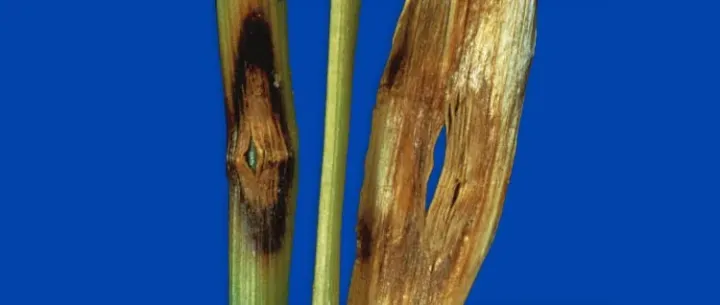
The most characteristic symptoms are distinct, sharp-edged, oval-shaped lesions on the lower leaf sheaths and the base of the stem. These lesions are light brown to straw-colored with a dark brown margin.
In high humidity, a sparse white mycelial growth may appear on the surface of the lesions. As the disease progresses, the stem tissue becomes brittle and prone to lodging, hence the name of the disease.
Affected plants often exhibit stunted growth and reduced tillering. The stems may break at the point of infection, causing the crop to collapse before harvest time.
In severe cases, the fungus may cause the rotting of the crown, leading to the premature death of the plant. However, the root system is typically less severely affected compared to other types of foot rot.
Proper diagnosis often requires laboratory isolation, as the symptoms can sometimes be confused with common eyespot or other fungal foot and root rot complexes.
Pathogen
The disease known as Sharp Eyespot is caused by the soil-borne fungus Ceratobasidium cereale (formerly Rhizoctonia cerealis). It is a basidiomycete that survives in the soil and on crop residues for several years.
The pathogen is known for its wide host range, primarily infecting the root systems and stem bases of various cereal crops, including winter wheat, winter barley, and oats.
The fungus produces mycelium that colonizes the base of the plant stem, penetrating the epidermal layers using specialized enzymes. It can persist in the form of sclerotia during unfavorable environmental conditions.
The survival of the pathogen is facilitated by its ability to saprophytically grow on decaying organic matter in the soil, allowing it to maintain a high inoculum potential between seasons.
Unlike some other eyespot pathogens, Ceratobasidium cereale is highly adaptable to cooler temperatures, making it a significant concern in early-sown winter cereal crops.
Conditions for development
The development of Sharp Eyespot is strongly favored by cool and damp weather conditions. Temperatures between +5°C and +15°C are ideal for the infection process.
High moisture levels in the soil and at the soil-plant interface are essential for the spread of the fungus. Poorly drained fields are particularly susceptible to severe outbreaks.
Dense crop stands increase the duration of leaf wetness and humidity at the base of the stems, creating an optimal microclimate for Ceratobasidium cereale to thrive.
Significant amounts of surface crop residue serve as a primary reservoir for the pathogen. Fields under minimum tillage systems may experience higher disease pressure over time.
Early sowing of winter cereals can lead to longer exposure of young seedlings to the pathogen during the cool and wet periods of the autumn, increasing the risk of infection.
Why it matters
Sharp Eyespot causes significant economic losses primarily through reduced grain filling. By damaging the conductive tissues of the stem, the fungus limits the transport of water and nutrients to the head.
The weakening of the stems leads to lodging, which not only makes harvesting difficult and increases grain loss but also significantly reduces the quality of the harvested grain.
The disease reduces the number of productive tillers per square meter, leading to lower yields. The grain harvested from infected plants is often shriveled and has a lower test weight.
In fields with high disease incidence, the premature death of tillers reduces the overall photosynthetic capacity of the crop, further contributing to yield decline.
The combined impact of these factors makes Sharp Eyespot a serious threat to the productivity of winter cereal production, especially in intensive farming systems.
Protection
Crop rotation is a fundamental management strategy. Rotating with non-host crops, such as legumes or oilseed rape, helps reduce the levels of inoculum in the soil.
Tillage practices that promote the rapid decomposition of crop residues help to reduce the population of the pathogen and limit its ability to survive in the field.
The use of effective seed treatments containing systemic fungicides is recommended to protect seedlings from early-season infections.
Managing planting density and avoiding excessive seed rates can improve air circulation within the canopy, reducing the humidity around the base of the stems.
- Applying fungicides during the spring growth stages if the disease threshold is met.
- Ensuring balanced nitrogen and potassium fertilization to support plant vigor.
- Selecting cultivars with resistance or tolerance to foot rot diseases.
Pathogens and affected parts
Affects crops · 3
Discussion
No discussions yet — be the first.