
Description
Symptoms
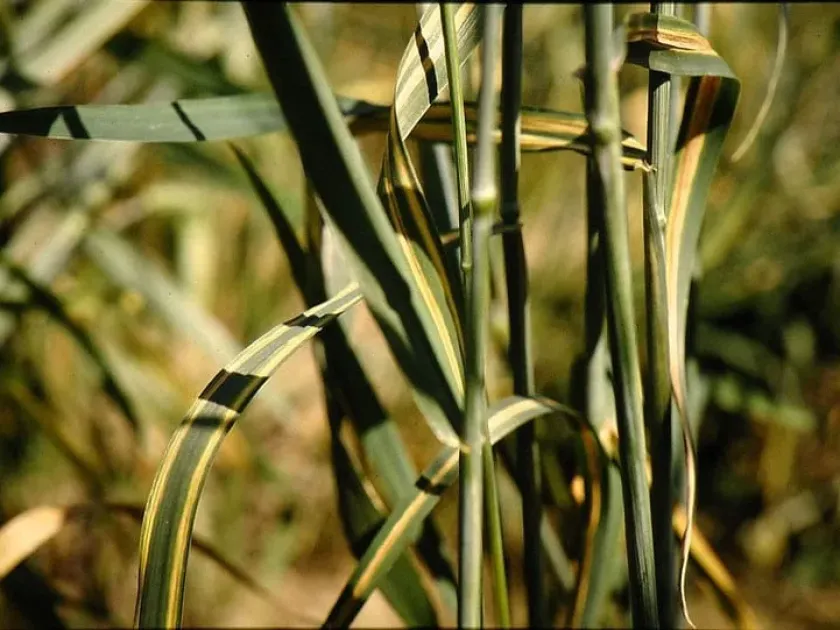
The first noticeable sign of the disease is the appearance of narrow yellow stripes along the leaf blades, extending from the base of the leaf to the tip. These stripes are often sharp and clearly defined, which is a key diagnostic feature.
Over time, infected leaves wither, curl, and dry out prematurely, while stems may take on an atypical brownish hue. In the lower part of the stem, under the leaf sheaths, the fungus may form spore-bearing structures that appear pinkish or whitish.
At later stages of development, distinct whitening of the ears is observed; these ears either remain empty or produce shriveled, poor-quality grain. Infected stems become brittle, which can lead to lodging during high winds or rain.
Internal tissues of infected stems turn brown, indicating a blockage of the vascular system by the fungal mycelium. The plant suffers from acute moisture and nutrient deficiency due to the disruption of transport pathways by the pathogen.
Upon examination of the root system, it remains relatively healthy, which distinguishes Cephalosporium stripe from many other root rot diseases of cereal crops.
Pathogen
The causative agent of the disease is the fungus Hymenula cerealis (formerly known as Cephalosporium gramineum). This is a soil-borne pathogen that infects the vascular system of cereals.
The fungus penetrates the plant through mechanical wounds in the root system or the base of the stem. The primary method of infection is root damage caused by pests such as cereal beetle larvae or nematodes.
The pathogen can persist for long periods in plant debris in the soil as mycelium. The infectious load accumulates when cereals are grown repeatedly on the same field.
The dispersal of conidia occurs mainly through rain splashes or snowmelt, which carry the spores across the field to weakened plants.
The fungus thrives in moderate temperatures and high moisture, where it actively colonizes the host tissues, filling the xylem and secreting specific toxins.
Conditions for development
The development of the disease is favored by wet and cool weather during the autumn and spring periods. High soil moisture is a critical factor for the germination of fungal spores.
The disease is particularly active in fields with frequent freeze-thaw cycles during the winter. These fluctuations lead to micro-injuries in the roots, facilitating the entry of the infection.
An important factor in the spread of the disease is the intensive use of crop rotations with high proportions of cereal crops such as winter wheat, winter barley, and rye.
Damage to the root system by insects or agricultural machinery during field maintenance creates entry points for the mycelium to penetrate the plant tissues.
Poorly drained areas where water stagnates are the most dangerous zones, as the pathogen exhibits maximum aggressiveness in these environments.
Why it matters
Cephalosporium stripe causes significant economic losses, reducing grain yields by 10–30% or more in years favorable for the pathogen.
The disease leads to a sharp decline in grain quality: it becomes shriveled, loses weight (thousand-kernel weight decreases), which significantly lowers its market and seed value.
Infection leads to uneven ripening, complicating the harvesting process and increasing losses during threshing due to stem brittleness.
The presence of the pathogen in the crop significantly reduces the winter hardiness of winter crops, which can lead to thin stands after the plants emerge from winter dormancy.
In the case of widespread infestation, farms incur direct losses not only from decreased total production but also from the need for additional expenses on fungicide treatments.
Protection
The primary method of control is strict adherence to crop rotation. It is not recommended to plant cereals on the same field for at least 2–3 years after the previous cereal crop.
Proper incorporation of crop residues into the soil is necessary to accelerate their decomposition, as the fungus survives in this material as a saprotroph.
It is important to control soil pests that damage the root system (wireworms, beetle larvae), as the fungus enters the plant through the tunnels they create.
Using varieties of winter wheat and other cereals resistant to Cephalosporium stripe is the most effective and economically viable method for preventing losses.
Applying agronomic practices, such as optimal sowing dates and the use of high-quality treated seed, helps plants better resist the infection background.
Pathogens and affected parts
Affects crops · 3
Discussion
No discussions yet — be the first.