
Description
Symptoms
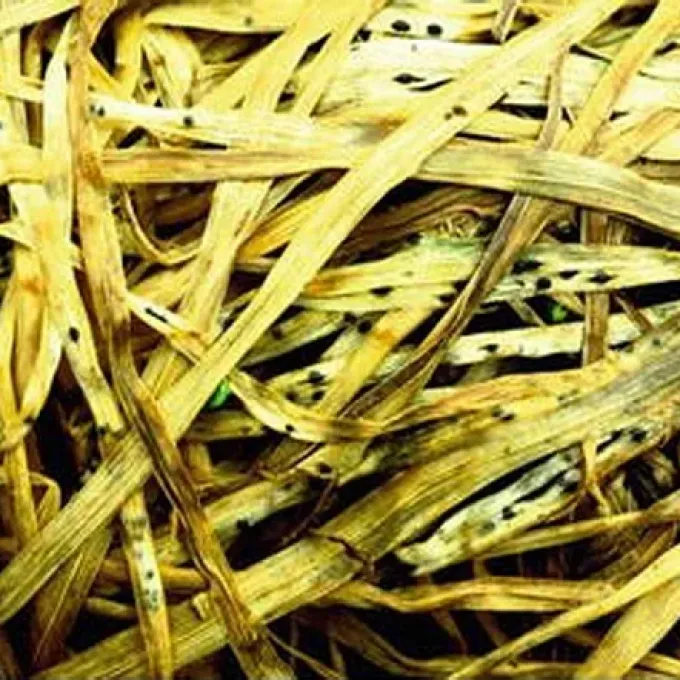
Symptoms become visible immediately after snowmelt in the early spring. The most distinct sign is a white or grayish, web-like mycelium covering the leaves and stems of winter crops.
Affected plant tissues quickly turn brown, become soft, and eventually die. The leaves may become brittle and appear as if they have been burned or damaged by extreme cold.
Small, hard black structures known as sclerotia develop on the surface of decaying plant matter. These are key diagnostic features for identifying the presence of Myriosclerotinia borealis.
In severe cases, large patches of the crop become matted together, leading to total plant death in affected areas, often resulting in significant gaps in the field.
Unlike other snow molds, the Sclerotinia-type damage is often characterized by this dense mycelial mat that persists for days until the plants begin to dry out.
Pathogen
The causative agent of this disease is the fungus Myriosclerotinia borealis. This pathogen is highly adapted to cold climates, specifically targeting winter cereals and grasses in regions with prolonged snow cover.
The fungus survives harsh conditions by producing sclerotia, which are durable structures that remain viable in the soil or on crop debris for several years.
Infection cycles are triggered by low temperatures near freezing, combined with high moisture levels often found under deep snow. This creates an ideal environment for mycelial spread.
Pathogen dispersal occurs primarily through soil-borne sclerotia and contaminated planting material, allowing the fungus to establish itself during the winter dormant phase.
As the primary pathogen in its niche, Myriosclerotinia borealis remains active throughout the winter months, slowly colonizing plants even when host metabolism is minimal.
Conditions for development
The disease thrives under persistent, deep snow cover, particularly when the underlying soil remains unfrozen, which keeps the temperature at the ground level stable.
High relative humidity and moisture within the canopy are essential for the germination of sclerotia and the subsequent expansion of the fungal colony.
Late planting or poor autumn growth makes winter cereals, such as winter barley, more vulnerable because the plants lack the vigor to resist early infection.
Poor drainage and low-lying field areas often show the highest disease incidence due to the accumulation of moisture and the persistence of fungal spores.
Continuous monocropping of susceptible cereals contributes to the buildup of the pathogen population in the soil, increasing the probability of severe outbreaks.
Why it matters
The primary damage is the death of winter crops, which leads to reduced plant density and the necessity for costly reseeding of the affected agricultural land.
Sub-lethal infections cause significant physiological stress, stunting plant growth and reducing the overall yield potential of the surviving crop.
Economic losses arise not only from total crop failure but also from the reduced quality and vigor of the grain harvested from stressed plants.
Winter barley is particularly sensitive to this pathogen, with heavy infections potentially resulting in major gaps in the crop stand and significant losses in productivity.
Additional costs include the application of prophylactic treatments and the necessity of managing soil conditions to minimize future risks of infection.
Protection
Implementing a diverse crop rotation is a fundamental strategy to prevent the buildup of sclerotia in the soil and break the fungal life cycle effectively.
Optimizing planting dates and ensuring healthy fall growth are critical steps to provide plants with the necessary hardiness to survive the winter season.
Selecting varieties that show natural resistance or high tolerance to cold-weather fungal diseases is the most effective long-term management approach.
Applying high-quality fungicide seed treatments provides essential protection during the initial growth stages, significantly reducing early winter infection rates.
- Utilizing proper soil cultivation to bury plant residue
- Ensuring adequate soil drainage in prone areas
- Applying fungicides in late autumn if infection risk is high
- Monitoring fields immediately after snowmelt for early detection
Pathogens and affected parts
Affects crops · 1
Discussion
No discussions yet — be the first.