
Description
Symptoms
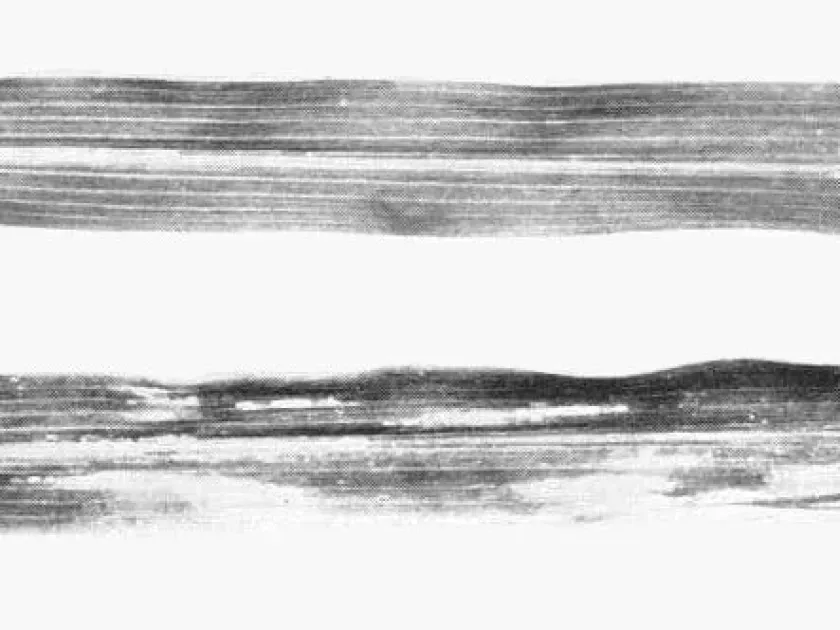
Symptoms of Brome mosaic include a characteristic chlorotic pattern on the leaf blades of infected plants. Leaves appear mottled or striped, with alternating light green and yellowish sections, which is typical for many cereal virus infections.
As the disease progresses, general growth inhibition and significant developmental delays are observed. Affected plants often look stunted compared to healthy crops, which is especially visible during the early stages of vegetation.
Sometimes, necrotic spots or stripes may appear on the leaves, indicating deeper tissue damage. In severe cases, curling and premature drying of the foliage occur, which disrupts normal photosynthesis processes.
Infection of reproductive organs leads to uneven heading, and the ears themselves may be deformed or incomplete. Grains in such ears are often shriveled, which leads to a significant decrease in the quality of the harvested yield.
Visual diagnosis can be challenging due to symptoms overlapping with other viral diseases, therefore laboratory testing, including serological methods or PCR, is often required for accurate identification.
Pathogen
The disease is caused by the Brome mosaic virus (BMV), which belongs to the Bromovirus genus. It is an RNA-containing virus with a wide host range among monocotyledonous plants, including wild grasses.
The virus is transmitted mechanically through the sap of infected plants during contact, as well as by certain types of insect vectors, such as thrips or beetles. Seed transmission is also possible under specific conditions, which facilitates the spread of the pathogen.
The biology of the virus is closely tied to the lifecycle of brome and other grassy weeds, which serve as primary reservoirs of infection within agroecosystems. In these plants, the virus persists throughout the year.
The infection process begins with the virus particles penetrating the host plant cells through micro-wounds caused mechanically or by insects. Once inside, the virus begins active replication, utilizing the resources of the plant cell.
Spread within the plant organism occurs systematically via the phloem, leading to the infection of all organs, including the root system, stems, and developing reproductive structures.
Conditions for development
Virus development is favored by weather conditions that support the activity of insect vectors, which carry virus particles from weeds to crop fields. High temperature and humidity often stimulate the activity of these vectors.
Infection of winter crops, such as wheat and barley, most often occurs in the autumn, when young seedlings come into contact with virus reservoirs. Early sowing increases the risk due to high pest activity during that time.
The presence of significant amounts of grassy weeds, such as brome, near fields creates a constant source of infection. The higher the density of weed vegetation along field edges, the higher the likelihood of crop infection.
Agronomic factors, such as high crop density or delayed pest control, contribute to a faster spread of infection within the field. Optimal conditions for cereal growth can also support high concentrations of the virus in plant tissues.
The virus overwinters primarily in the rhizomes of perennial grasses or in winter crops, where the pathogen maintains its virulence until the beginning of the next growing season.
Why it matters
The damage caused by Brome mosaic is expressed in a significant reduction in grain yield. Under severe infection, grain losses can reach 20–30% or more, depending on the plant's growth stage at the time of initial infection.
In addition to quantitative losses, a significant decline in grain quality indicators is observed, including a decrease in thousand-kernel weight, test weight, and protein content. Such grain often becomes unsuitable for seed purposes.
Viral infection weakens plant immunity, making them more susceptible to secondary fungal and bacterial infections. As a result of complex infection, a significant portion of productive stems often dies.
The disease negatively affects crop structure, causing thinning and reduced tillering. This leads to inefficient use of arable land and decreased competitiveness of the crop against weeds.
The economic impact includes not only yield losses but also costs associated with additional protective measures aimed at suppressing the population of insect vectors.
Protection
The primary protection measure is the thorough elimination of weeds in fields and adjacent territories, which act as the main reservoirs of the virus. Regular control of brome and other grasses is critical.
Strict adherence to optimal sowing dates for winter crops is necessary. Early autumn planting exposes young plants to attack by pests, which are active vectors of virus particles.
The use of insecticides to manage insect vectors, such as thrips or leafhoppers, can significantly limit the spread of infection during early vegetation stages. Effectiveness depends on the timeliness of treatments.
Implementing crop rotation with non-susceptible crops is recommended. This interrupts the pathogen's lifecycle and reduces the infectious background of the soil and environment.
Breeding and the use of resistant or tolerant varieties of winter wheat and barley are the most promising and environmentally friendly control methods, allowing the risk of infection to be minimized.
Pathogens and affected parts
Affects crops · 3
Discussion
No discussions yet — be the first.