
Description
Symptoms
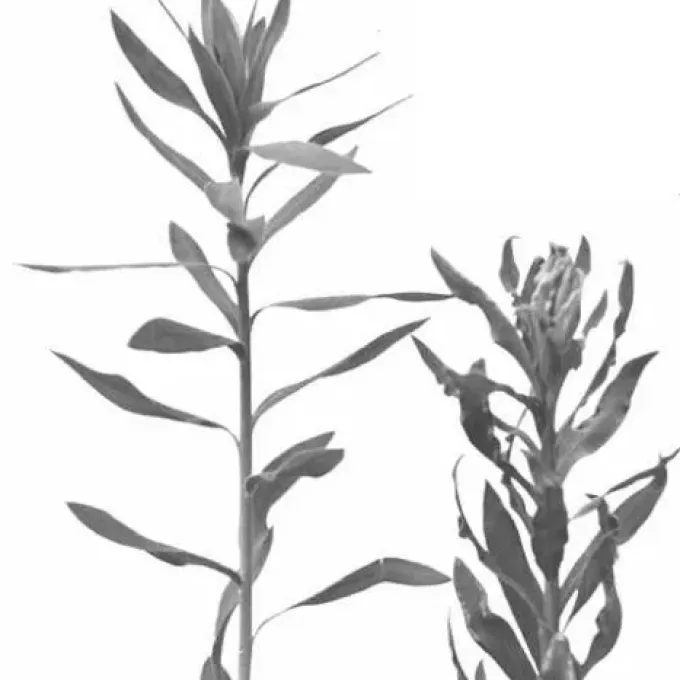
The most distinctive symptom is a deep blue-green coloration of the foliage. This color change often appears in patches within the field where the initial vector activity occurred.
Severe stunting is a hallmark of the disease. Internodes are significantly shortened, giving the plant a condensed and dwarfed appearance compared to healthy neighboring plants.
Reproductive development is severely hampered. In many cases, the panicles fail to emerge properly from the leaf sheath, or they remain underdeveloped and sterile, preventing any seed formation.
The leaves often become thicker and more brittle than normal. In advanced stages, the plants may show abnormal tillering, resulting in a bushy, rosette-like growth habit.
- Dark blue-green leaf discoloration.
- Extreme stunting of stems.
- Poorly developed or absent panicles.
- Thickened, brittle leaf tissue.
Pathogen
The disease is caused by the Oat blue dwarf virus (OBDV). It is a plant virus transmitted by insect vectors that circulate through the phloem of host plants, causing systemic infection.
The primary vector for the virus is the aster leafhopper (Macrosteles fascifrons). The insect acquires the virus by feeding on infected plants and retains the ability to transmit it for the remainder of its life span.
The virus has a broad host range among monocotyledonous plants. It notably affects oats (Avena sativa) and winter barley (Hordeum vulgare), as well as numerous wild grasses that act as reservoirs.
Once introduced into the plant, the virus interferes with normal hormonal regulation, specifically affecting auxin production. This leads to the characteristic stunted growth patterns observed in infected crops.
The viral particles persist within the leafhopper's body, which allows for efficient transmission even across long distances when favorable wind conditions assist the insect's migration.
Conditions for development
Disease outbreaks are heavily dependent on the population dynamics of the aster leafhopper. Warm, dry weather conditions facilitate the rapid multiplication and movement of the insect vector.
Presence of perennial grass weeds near crop fields provides an essential overwintering habitat for the virus and the vector, creating an continuous infection cycle throughout the growing season.
Early planting dates may help reduce the incidence of the disease. Crops that reach a mature growth stage before the peak population of leafhoppers occur are generally less susceptible to catastrophic damage.
High temperatures during the early growth stages of cereals accelerate the metabolism of the leafhoppers, thereby increasing the rate of viral transmission to young seedlings.
Fields located in areas with high weed pressure are at a greater risk of infestation, as these weeds act as intermediate hosts before the insects migrate to the cereal crop.
Why it matters
The economic impact of oat blue dwarf is primarily due to drastic yield loss. Plants severely affected by the virus rarely produce viable grain, leading to significant reductions in harvest tonnage.
The disease causes poor stand establishment. Stunted plants are unable to compete with weeds, leading to patchy fields that require additional management or potential crop abandonment.
Grain quality from partially infected plants is significantly lower. The seeds are often shriveled and possess low test weights, making them unsuitable for commercial milling or future seeding.
In winter barley crops, widespread infection can necessitate reseeding if the damage is severe enough to compromise the integrity of the field, resulting in high economic losses.
The cumulative effect of infection leads to long-term issues for farmers, as the virus can remain present in the environment if the vector populations are not managed properly.
Protection
The most effective management strategy is the control of weed reservoirs. Removing wild grasses around the perimeter of cereal fields helps to break the virus's life cycle.
Targeted insecticide applications to control leafhopper populations can reduce the spread of the virus, provided they are timed correctly based on scouting and economic thresholds.
Crop rotation and physical isolation from heavily infested perennial pastures can significantly reduce the potential for vector migration into the cereal field.
Selecting tolerant or resistant varieties is the best long-term strategy for managing oat blue dwarf in regions where the disease is known to be endemic.
Monitoring for leafhopper activity using yellow sticky traps is a critical component of integrated pest management, allowing for timely intervention before large-scale transmission occurs.
Pathogens and affected parts
Affects crops · 2
Discussion
No discussions yet — be the first.