
Description
Symptoms
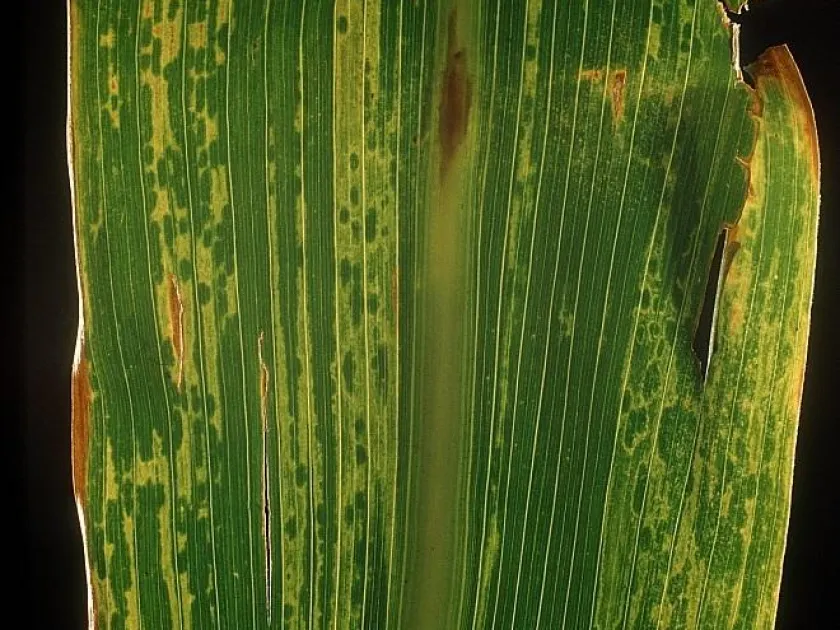
The primary symptom of barley stripe mosaic is the appearance of light green or yellow elongated spots and streaks on the leaves. As the disease progresses, these areas can become necrotic, giving the foliage a distinct mosaic or striped pattern.
Infected plants exhibit severe stunting and reduced tiller development, which is a hallmark of the viral systemic infection. The overall growth rate of the barley is significantly impaired compared to healthy plants in the same field.
Leaves may show curling, twisting, and premature senescence, which drastically reduces the plant's photosynthetic capacity. In early stages, the symptoms might be subtle, appearing as faint chlorosis, which later intensifies into characteristic striping.
During the heading stage, infected barley often displays shortened, malformed spikes that fail to emerge properly from the leaf sheath. This physical impairment prevents normal pollination and seed set, leading to poor grain development.
Field patches with stunted, discolored plants are common signs of the disease. These clusters stand out due to their diminished height and poor canopy density, indicating a systemic viral presence within the population.
Pathogen
The disease is caused by the Barley stripe mosaic virus (BSMV), which belongs to the Hordeivirus genus. It is a highly contagious plant virus known for its ability to infect a wide range of monocotyledonous hosts, especially barley.
Unlike many other plant viruses, BSMV is easily transmitted mechanically. Contact between infected and healthy plants, caused by wind or human activity, allows for the rapid spread of the virus within a crop stand.
Seed transmission is the most critical factor in the epidemiology of the disease. The virus survives within the embryo of the seed, ensuring that it is introduced into the new crop from the very beginning of the growing season.
Pollen transmission also occurs, which is particularly problematic for seed production fields. This mode of spread facilitates the rapid dissemination of the virus during the flowering stages of the plant.
Inside the host cells, the virus replicates and causes significant structural damage to chloroplasts. This interference with cellular metabolism is the direct cause of the chlorotic symptoms observed on the leaf surfaces.
Conditions for development
The development of Barley stripe mosaic is favored by moderate temperatures, typically between 15°C and 25°C. These conditions are optimal for both the growth of the barley plant and the replication of the virus.
High plant density encourages the rapid spread of the pathogen. When leaves are in close contact, the mechanical transfer of the virus from infected to healthy tissue occurs more efficiently, leading to disease clusters.
High humidity and moisture on leaf surfaces play a secondary role by making the plant tissues more susceptible to mechanical injury and facilitating the entry of viral particles. Excessive dew or rain can heighten this effect.
The use of infected seed lots in favorable weather conditions almost guarantees a disease outbreak. The pathogen relies on the host's vitality to spread, so vigorous spring growth often aligns with the peak expression of symptoms.
Poor agricultural hygiene, including the presence of infected crop residues or weed hosts in the field, acts as an inoculum reservoir. This allows the virus to persist and re-infect subsequent plantings if not managed correctly.
Why it matters
The main economic impact of this disease is a significant loss in grain yield, which can range from 20% to 50% depending on the infection rate. Infected plants fail to produce fully developed grains, leading to high percentages of shriveled kernels.
The quality of the harvested grain is severely compromised, showing low protein content and poor germination rates. This renders the crop unsuitable for seed production and limits its use in feed or malting industries.
Infected barley shows reduced tolerance to environmental stressors, such as drought or heat waves. This increased susceptibility leads to secondary issues, including higher rates of colonization by opportunistic fungal pathogens.
The systemic nature of the infection disrupts the hormonal balance of the plant, often leading to uneven maturity. This complicates harvest operations and can result in additional losses due to lodging or grain shattering.
Farmers face significant financial losses due to the need to discard entire seed lots and the subsequent cost of sourcing high-quality, virus-free seeds for the following season.
Protection
The cornerstone of managing barley stripe mosaic is the exclusive use of certified, virus-tested seed. Since the virus is seed-borne, starting with clean stock is the most effective preventative measure available.
Implementing a strict crop rotation schedule helps reduce the inoculum load in the field. Avoiding the cultivation of barley in the same soil for at least three seasons breaks the persistence cycle of the virus.
Rigorous weed management is essential to remove potential alternative hosts that can harbor the virus during the off-season. Keeping fields clean prevents the disease from re-establishing itself.
- Regular phytosanitary inspection of seed production plots.
- Selection and planting of resistant or tolerant barley varieties.
- Proper sanitation of farm machinery to prevent mechanical transmission.
- Maintaining spatial isolation between seed fields and commercial crops.
Because there is no curative treatment for infected plants, management must be entirely preventative. A proactive approach focused on clean seeds and good field hygiene remains the only viable strategy for controlling this virus.
Pathogens and affected parts
Affects crops · 1
Discussion
No discussions yet — be the first.