
Disease · fungal · affects Anemone coronaria, Apple, Carnation
Especially harmful
Southern blight
Sclerotium rolfsii
Description
Symptoms
The first external sign of infection is usually the sudden wilting of the foliage, which remains green at first but soon turns yellow and collapses.
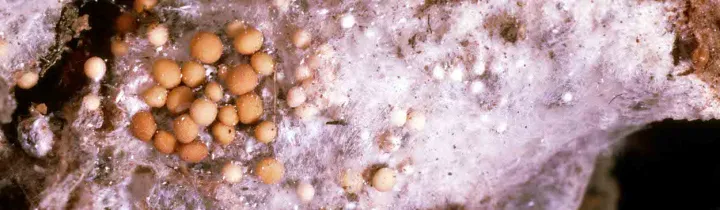
A dense, white, fan-like fungal mycelium can be observed at the base of the stem, often spreading outwards onto the surface of the surrounding moist soil.
As the disease progresses, the stem tissue at the soil line becomes necrotic and rots, leading to a complete collapse of the plant due to the loss of structural integrity.
The most diagnostic feature is the appearance of small, round, tan-to-dark brown sclerotia, which look remarkably like mustard seeds, clustered on the infected stems or adjacent soil.
A broad range of crops is susceptible, including:
- Onion and garlic
- Fodder beet
- Oilseed rape and Indian mustard
- Ornamental species like Anemone and Campanula
Pathogen
Southern blight is caused by the soil-borne fungus Sclerotium rolfsii (the sexual stage is Athelia rolfsii). It is a highly destructive pathogen globally, impacting a vast range of vegetable and ornamental crops.
The fungus survives in the soil and on infected plant debris as sclerotia—hard, mustard seed-sized structures that are highly resistant to adverse environmental conditions.
When conditions are favorable, sclerotia germinate to produce white, thread-like mycelia that spread rapidly across the soil surface and plant tissues.
The pathogen does not produce conidia; therefore, its spread is primarily driven by the movement of infested soil, contaminated water, and the transport of infected plant material or equipment.
The fungus produces powerful enzymes, such as oxalic acid and cell-wall degrading enzymes, which macerate plant tissues and facilitate rapid invasion of the host.
Conditions for development
Southern blight is a warm-weather disease. It thrives at soil temperatures between 25 °C and 35 °C, with activity declining significantly in cooler weather.
High soil moisture is essential for the germination of sclerotia and the rapid colonization of the host plant, making it particularly severe during rainy seasons followed by heatwaves.
The fungus is generally more active in acidic soils; however, it can adapt to various soil types, making management challenging in diverse agricultural environments.
Dense canopies and poor air circulation around the base of the plants maintain high humidity, which promotes the growth and spread of the mycelium.
Wounded plant tissues, caused by mechanical injury or insect feeding, are much more susceptible to rapid infection by the fungus.
Why it matters
The primary damage caused by Southern blight is total plant mortality, which can occur within a few days of the initial infection in susceptible crops.
Crop yields are devastated, and in many cases, entire fields or portions of fields can be rendered unharvestable due to the rapid spread of the rot.
Stored products are also at risk if infected during harvest, leading to post-harvest decay and losses during transit or warehouse storage.
The accumulation of sclerotia in the soil creates a long-term problem for growers, necessitating the use of extended crop rotations or costly soil treatments.
Since the pathogen is highly adaptable and soil-borne, it complicates the export of nursery stock and seed materials, causing significant economic disruption.
Protection
Integrated pest management, specifically the use of long-term crop rotation with non-host crops like corn or small grains, is the most recommended preventative measure.
Deep plowing can help bury sclerotia deeper into the soil profile, reducing the likelihood of them reaching the surface and infecting subsequent crops.
Soil solarization in sunny regions has proven effective in reducing the population of viable sclerotia in the upper layers of the soil.
Good sanitation practices, including the careful removal and disposal of all infected plant parts, prevent the further build-up of the pathogen in the field.
Chemical control with targeted fungicides applied to the base of plants can provide protection, though it is often expensive and requires precise timing to be effective.
In brief
27
Affects crops
Biology
Pathogens and affected parts
Pathogens
Affected plant parts
whole plantrootstemseed
Content graph
Affects crops · 27
Reference
Connections · Southern blight
Most often together:
Marketplace
Products · 1
Community
Discussion
No discussions yet — be the first.